

The concept of reciprocal justice — “An eye for an eye” — goes back to the Code of Hammurabi and various religious texts, but has faced challenges Biblical (“Vengeance is Mine, I will repay”), Shakespearean (“The quality of mercy is not strained”), and catch-all (“An eye for an eye makes the whole world blind”).
Tanaz Eshaghian and Farzad Jafari’s An Eye for an Eye puts issues of justice, vengeance and mercy to the ultimate test in a documentary that’s taut, emotional and provocative. There’s a sense that the 84-minute film leaves a lot of big ideas on the table in favor of something more intimate and efficient, but there’s a lot to admire in the filmmakers’ restrained account, which might have spiraled out of control if it tried to answer every question it introduces.
An Eye for an Eye
The Bottom Line
Highly effective, if limited in scope.
Venue: Tribeca Film Festival (Documentary Competition)
Directors: Tanaz Eshaghian and Farzad Jafari
1 hour 24 minutes
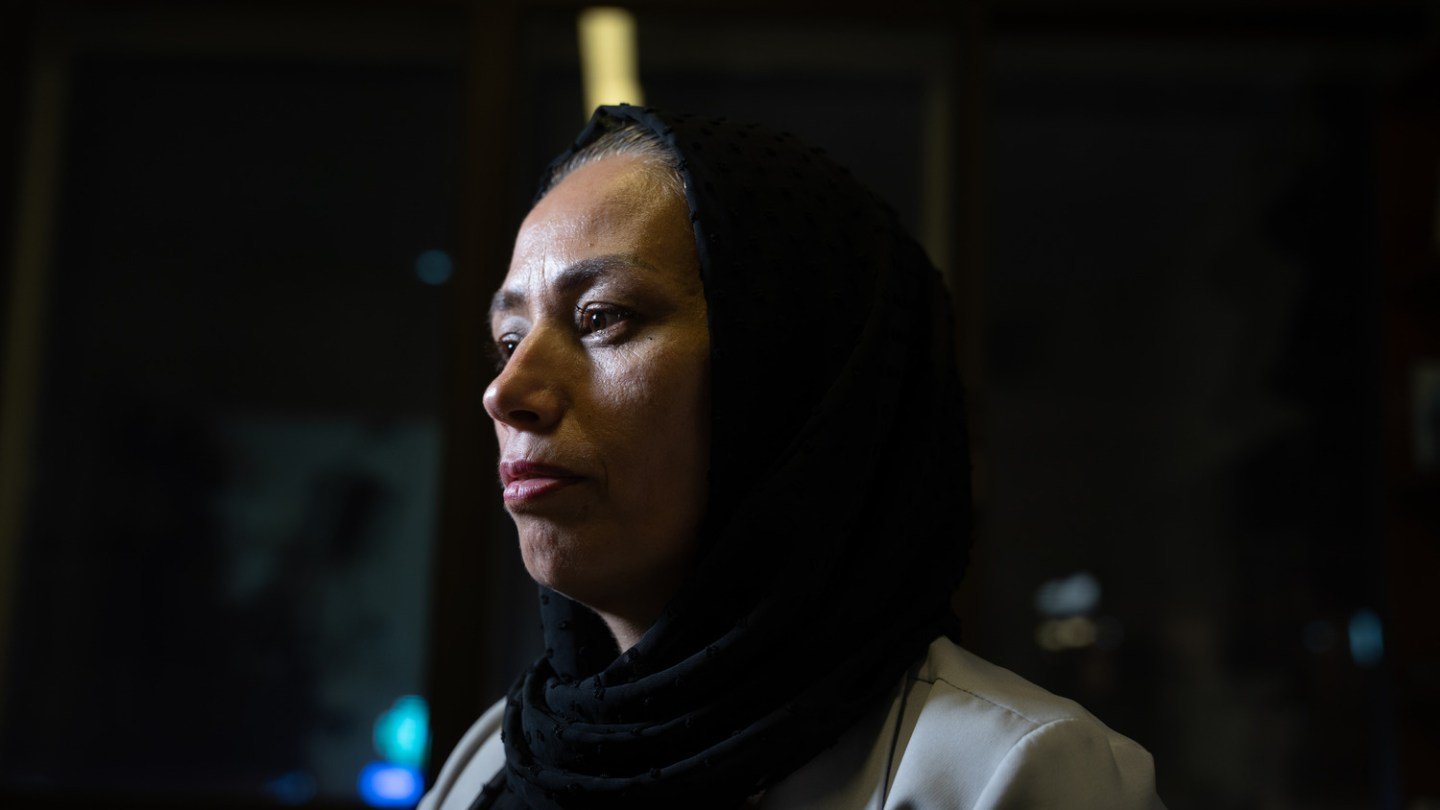
Set in Tehran and informing viewers only about the details of the Iranian legal system that are immediately relevant, An Eye for an Eye focuses on Tahereh, out on bail after 14 years in prison for murdering her husband. Tahereh claimed that she strangled Hossein after years of drug-fueled abuse, expressing concerns for her young daughters and son Mohsen. The system did not care.
Tahereh’s life remains in limbo. Her fate is in the hands of her brother-in-law, Bashir, the final arbiter of a seemingly impossible decision: At his word, Tahereh can be executed or else Bashir and his family can negotiate blood money, payment in exchange for his mercy. Bashir’s mother wants Tahereh dead, especially since Tahereh has been remorseless.
Plus, it isn’t like Tahereh and her kids have very much money, nor the prospects to make that money in a country that’s teetering on the brink of rebellion or economic collapse. Mohsen, who initially felt betrayed by his mother’s crime now feels that she should be doing more to fight for her life, that his uncle and grandmother should be thinking of the rest of their seemingly innocent kin.
As gripping as this life-and-death conceit is, it’s hard not to watch An Eye for an Eye and ponder versions that might have been more expansive.
The directors include necessary concern about, if not condemnation of, the religious-based law designed to affirm the patriarchy. It’s interesting to see, though, that Tahereh’s lawyer is a woman, as are the various anti-execution advocates who serve as mediators through the early phases of the case (before a meeting with a judicial tribunal, composed entirely of men). Questions about the gendered mechanics of this process arise throughout, but Eshaghian and Jafari simply aren’t interested in making this an ideologically righteous, but perhaps thematically restrictive, documentary about the horrors of life for women in modern Iran.
Tahereh is a victim here, but the documentary is evasive in its approach to the central crime. Tahereh took responsibility alone, even though both of her daughters initially stated that they participated in the murder and the disposal of the body — two versions of events that contradict the initial story that Mohsen, six at the time, told the police. The directors get a local journalist and law enforcement figure to point to the aspects of the case that don’t line up — specifically the alleged involvement of an unseen man named Hamed.
Was this a crime of passion or premeditated? Can we choose between the versions that we know or is something even twistier afoot? How are the men in power so eager to punish Tahereh and yet so skeptical that any woman could have committed this crime at all? With appetites for true crime documentaries seemingly insatiable, some viewers will be perplexed and even frustrated at how the directors don’t want to play investigative reporter or detective.
The simple question that Eshaghian and Jafari presumably want whodunit-inclined viewers to ask is: “Does what happened even matter at this point?” The choices that Tahereh and her family are making — regarding how to scrounge for money and how to appeal to Hossein’s family for mercy — aren’t impacted anymore by what did or didn’t happen. Nor is it really relevant to the documentary if it’s a broken system that gave Bashir and his side of the family the life-and-death power over people who, in a different timeline, they would have considered family as well. These aren’t crusaders or symbols, they’re people who have choices to make, whether the institutions involved are right or wrong.
The documentary lives in these weighty conversations that are, remarkably, playing out with cameras at close range — the debates and negotiations, the pleas and manipulations. I don’t think it’s wrong to wish that the film contained a little more investigation or a little more activism. But as the drama escalates, it’s hard to get hung up on those things and easy to become invested in Mohsen’s building desperation and in Tahereh’s almost unreadable resistance to beg or fight for her life.
The documentary works well enough that you can find empathy for Hossein’s family, even if Hossein is the piece’s villain and Tahereh is presented as the victim. We’re watching Bashir deliberate between money that could help his struggling family and perpetuating a cycle of violence that still may not bring them peace.
Even if the documentary finds resolution, the questions both directly instigated and tacitly seeded linger in intricate ways.
