

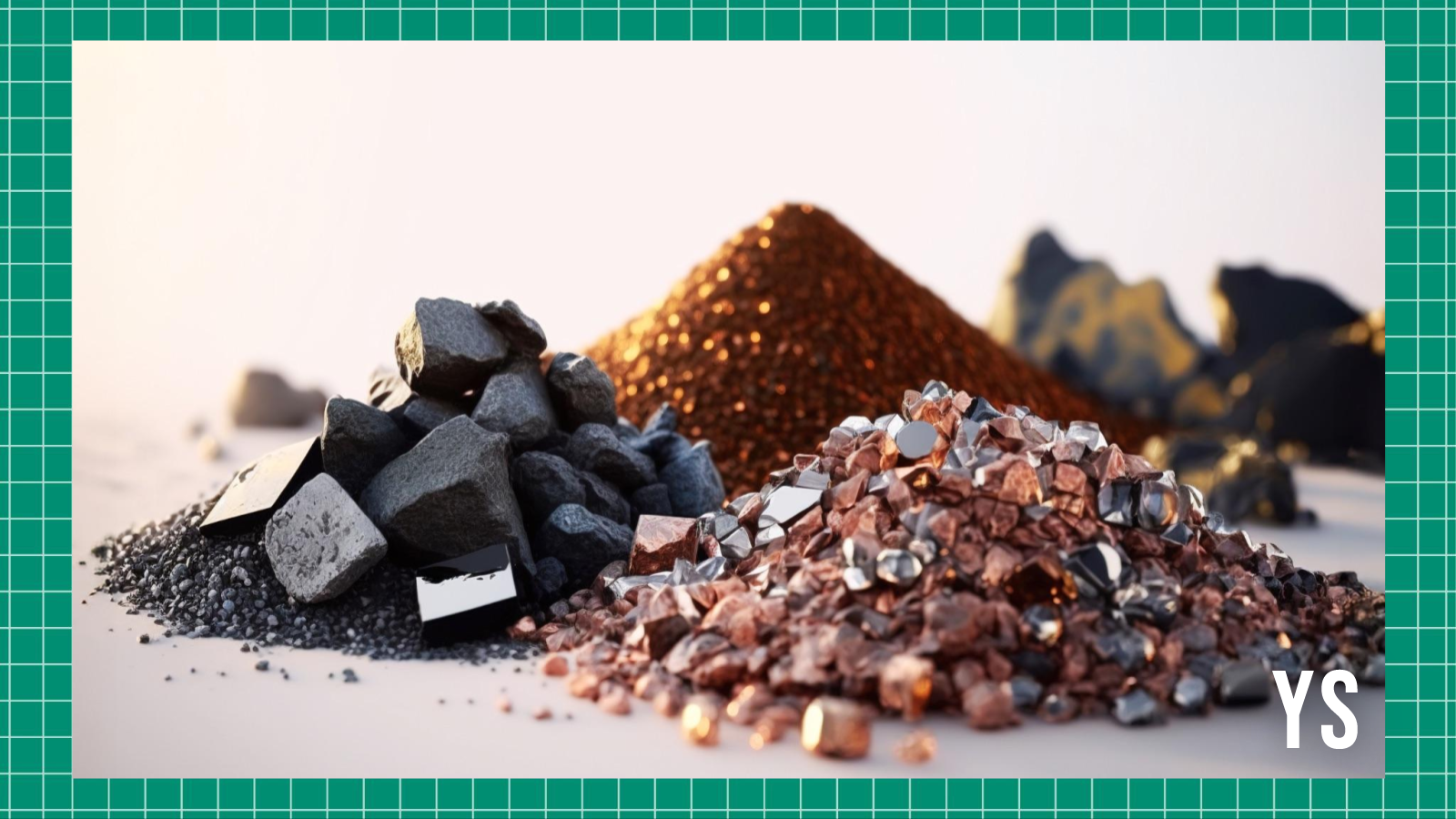

In the months following China’s export restrictions on rare earth magnets—a type of powerful permanent magnet made from rare earth elements—several sectors worldwide, including automotive, aerospace, and defence, experienced significant disruptions.
India has a $240 billion automobile industry. The problem? China controls over 90% of the global production of rare earth magnets that are crucial for the industry. The effects of China’s restrictions on these materials, which began in April, are starting to show up.
A PTI report on Wednesday reported that car maker Maruti Suzuki has cut its near-term production targets for its electric vehicle e-Vitara by two-thirds because of rare earth shortages plaguing the supply chain. Interestingly, it had said on Monday that it did not see any impact yet from the supply crisis.
EV scooter maker Bajaj Auto had also flagged during its Q4 earnings call that its production of electric scooters will be disrupted starting July 2025 due to depleting inventory of rare-earth magnets.
These magnets are used in power-steering systems, electric traction motors, sensors and audio systems. They are a crucial component in the automotive sector due to their temperature resistance, high magnetic strength, and energy efficiency.
.thumbnailWrapper{
width:6.62rem !important;
}
.alsoReadTitleImage{
min-width: 81px !important;
min-height: 81px !important;
}
.alsoReadMainTitleText{
font-size: 14px !important;
line-height: 20px !important;
}
.alsoReadHeadText{
font-size: 24px !important;
line-height: 20px !important;
}
}

Global repercussions
In April 2025, China imposed licensing requirements for exports of rare earth magnet technology, sending shockwaves across the world. This has resulted in delayed or blocked exports to several countries, including India, Japan, and the US.
Last week, in a 2 AM post on his Truth Social account, US President Donald Trump said that it was very hard to make a deal with his Chinese counterpart, Xi Jinping. However, the duo got on a call later. Trump posted that the call was “very good” and focused on trade.
However, the two countries appear to be finding common ground. In a turn of events, on Thursday, Trump wrote on Truth Social that China had agreed to supply US companies with magnets and rare earth metals, provided the US would work on revoking visas of Chinese students. “Our deal with China is done, subject to final approval from President Xi and me,” he posted.
The EU has also been pressuring China to loosen the restrictions placed on these exports.
Meanwhile, 17 other auto-component suppliers have been blocked from importing rare-earth magnets due to these curbs, resulting in a high risk of manufacturing delays.
According to a report by Crisil Ratings published this month, India has sourced over 80% of its about 540 tonne magnet imports from China in the last fiscal year. By the end of May this year, nearly 30 import requests from Indian companies endorsed by the government are awaiting approval from Chinese authorities.
India, in the meantime, has sent a delegation of senior manufacturing executives to Beijing to facilitate expediation of import approvals.
The country is also pressing the pedal on encouraging local production amid the alarming dependence on China for these critical components.
India’s moves
Despite the dependence on China, India holds the world’s third-largest rare earth reserves. However, the country accounts for less than 1% of the worldwide rare earth minerals globally, according to a report by Rare Earth Exchanges.
India is also holding talks with companies to set up long-term stockpiles of rare earth magnets by offering fiscal incentives for domestic production, Reuters had reported citing people familiar with the matter this month.
While the government is taking steps, setting up a domestic inventory of these minerals could take years, leaving little clarity on its short-term supply.
According to Ankit Somani, co-founder at Conifer, a rare earth magnet agnostic electric powertrain technology company, the setting up of a rare earth mine and the processing facilities will take between 10-15 years.
Additionally, the country would also have to plan on dealing with the toxic waste that is released during the mining of rare earth magnets.
.thumbnailWrapper{
width:6.62rem !important;
}
.alsoReadTitleImage{
min-width: 81px !important;
min-height: 81px !important;
}
.alsoReadMainTitleText{
font-size: 14px !important;
line-height: 20px !important;
}
.alsoReadHeadText{
font-size: 24px !important;
line-height: 20px !important;
}
}

Somani has a point. According to a 2021 report by the Harvard International Review, for every tonne of rare earth magnets produced, the mining process yields around 13 kg of dust, 9,600 to 12,00 cubic meters of waste gas, 75 cubic meters of wastewater, and one tonne of radioactive residue.
In the short term, Somani argues that while India negotiates with China, it should also look at other countries that are mining rare earth magnets such as Australia. “But there is going to be a price hit, for sure. Because the entire world is depending on the same options.”
The Reuters report also added that a scheme is being drafted by the Ministry of Heavy Industries, which will also include provisions to partly fund the difference between the final price of the made-in-India magnet and the cost of Chinese imports, to help achieve cost parity and encourage local demand.
India has taken baby steps over the years to cash in on the reserves in the country. For instance, government-owned Indian Rare Earths Limited (IREL) has processing and mining facilities to extract rare earth oxides.
Additionally, according to multiple reports, the Technology Development Board has sanctioned funding to support Hyderabad-based Midwest Advanced Materials to produce India’s first rare earth magnets. A Business Standard report on June 9 also said that the company is considering investing Rs 1000 crore over a period of three years to expand its capacity.
The rare earth magnet crisis has also left gaping holes in the rising adoption of electric vehicles.
“Rare earth magnets are essential components in electric vehicle motors, particularly in India’s two- and three-wheeler segments where performance, efficiency, and compact design are critical. These magnets offer the power density required for modern EV applications, and currently, the majority of global production and processing is concentrated in China,” said Pratik Kamdar, CEO and Co-Founder at Neuron Energy. The company specialises in developing energy solutions for electric mobility and energy storage.
Kamdar added that this supply chain bottleneck especially affects smaller players in the ecosystem, disrupting launch schedules, margins, and overall momentum.
Edited by Affirunisa Kankudti
