

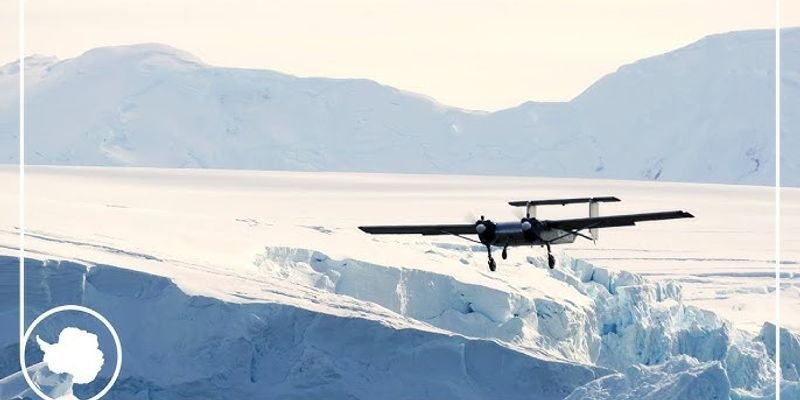

Open any live air traffic map and you’ll see a bustling web of flights connecting continents in real time. Look closer, you’ll notice plenty of planes skimming the Arctic Circle. But glance southward and you’ll spot something peculiar: a total blank over Antarctica. No flight paths, no aircraft, no activity. For a continent twice the size of Australia, that’s a little strange, isn’t it?
The reasons are more complex — and fascinating — than you might expect. This is a story of tragic history, harsh science, aviation engineering, and polar peril.
A fatal flight that changed everything
In the 1970s, Air New Zealand launched sightseeing flights over Antarctica. These weren’t just for adventure — they were commercial tourist trips that flew over the ice sheet before returning the same day. The flights were popular, scenic, and operated with standard commercial aircraft.
But on 28 November 1979, flight TE901 crashed into Mount Erebus, a volcano in Antarctica, killing all 257 people on board. The crash was the result of a navigational error and whiteout weather conditions. Crucially, the crew wasn’t adequately trained for polar flying, and the data fed into the navigation system was incorrect by just 2 degrees — a tiny error with devastating consequences.
This disaster was a wake-up call for aviation authorities across the world. Polar routes were deemed high-risk and regulations were tightened severely.
Antarctica: Beautiful but brutal
Flying over Antarctica presents several inherent dangers. Unlike the Arctic, which has emergency airfields in places like Alaska or Greenland, Antarctica has no full-scale diversion airports. The closest usable airport is Ushuaia International in Argentina, about 4,000 km from the South Pole. In aviation terms, that’s an eternity.
Emergency landings are virtually impossible due to:
- No suitable runways
- Mountainous, icy terrain
- Extreme sub-zero temperatures
- Whiteouts and zero visibility conditions
In the event of a technical failure, engine fire, or medical emergency, there’s quite literally nowhere to go.
The FAA’s polar playbook
After multiple incidents and close calls, the Federal Aviation Administration (FAA) introduced strict rules for polar operations in 2001. These include:
- Special cold-weather gear for crew (anti-exposure suits)
- Continuous fuel temperature monitoring
- Mandatory FAA-approved diversion plans
- Manual navigational procedures using “true north,” not magnetic north
And therein lies another problem: Antarctica’s magnetic field is unstable. The magnetic South Pole shifts by miles each year, distorting compass readings and confusing autopilot systems. This affects runway headings, flight paths, and general orientation — a problem pilots simply don’t face in more stable regions.
To navigate here, pilots must manually align to true north using astronomical data or gyrocompasses, which adds complexity to already difficult flights.
Twin-engine tech and ETOPS limitations
Modern commercial jets like the Boeing 737 or Airbus A320 operate under what’s known as ETOPS — Extended-range Twin-engine Operational Performance Standards. ETOPS determines how far an aircraft can fly from an emergency airport in case one engine fails.
- Pre-1985: ETOPS-60 — within 1 hour of diversion airport
- Today: Most long-haul jets have ETOPS-180 to ETOPS-370, allowing up to 6 hours of flight away from an alternate runway.
But Antarctica is so remote, even the highest ETOPS ratings can’t safely cover it. The lack of nearby airports means any technical issue becomes a high-stakes gamble.
So why can we fly over the North Pole?
Flights between cities like New York and Hong Kong or Dubai and Los Angeles routinely cross the Arctic. Why? Because despite the polar chill, there are fallback options: Alaska, Canada, Scandinavia, and Russia all offer nearby airports for emergency landings.
Plus, the Northern Hemisphere contains 90% of the global population, making it a natural hub for flight routes.
Does any flight touch Antarctica?
Yes, but rarely. Some long-haul routes — such as Sydney to Johannesburg or Santiago to Auckland — skim the Antarctic edge and occasionally cross small portions of its airspace, depending on jet streams and winds. However, no major commercial flight directly traverses the South Pole.
Technically, it’s possible with advanced aircraft, specially trained crews, and emergency planning. But from a risk-reward perspective, it’s simply not worth it.
Final descent
The mystery of Antarctica’s empty skies isn’t about conspiracy or international secrets. It’s about physics, logistics, and tragedy. Between the crash of TE901, hostile weather, no emergency landing options, and navigation nightmares, Antarctica remains one of the last untouched zones in global aviation.
It’s a poetic irony: a continent of endless daylight for half the year, where no planes dare to fly.
