



“Forecast storage utilization over the next 90 days for enterprise customers with hybrid cloud workloads, based on seasonal demand, workload type, and recent spike in AI usage.”
“What happens if 30% of high-performance array demand shifts from North America to India due to hyperscaler build-outs?”
These are the kinds of questions enterprises increasingly need to answer in real time. But traditional forecasting tools—and even general-purpose LLMs—fall short. They require manual tuning, can’t reason over multivariate and categorical metadata, and are incapable of simulating complex “what-if” scenarios.
Through NetApp Excellerator Cohort 14, Synthefy is working with NetApp to enable context-aware, multi-modal forecasting across key business and operational units—transforming how forecasts drive decisions across infrastructure, supply chain, sales, and finance.
The problem: One-dimensional forecasting in a multi-dimensional world
NetApp generates telemetry from infrastructure systems and business operations at global scale. But conventional time series models typically rely on narrow historical patterns—ignoring workload type, product metadata, macroeconomic signals, and shifting market dynamics. The result: siloed models, limited accuracy, and no ability to explore what-if questions.
This gap affects multiple units:
- Infrastructure teams lack predictive tools for performance and capacity planning.
- Supply chain teams can’t simulate demand shifts by geography or customer segment.
- Sales and finance teams struggle to adjust forecasts based on real-time pipeline signals or economic context.
The solution: Multi-modal forecasting for enterprise contexts
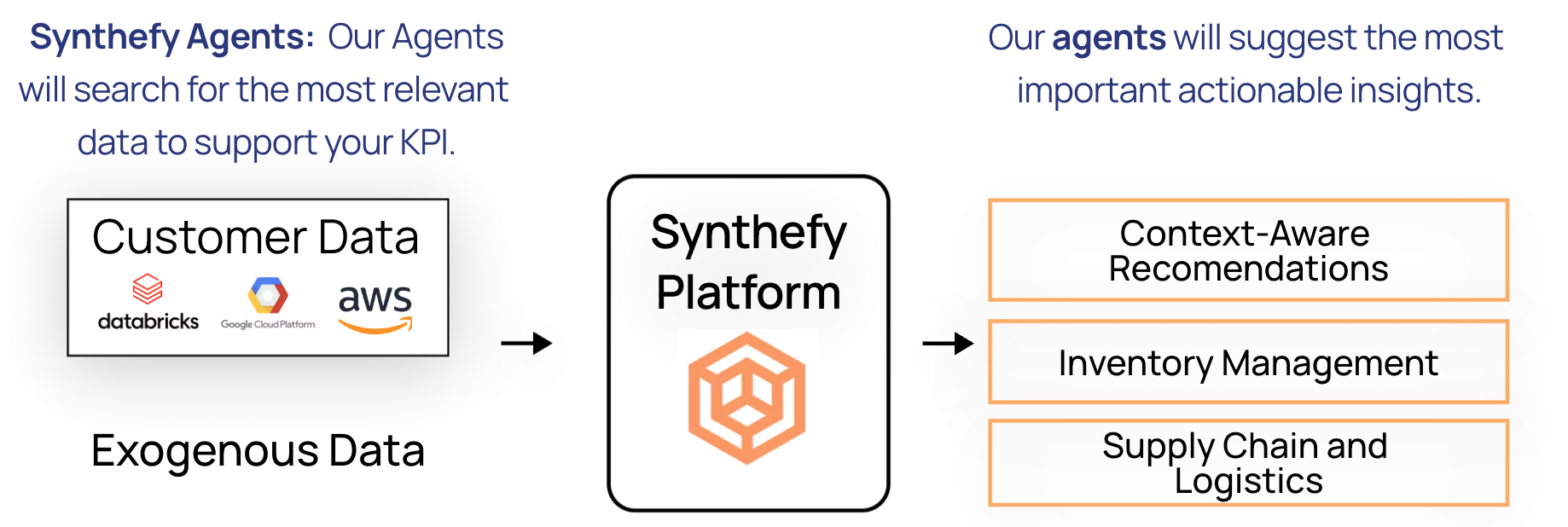
Figure 2: Our platform can be deployed in the cloud or locally for privacy-preserving training and inference. The same model can be used to build multiple applications in time series.
Synthefy’s foundation model brings multi-modal reasoning to time series forecasting. It ingests not just raw time series but structured and unstructured metadata—system logs, deployment specs, product hierarchy, geo-labels, sales pipeline stages, macroeconomic indicators.
With NetApp, this enables:
- Infrastructure forecasting: Predict IOPS, latency, and congestion using workload types, storage tier metadata, and past usage patterns.
- Supply chain and demand forecasting: Simulate demand fluctuations by region or channel. For example:
- “How will Q4 component orders shift if demand for all-flash arrays rises 20% in Asia Pacific?”
- Sales pipeline forecasting: Forecast bookings based on pipeline stage, product type, sales cycle velocity, and territory coverage.
- Revenue forecasting: Model revenue impact of late-stage deal slip, changing FX rates, or macroeconomic triggers by aligning real-time signals with historical outcomes.
- What-if simulation across units: Enable scenario-based planning:
- “What happens to quarterly revenue if deal conversion in EMEA drops 15%?”
- “How does NAND pricing volatility affect margin forecast for H2?”
Why it matters
This unified, context-aware forecasting capability drives value across the company:
- Fewer manual models: A single foundation model can power use cases across ops, sales, and finance—reducing tooling and engineering burden. Anyone in the company can build an application.
- Faster, more reliable forecasts: Teams can run scenario analyses and planning forecasts with natural-language prompts and structured inputs.
- Better cross-functional planning: From infrastructure to sales, business units can now simulate and align around shared planning scenarios.
Looking ahead
NetApp and Synthefy are working together to move beyond static forecasting into dynamic, scenario-driven intelligence—while maintaining strict adherence to NetApp’s data governance standards. All forecasting models are developed in compliance with NetApp’s by-design principles for protecting customer data, including Personally Identifiable Information (PII) and Confidential or Critical Information (CII). No sensitive customer data is shared during this collaboration, and all modeling is performed under NetApp’s secure data environments.
Whether it’s forecasting congestion on a hybrid cloud deployment, planning for global supply chain shifts, or projecting revenue risk under market uncertainty—this collaboration enables more accurate, flexible, and actionable forecasts without compromising data privacy.
Answering “what happened?” is table stakes. With multi-modal forecasting, NetApp is answering “what’s next?”—and more importantly, “what if?”—all while upholding enterprise-grade privacy and compliance.
