

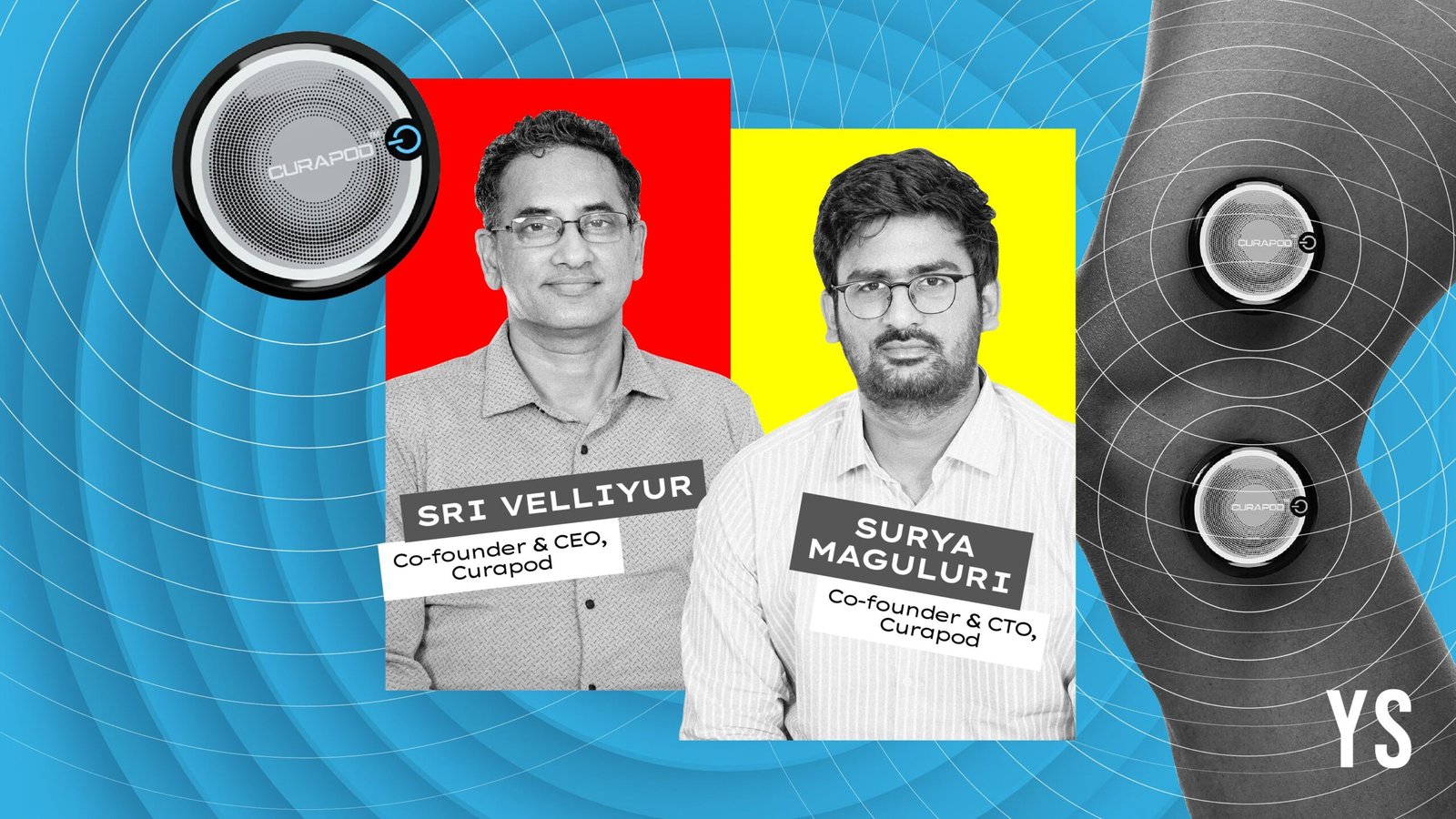

India’s healthcare system has made commendable progress in managing acute diseases. Yet, management of chronic musculoskeletal pain—impacting nearly 19.3% of the population—remains largely underserved. Most patients still rely on long-term painkillers, steroid injections, or expensive physiotherapy sessions. These approaches, while prevalent, come with known risks: side effects, high recurring costs, and the potential for dependency.
Challenging this status quo is Curapod, a non-invasive, wearable device developed by Litemed, leveraging photobiomodulation therapy to provide targeted relief.
The technology uses specific wavelengths of light to stimulate cellular repair and reduce inflammation, bringing a hospital-grade intervention into the user’s home, without a long-term, systemic impact.
The personal story behind the innovation
Sriram (Sri) Velliyur, an electrical engineer with two decades of leadership experience, has held leadership positions at IBM, Ford, UnitedHealthcare, the United Nations, and NYU Langone Medical Center in the United States, where he first started to delve into pain management systems.
During his tenure at NYU Langone (2017–2019), where he helped lead a major hospital merger, he gained deep exposure to the systemic limitations of chronic pain care. “I had access to every layer of the system from nurse stations to the CMO’s desk, and what stood out was how consistently chronic pain was being managed with the same old playbook: pills and procedures,” he recalls. “Rarely was there time, space, or incentive to ask whether this was the best path forward for the patient.”
The issue became personal when a close college friend suffered a severe back injury and developed a dependency on painkillers. “Watching her deteriorate—not just physically, but mentally, because of the medications was painful. It was the kind of helplessness that lingers,” says Velliyur. “That was the moment I knew I had to build something different. Something that doesn’t numb the pain but treats its cause, and does it safely.”
Around the same time, Dr Surya Maguluri, a pharmacist, was drawing similar conclusions about the prevailing dependence on lifelong pharmacological treatments. His motivation was shaped by mentorship from his uncle, who encouraged him to look beyond conventional career paths and build with purpose.
<figure class="image embed" contenteditable="false" data-id="576749" data-url="https://images.yourstory.com/cs/2/6c7d986093a511ec98ee9fbd8fa414a8/curapod-1752235546842.png" data-alt="Curapod " data-caption="
Curapod – Non Invasive Pain Management Device
” style=”float: right; margin-left: 20px; width:50%; height:auto”> Curapod – Non Invasive Pain Management Device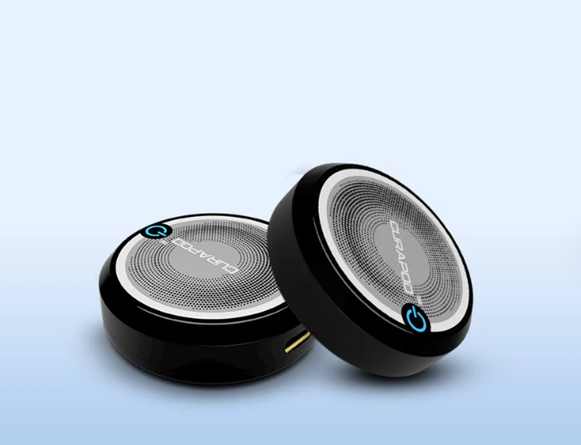
“We’re not healing people, we’re managing one illness by triggering another. I wanted to create non-invasive therapeutics that were clinically safe, long-term usable, and made patients’ lives better,” recalls Maguluri.
The two met through shared professional networks in 2022 and partnered to realise their shared mission after returning to India that year. Sri brought expertise in systems, engineering, and operations, while Surya contributed clinical depth, optical science, and a research-first mindset.
Together, they founded Litemed with a clear mission: to miniaturise clinical-grade therapeutic technology into safe, medically rigorous, and user-friendly home-use devices.
“We didn’t want to build another wellness gadget. We wanted to engineer a therapeutic device that could stand up to clinical scrutiny. Something that was accessible enough for home use, but rigorous enough to be trusted by doctors,” he says.
The making of Curapod
Initially exploring non-invasive blood sugar monitoring, the duo pivoted due to COVID-19 and refocused on chronic pain solutions, leading to the development of Curapod. Their most significant breakthrough came with enhancing the penetration depth of therapeutic light from 5mm to 60mm, a 12x improvement, enabling effective treatment of deeper tissues, joints, and tendons that conventional devices couldn’t reach.
<figure class="image embed" contenteditable="false" data-id="576750" data-url="https://images.yourstory.com/cs/2/6c7d986093a511ec98ee9fbd8fa414a8/curapod-advanced-laser-light-technology-1752235855099.jpg" data-alt="Curapod" data-caption="
Curapod -laser-light-technology
” style=”float: left; margin-right: 20px; width:50%; height:auto” align=”center”> Curapod -laser-light-technology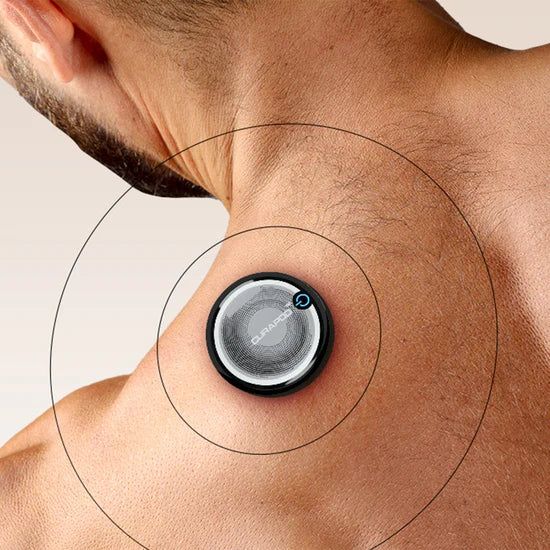
Launched in 2024, Curapod is a compact, USB-rechargeable device delivering precise light pulses. Each kit includes two devices, straps, adhesive stickers, and a charger, designed for up to 1,000 uses, making it viable for long-term, multi-condition treatment. “This wasn’t about launching a consumer gadget. It was about engineering a platform with real medical depth—both literally and metaphorically,” says Velliyur.
Validation through science
Bringing credibility to a new therapeutic approach was essential. Curapod underwent rigorous double-blind, randomised, placebo-controlled multicenter clinical trials, with results showing 50–60% pain relief in a single 30-minute session for conditions such as arthritis, sciatica, frozen shoulder, and tendonitis.
Field-level validation followed, with over 100 community treatment camps conducted and more than 3,000 patients treated. Among them were athletes from the Sports Authority of India, who experienced faster recovery cycles. Despite initial scepticism from some clinicians, the data began to speak for itself.
Curapod is medically certified in India and approved by the CDSCO as a Class B medical device.
“We decided early on that validation had to come from outcomes, not endorsements. We didn’t pay doctors or influencers. We let the results speak for themselves,” Velliyur notes.
Maguluri claims that the team prioritised safety from the outset, first validating the biological safety of the device’s light emission before initiating any animal studies. “With safety established, it followed a structured research path—starting with in vitro (cell culture) studies, advancing to animal testing, and finally conducting human clinical trials to confirm both safety and effectiveness,” he explains.
This integrity-first approach led to over 300 orthopaedic and rheumatology specialists, primarily from Hyderabad, Bangalore, and Tier II cities like Vijayawada, prescribing the device. So far, this has resulted in 8,000 prescriptions and about 15,000 units sold, establishing an early trust network within the medical community.
Making relief accessible
The device was designed with everyday usability in mind. For most conditions, the protocol is straightforward: apply the device to the pain point for 30 minutes, twice a day, over a 7–14 day period, depending on severity.
For those with recurring or chronic conditions such as plantar fasciitis, arthritis, or lower back pain, the device provides a non-pharmaceutical, reusable alternative, removing the need for clinic visits or medication refills.
“For someone in their 60s or 70s, even going to the clinic can be physically demanding. We wanted a solution so simple, they could use it while watching TV or reading the paper,” Velliyur explains.
The simplicity of use, along with visible results, has led to high patient compliance and strong word-of-mouth referrals, especially among older adults, sedentary workers, and fitness-conscious users. Priced at Rs 9,000 (typically available for Rs 7,650 with discounts), it offers a cost-effective alternative to repeated physiotherapy or long-term medications.
From soft launch to growth trajectory
Curapod had a soft launch in October 2024, initially generating modest revenue of Rs 4 lakh per month. Over the past year and a half, however, monthly revenue has grown steadily to Rs 70 lakh, with Rs 2.5 crore earned over the last four months. By July 2025, the startup expects to cross Rs 1 crore per month, and targets a Rs 2 crore monthly run rate by December.
The initial focus was on direct-to-consumer (D2C) sales through Litemed’s online platform, supported by digital campaigns, clinical engagement, and educational events. The team has organised over 300 medical conferences and awareness drives, deliberately avoiding online marketplaces in the early stage to retain control over education and brand positioning.
“We stayed off Amazon and Flipkart to ensure users understood what the product does before buying. Now, with strong traction and search demand—almost 2.5 lakh monthly searches for pain relief on Amazon—we’re ready for broader exposure,” he says.
Launches on major ecommerce platforms are slated for August 2025, and backend systems and supply chain capacity are subsequently being scaled in parallel to meet the projected demand surge.
.thumbnailWrapper{
width:6.62rem !important;
}
.alsoReadTitleImage{
min-width: 81px !important;
min-height: 81px !important;
}
.alsoReadMainTitleText{
font-size: 14px !important;
line-height: 20px !important;
}
.alsoReadHeadText{
font-size: 24px !important;
line-height: 20px !important;
}
}

Funding, team, and manufacturing backbone
Litemed is backed by angel and institutional investors, including two international strategic players, one in industrial automation and another from the global healthcare ecosystem. Their involvement brings not just capital but also access to certification pathways, manufacturing capabilities, and international distribution channels.
“We’re not a bootstrapped garage project. We’ve raised capital strategically to build a robust, global-grade business. Our investors believe in the long game,” Velliyur emphasises.
The current team stands at 16 members, spanning R&D, operations, manufacturing, marketing, and clinician outreach. As the startup scales, it is expanding manufacturing capacity and building out supply operations to support domestic and international demand. FDA registration is expected by February 2026, which will enable Curapod’s formal entry into US and European markets. Discussions with European distributors are already underway.
Although the startup claims to have no direct competitors, there are players with similar features, such as UltraCare PRO, ReLiva Physiotherapy, and Nivaran Pain Relief Device (Biowave), among others. “What makes us stand out is that it’s not just another pain patch or wearable gadget. It’s a clinically-informed, non-invasive phototherapy platform designed to enhance microcirculation and cellular function, helping manage chronic conditions at the root, not just masking symptoms,” Velliyur explains.
Looking ahead
The Indian pain management drugs market, valued at $2.66 billion in 2024, is projected to reach $4.07 billion by 2033, with a CAGR of 4.47%, according to IMARC.
To fulfil this pain management demand, Curapod is also developing a portfolio of wearable, home-use devices targeting other underserved chronic conditions. “We believe that many issues currently treated with medication or invasive therapies could benefit from evidence-based, non-invasive alternatives,” Velliyur says.
By the end of this year, Litemed plans to launch devices for menstrual pain relief and PCOS management. In 2025, new product lines will address diabetic neuropathy, migraines, and erectile dysfunction, all based on the same therapeutic foundation of photobiomodulation and microcirculation enhancement.
“Our pipeline is built on one core belief: that biology-first, non-invasive care should be as accessible as a pill, but without the downsides. Pain, hormonal imbalances, even metabolic issues; there’s a better way to treat them than just prescriptions,” he concludes.
The company is also undertaking parallel R&D efforts to explore pre-menopause support and alternative light therapies for chronic metabolic disorders. In addition to individual users, Litemed is also eyeing B2B channels, including corporate wellness programmes, sports rehab facilities, and digital health platforms.
Edited by Jyoti Narayan
