


India’s beauty and wellness sector continues to expand, fuelled by rising urban incomes, shifting beauty norms, and increased consumer spending on personal grooming. Yet, this growth conceals significant inefficiencies, particularly in the mid-tier and neighbourhood salon segments.
Despite forming the backbone of the industry, these establishments remain largely unorganised and digitally underserved. For most, walk-ins, phone calls, or WhatsApp messages are still the dominant modes of operation, often resulting in unpredictability around service quality, price opacity, and extended wait times.
Launched in early 2025, Style Lounge was built to address these structural inefficiencies through a digital-first approach. The platform operates via a dual-app model—one designed for consumers and another for salon partners.
In just three months of operations, the app has surpassed 25,000 downloads on both Android and iOS, with over 14,000 active users and 1,000 salons onboarded across the Delhi NCR region. These salons were mapped from a total base of 2,800 establishments, a significant proportion of which remain independent, under-digitised, or unlisted.
The consumer app allows users to search for nearby salons, browse services, choose specific stylists, make partial advance payments (typically 5–10%), and confirm appointments. Each booking is secured via a one-time password (OTP), helping avoid fraud and scheduling errors. Notably, Style Lounge enforces a time-respect policy—if a customer is made to wait 5–10 minutes beyond the scheduled time, the platform offers full compensation for the service.
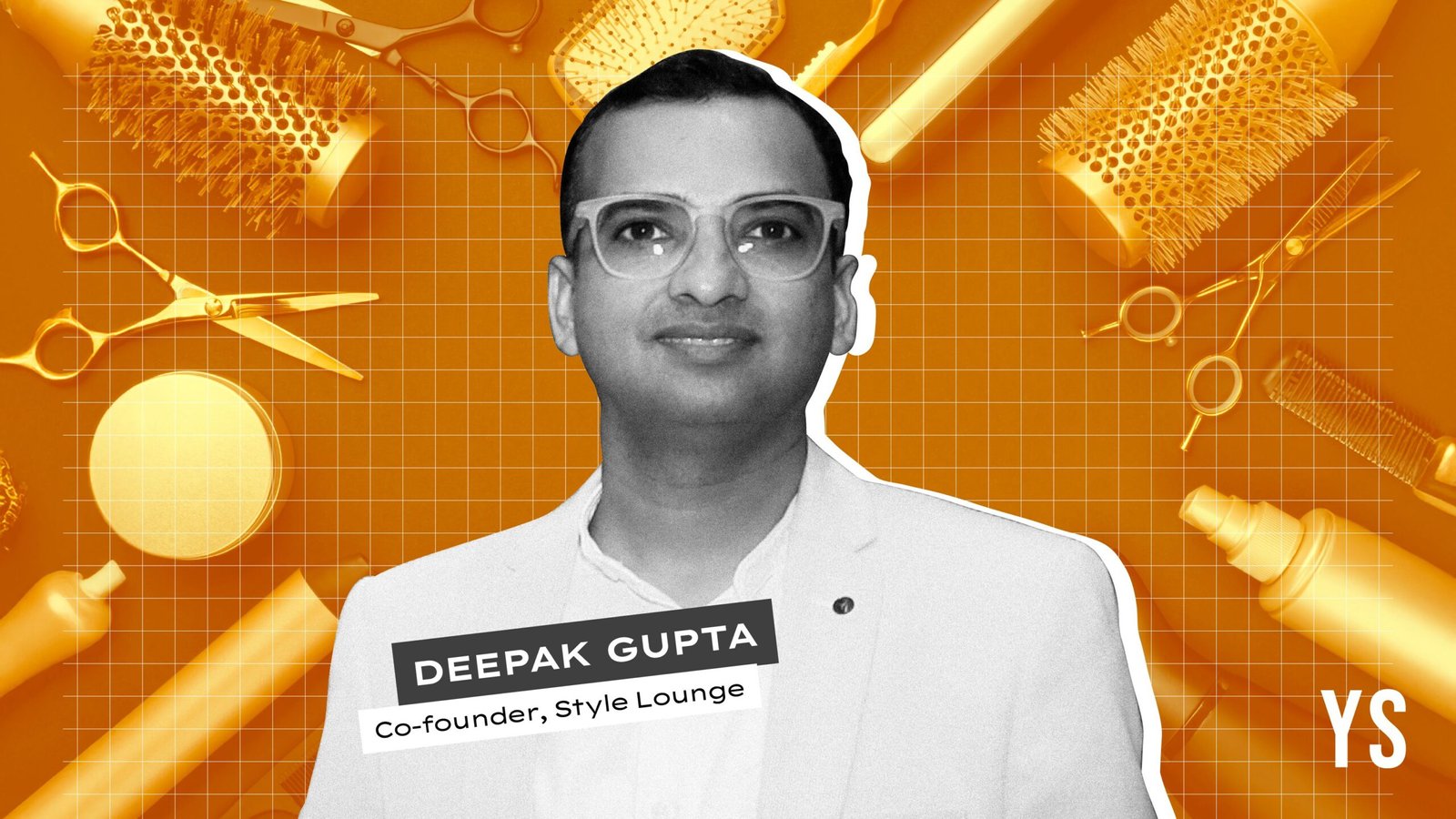
“We took a simple but powerful stand—respect the customer’s time,” says Deepak Gupta, co-founder, Style Lounge.
“Salons often don’t operate on punctuality, and there’s no redressal if a service goes poorly. We wanted to formalise both accountability and user expectations.”
From deep-tech to consumer-centric solutions
Gupta brings over 28 years of experience in the tech industry, including 18 years working with semiconductor majors and 5 years at Cadence Design Systems, where he led initiatives in automation architecture, validation frameworks, and AI-driven chip design tools. His client base included global hardware giants like Apple and NVIDIA.
“Much of what I did was foundational but invisible—chip design tools that power everything from phones to servers, yet most users will never see or touch them,” Gupta explains. “After nearly three decades, I wanted to solve problems that were tangible, everyday, and widely relatable. The salon ecosystem stood out because of its informality, fragmentation, and high relevance to urban consumers.”
Gupta founded Style Lounge as a bootstrapped initiative in his 40s, following early-stage consultancy engagements in the service sector. “I didn’t want to start with capital. I wanted to start with conviction and clarity of use case. Once we understood the behaviour and inertia in the salon space, we began building workflows to match that reality—not disrupt it overnight.”
Only a minority—approximately 5–7% of the population—actively use premium or branded beauty services, while the overwhelming majority of Indian consumers still depend on local, informal salons for their grooming needs, according to a Redseer report. This imbalance points toward a significant market opportunity for platforms that can offer structure, transparency, and standardisation to an otherwise fragmented ecosystem.
AI-led consultations
Style Lounge’s user experience is its AI-powered consultation engine, which allows users to upload selfies and receive diagnostic insights on issues like pigmentation, dryness, and uneven tone. These insights are used to recommend salon services, ayurvedic home remedies, and neutral product suggestions tailored to the user’s skin profile.
Rather than building the AI model from scratch, Style Lounge partnered with a global dermatology-backed solution provider. The model was trained on over 100 Indian datasets and went through an 8-month localisation and validation phase, including collaboration with dermatologists in Delhi NCR. The platform claims a diagnostic accuracy of over 90%, focused on matching treatment recommendations with real-world results.
“We chose not to use AI as a gimmick,” Gupta says. “Many platforms deploy it to push product bundles or upsell treatments. We’ve stayed product-agnostic—our aim is not to sell, but to inform. The model evolves through continuous user feedback, and we actively monitor whether users are seeing the intended outcomes like reduced dryness or improved glow.”
Monetisation, pricing, and salon-side analytics
Style Lounge earns revenue through four primary streams: a 10–15% commission on every appointment, service credits from salons (such as 3 complimentary haircuts and 3 eyebrow services per month), sponsored listings for visibility, and an upcoming in-app advertising model targeting beauty brands.
The platform has also introduced a dual-discount model to drive consumer value and improve salon utilisation. For example, a service priced at Rs 1,000 may receive a 20% weekday discount from the salon, plus a 10–15% additional discount from Style Lounge, reducing the final cost to Rs 640–Rs 720. High-value services like balayage, which typically cost Rs 7,000, are available for as low as Rs 3,000 during off-peak periods like Wednesdays and Thursdays.
“We’ve studied pricing dynamics in other industries like aviation and hospitality,” Gupta adds. “We brought similar logic to beauty services—slot-level data, yield-driven pricing, and micro-incentives to fill underbooked hours. Salons typically spend Rs 40,000–Rs 50,000 per month on social media marketing with unpredictable ROI. Our platform gives them both demand and data.”
.thumbnailWrapper{
width:6.62rem !important;
}
.alsoReadTitleImage{
min-width: 81px !important;
min-height: 81px !important;
}
.alsoReadMainTitleText{
font-size: 14px !important;
line-height: 20px !important;
}
.alsoReadHeadText{
font-size: 24px !important;
line-height: 20px !important;
}
}

Adoption roadblocks
Convincing salons to join the platform was far from easy. In the early stages, only two out of every ten salons that were approached agreed to sign up. One major barrier was the lack of decision-making power on-site—owners were rarely present, and managers lacked the authority to commit. Additionally, many salon owners were disillusioned by past experiences with lead-generation apps that delivered little value.
“It was a classic trust-building problem,” Gupta reflects. “They’d been promised footfall but got none. We had to let the product speak through real results. And we started with the mid and upper-mid-tier salons—places that had infrastructure but no digital tools or structured feedback loops.”
Over time, as customer traction increased, previously hesitant salons came on board. The startup now has over 1,000 active salons on the platform, covering approximately 35% of all mapped salons in Delhi NCR. Internal audits show that around 30% of these outperform larger salon chains in service quality, based on user feedback and on-ground service assessments.
Style Lounge currently has a 17-member full-time team, focused on customer service, salon onboarding, and field training. Technology development and digital marketing remain outsourced, in part due to the need for domain-specific expertise. One operational challenge has been navigating low digital literacy across many partner salons.
“In several cases, salon owners insisted on controlling the partner app themselves—concerned that employees might misuse it,” says Gupta. “We had to redesign workflows that respected this control preference while still enabling real-time bookings, feedback logging, and staff scheduling. Training modules had to be customised for different comfort levels.”
Looking forward
The Indian beauty tech market is projected to generate a revenue of $6,747.1 million by 2030, with a CAGR of 22.8% from 2025 to 2030, according to Horizon Grand View.
Style Lounge plans to expand geographically over the next six months, with a focus on southern metros such as Bangalore, Hyderabad, and Chennai—regions with a high density of mid-tier salons and rising digital adoption.
The startup is also experimenting with event-driven grooming pods—temporary setups at weddings, corporate events, and exhibitions that provide express grooming services like light makeup or blow-dries for guests.
“This is where we see a real-world blend of tech and service,” Gupta says. “Digital scheduling drives offline convenience—whether in salons or at pop-up pods. We’re not trying to become a super app. We’re solving for repeatable, localised problems in a high-frequency industry.”
The startup competes with players including Stylup and EvoGroom. “While most platforms focus on branded salons or home services, often pushing products and reducing stylists to commodities, we chose a different path. Style Lounge empowers mid-tier neighbourhood salons with AI-driven consultations, real-time bookings, and built-in accountability. Our goal isn’t to replace salons, but to enhance discovery, trust, and service quality in a long-overlooked segment,” he concludes.
Edited by Jyoti Narayan
