

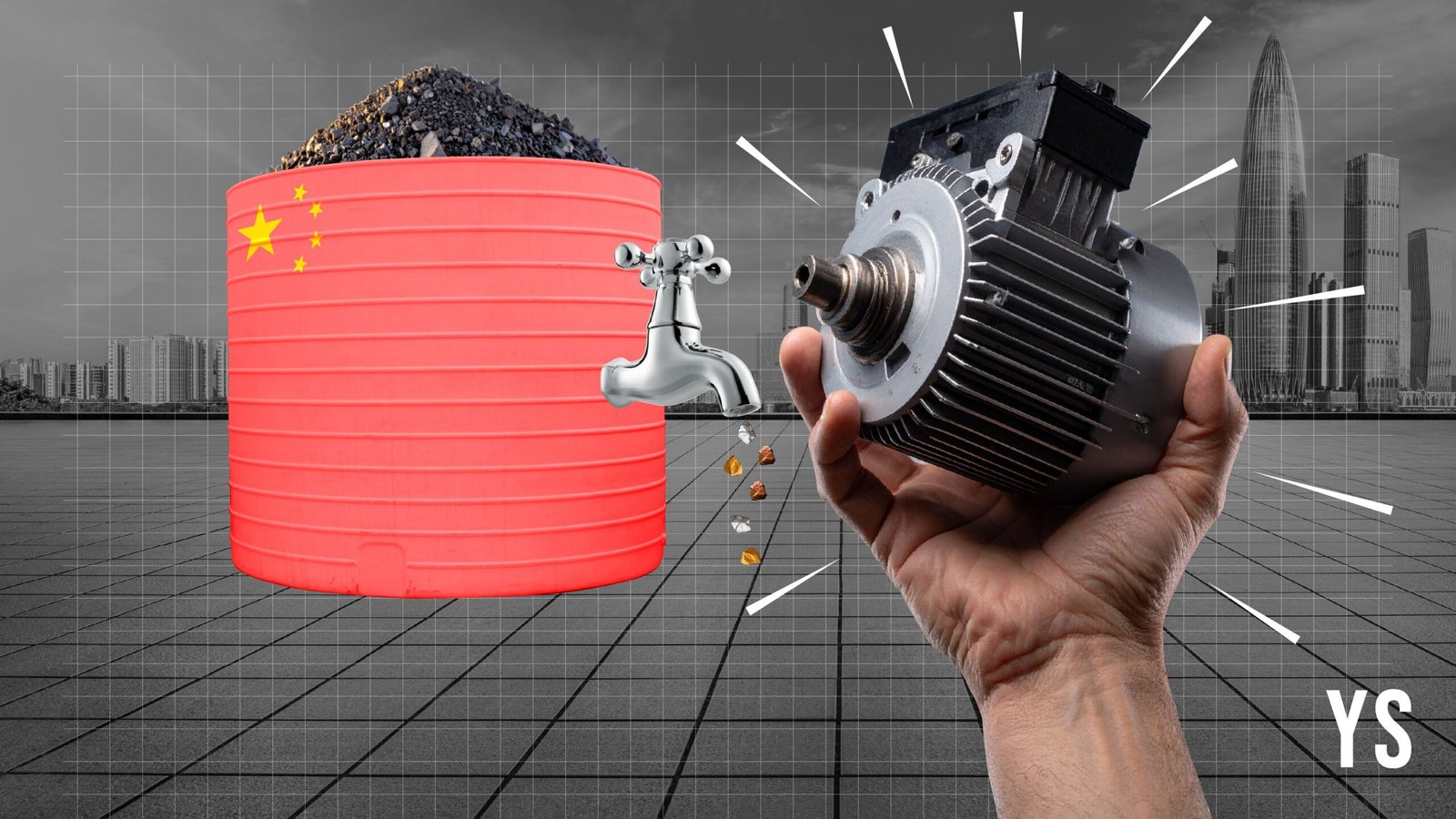

In a report, the State Bank of India has noted that India’s rare earth magnet (made from alloys of rare earth minerals) imports increased sharply in FY25, touching $291 million as opposed to an annual average of $249 million over the last four years.
In a report titled ‘China’s ban on Rare Earth and Permanent Magnets: Implications for India’, the SBI noted that total imports of rare earth minerals and compounds have been around $33 million per year for the last four years. In FY25, these imports stood at $31.9 million.
The report also named the main sectors that are drastically affected by China’s export restrictions of these rare earth magnets: transport equipment, basic metals, machinery, construction, electrical, and electronics.
According to SBI, both domestic production and exports in these sectors will be impacted due to the ongoing supply bottleneck.
.thumbnailWrapper{
width:6.62rem !important;
}
.alsoReadTitleImage{
min-width: 81px !important;
min-height: 81px !important;
}
.alsoReadMainTitleText{
font-size: 14px !important;
line-height: 20px !important;
}
.alsoReadHeadText{
font-size: 24px !important;
line-height: 20px !important;
}
}
In an attempt to address this problem, the Indian government launched the National Critical Mineral Mission (NCMM) this year, allocating Rs 18,000 crore between 2025 and 2031 to establish self-reliance in the critical mineral sector.
The report also noted the important role state governments need to play in the domestic value chain creation. Many states have already issued notices inviting tenders (NIT) for the auction of exploration licences.
The ongoing rare earth magnet crisis has also thrown a wrench in the burgeoning electric vehicle industry in India, with major players like Bajaj Auto, TVS Motor, and Ather Energy reportedly eyeing production cuts, according to reports.
Many companies are experimenting with readily available ferrite magnets and rare-earth magnet free electric vehicle motors as alternative solutions.
Edited by Kanishk Singh
