

New-age EV makers Ola Electric and Ather Energy reported sharply contrasting Q1 performances, where the Bhavish Aggarwal-led company saw its sales plummet during the period, and Ather Energy saw demand for its vehicles surge on the back of its network expansion.
Ather, which reported results on Monday, saw its revenue from operations surge 1.8X during the three months ended June 30 to Rs 644.6 crore. Meanwhile, Ola Electric had reported a 50% slump in its quarterly revenue to Rs 828 crore.
Ola Electric’s decline in revenue can be traced to lower demand for its vehicles. According to the Vahan vehicle registry, Ola Electric sold 58,600 vehicles during the quarter—much lower than its previous year-ago sales, which stood at 108,412 units.
Meanwhile, Ather Energy has been expanding its network across the country—a move that has helped the company see an uptick in sales this year. The Tarun Mehta-led company sold 41,037 units in the first quarter compared to 16,515 units in the year-ago period. Additionally, the demand for its family scooter Rizta, which was launched in April last year, has historically driven the majority of its sales.
The slow sales have also weighed heavily on Ola Electric’s bottom-line numbers. Its consolidated Q1 net loss widened to Rs 428 crore compared to Rs 347 crore a year earlier.
At the same time, Ather Energy, despite an uptick in expenses, was able to marginally narrow its losses in the first quarter to Rs 178.2 crore compared to Rs 182.9 crore in Q1 FY25.
.thumbnailWrapper{
width:6.62rem !important;
}
.alsoReadTitleImage{
min-width: 81px !important;
min-height: 81px !important;
}
.alsoReadMainTitleText{
font-size: 14px !important;
line-height: 20px !important;
}
.alsoReadHeadText{
font-size: 24px !important;
line-height: 20px !important;
}
}
Ola’s cell manufacturing weighs heavily on balance sheet
While both companies sell multiple models and variants of electric scooters, one distinguishing factor between the two is how the two companies have approached cell technology.
Ola Electric has doubled down on vertical integration, pumping in cash to set up its own cell manufacturing plants.
Ather, on the other hand, have been vocal about not trying to set this up for a number of reasons, including thin profit margins of the business and significant investments.
Ola Electric’s gamble on setting up its own cells is yet to take off, with the business bleeding cash. In the first quarter, the cell segment generated just Rs 3 crore in revenue, but incurred an EBITDA loss of Rs 43 crore, with a whopping margin of -1,579%. Production volumes remain low—only 11,744 cells were produced during the quarter. However, these numbers are expected to pick up when the company rolls out these cells, which are expected to be included in its vehicles by Navratri.
The cell segment is one of Ola’s costliest bets. It has pledged an approximately Rs 2,800 crore capex plan to build its 5GWh gigafactory and has already invested Rs 1,500 crore, and expects the remaining investments to come in FY26. The company’s management maintains that the cell unit will turn free cash flow positive by FY27, but investors are likely to remain wary of ballooning losses in a capital-intensive segment that is yet to scale.
<figure class="image embed" contenteditable="false" data-id="578325" data-url="https://images.yourstory.com/cs/2/a09f22505c6411ea9c48a10bad99c62f/Imagebcho-1746105381445.jpg" data-alt="Ola ELectric Roadster" data-caption="
Ola Electric Roadster X motorcycles
” align=”center”> Ola Electric Roadster X motorcycles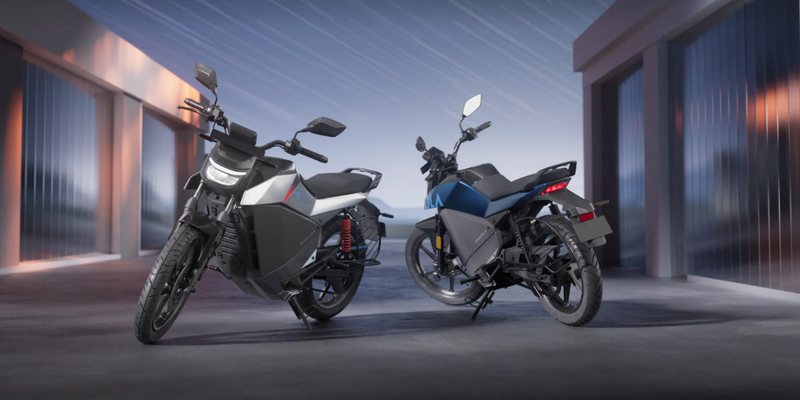
Magnet crisis: Ola eyes upside, Ather risks a tumble
During recent months, the Indian automotive industry has sparked fears of production slowdowns and other supply chain interruptions after China’s export restrictions triggered a supply chain bottleneck for rare earth magnets.
Companies like Bajaj Auto, TVS Motor, and Ather Energy have hinted at possible interruptions to their production in the upcoming months due to the ongoing crisis.
During Ather’s post-earnings call, CEO Tarun Mehta said that the company sees the rare earth magnet crisis leading to possible delays of up to one week in supplying vehicles to its dealers in the second quarter. However, the company said it sees the impact of the crisis restricted to the second quarter.
Meanwhile, Ola Electric has maintained silence on the issue and with good reason. The company, during its post-earnings call in July, said it had set up unique solutions to address the ongoing crisis.
According to Bhavish Aggarwal, the company’s dual strategy of managing through alternate suppliers for magnets is expected to help it steer away from production interruption.
Moreover, Ola Electric is also developing a rare-earth magnet-free motor, which is expected to be delivered to customers in the next quarter. “We’ve been working on these technologies for the last year or two,” Aggarwal told analysts.
Edited by Jyoti Narayan
