

Launched in 2014, PhotoSparks is a weekly feature from YourStory, with photographs that celebrate the spirit of creativity and innovation. In the earlier 895 posts, we featured an art festival, cartoon gallery. world music festival, telecom expo, millets fair, climate change expo, wildlife conference, startup festival, Diwali rangoli, and jazz festival.
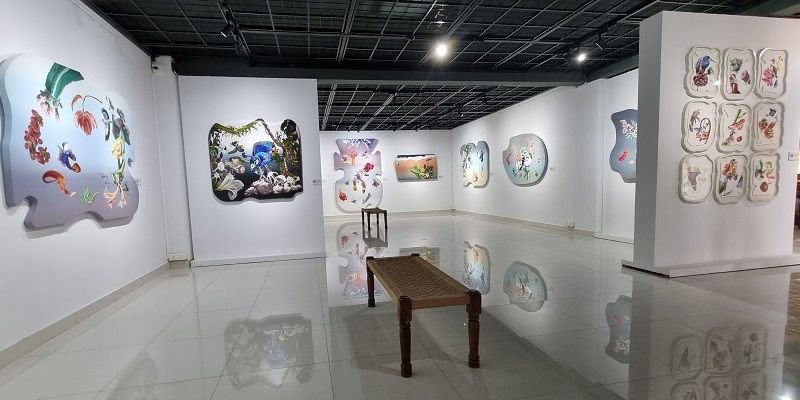
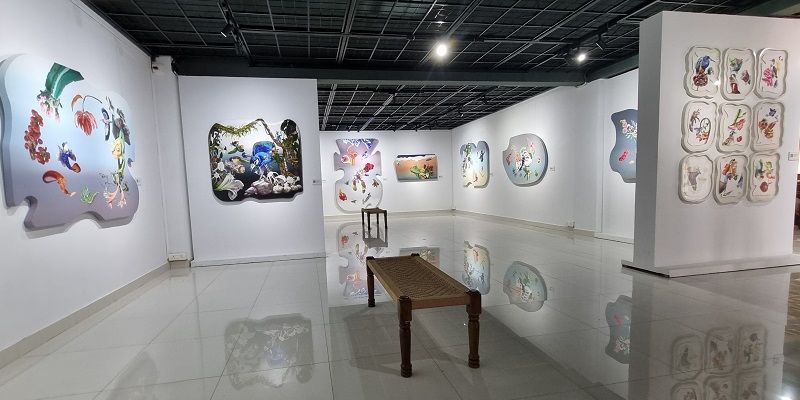
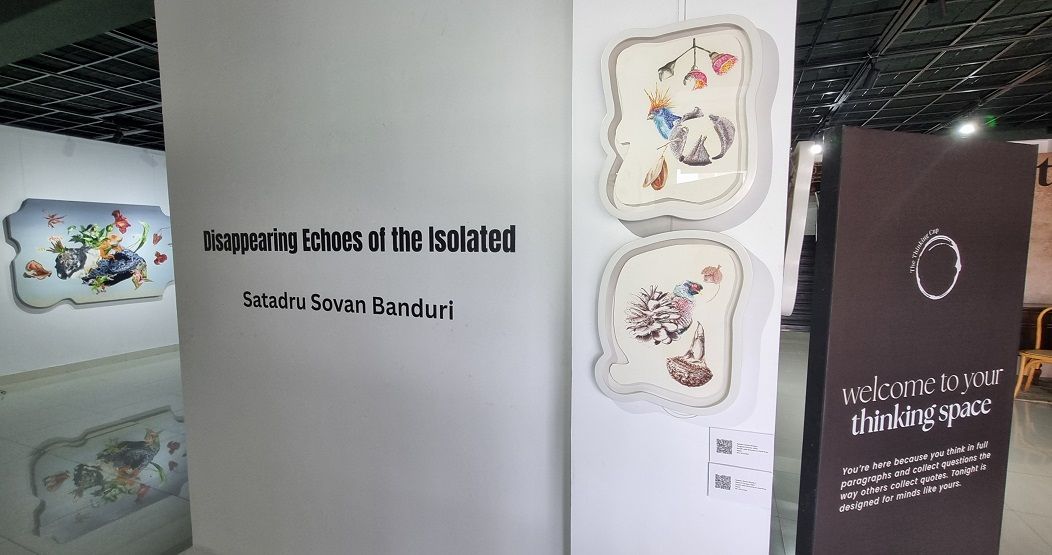
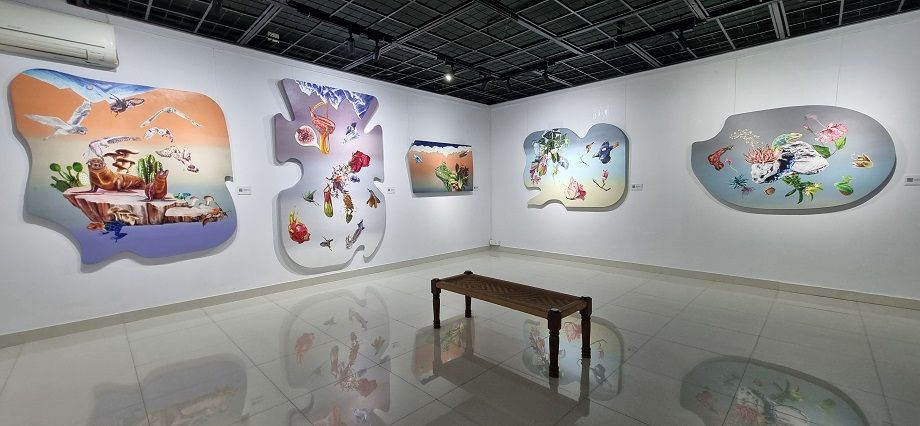
Kalakriti Art Gallery in Hyderabad is a popular destination for art lovers and those seeking a different kind of creative boost. It is currently hosting two contrasting exhibitions titled Disappearing Echoes of the Isolated and Eternal Lotus.
The first exhibition features surrealism art by Satadru Sovan Banduri, while the second exhibition is on the traditional pichwai style from Rajasthan. See our coverage of earlier exhibitions at Kalakriti from 2018 onwards here.
.thumbnailWrapper{
width:6.62rem !important;
}
.alsoReadTitleImage{
min-width: 81px !important;
min-height: 81px !important;
}
.alsoReadMainTitleText{
font-size: 14px !important;
line-height: 20px !important;
}
.alsoReadHeadText{
font-size: 24px !important;
line-height: 20px !important;
}
}

Banduri is a multi-disciplinary artist who specialises in canvas art, digital art, and installations. He is a recipient of the prestigious Fulbright Scholarship. His areas of interest include social activism and participatory culture.
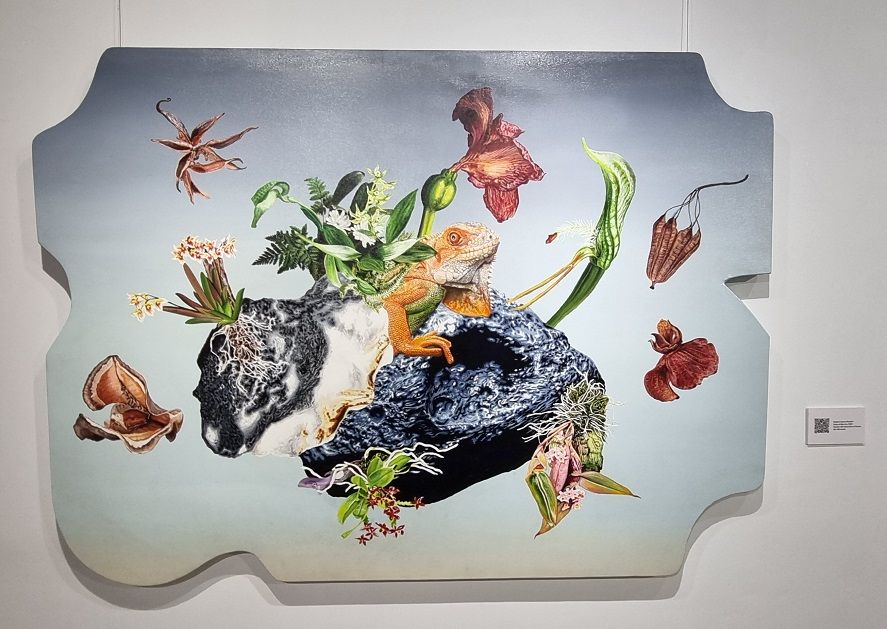
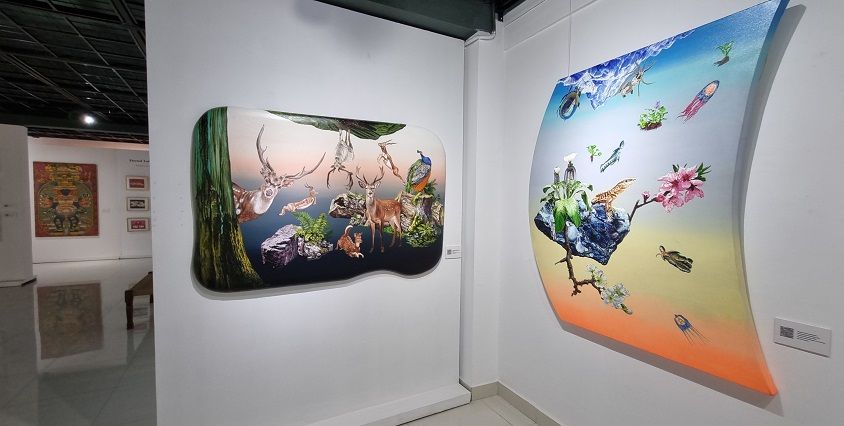
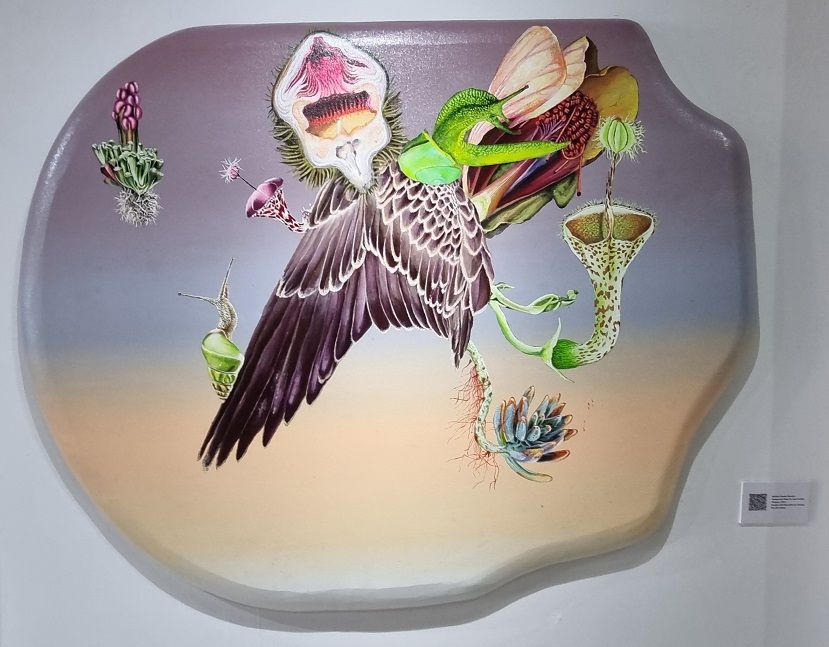
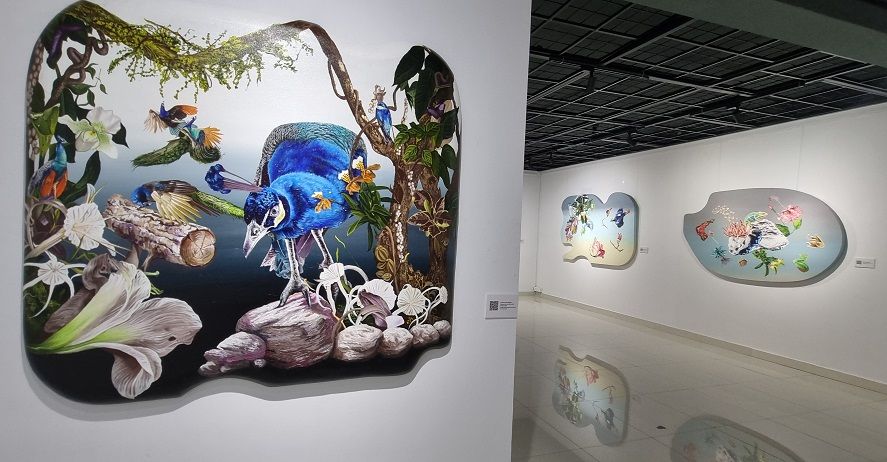
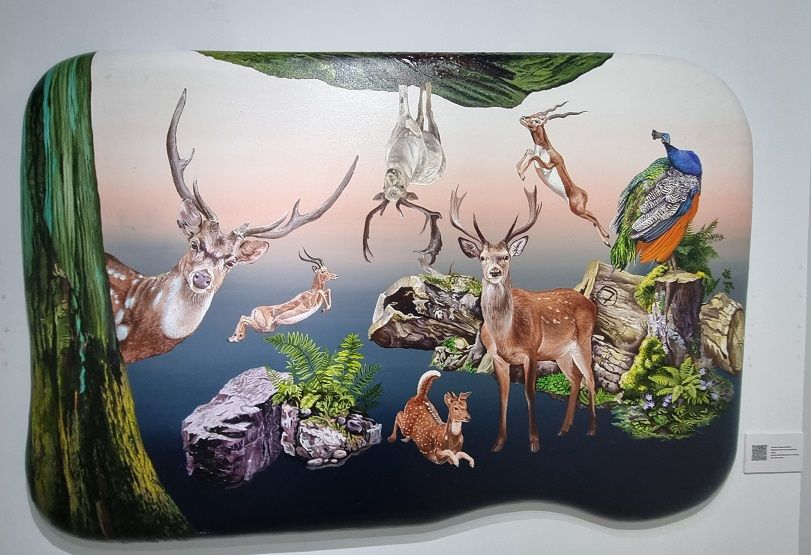
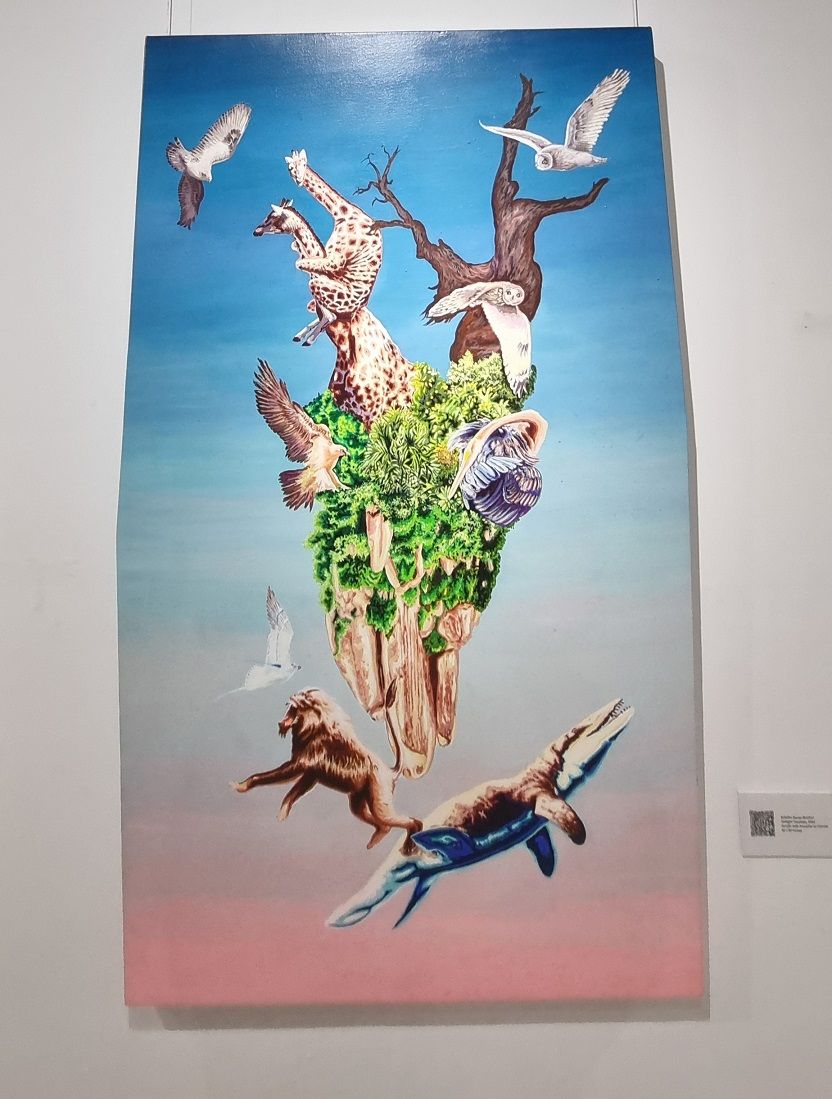
“Banduri’s densely populated canvases craft speculative ecosystems where bodies, species, and temporalities collapse into one another,” describes Satyajit Dave, an art curator and art historian.
They evoke Indic painting traditions as well as surrealist compositions. “His spatial raptures and hallucinatory figuration also nod to the psychedelic aesthetics of 1970s counterculture,” Dave says.
.thumbnailWrapper{
width:6.62rem !important;
}
.alsoReadTitleImage{
min-width: 81px !important;
min-height: 81px !important;
}
.alsoReadMainTitleText{
font-size: 14px !important;
line-height: 20px !important;
}
.alsoReadHeadText{
font-size: 24px !important;
line-height: 20px !important;
}
}

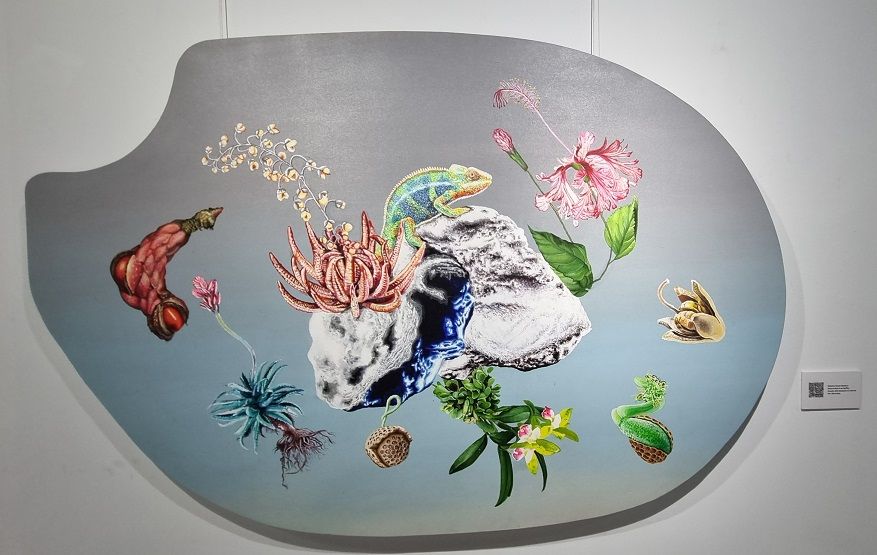
Banduri’s artworks also include elements of bio-surrealism. “They are grounded in a politics of place―marked by South Asian visual traditions, postcolonial inheritances, and posthuman epistemologies,” Dave adds.
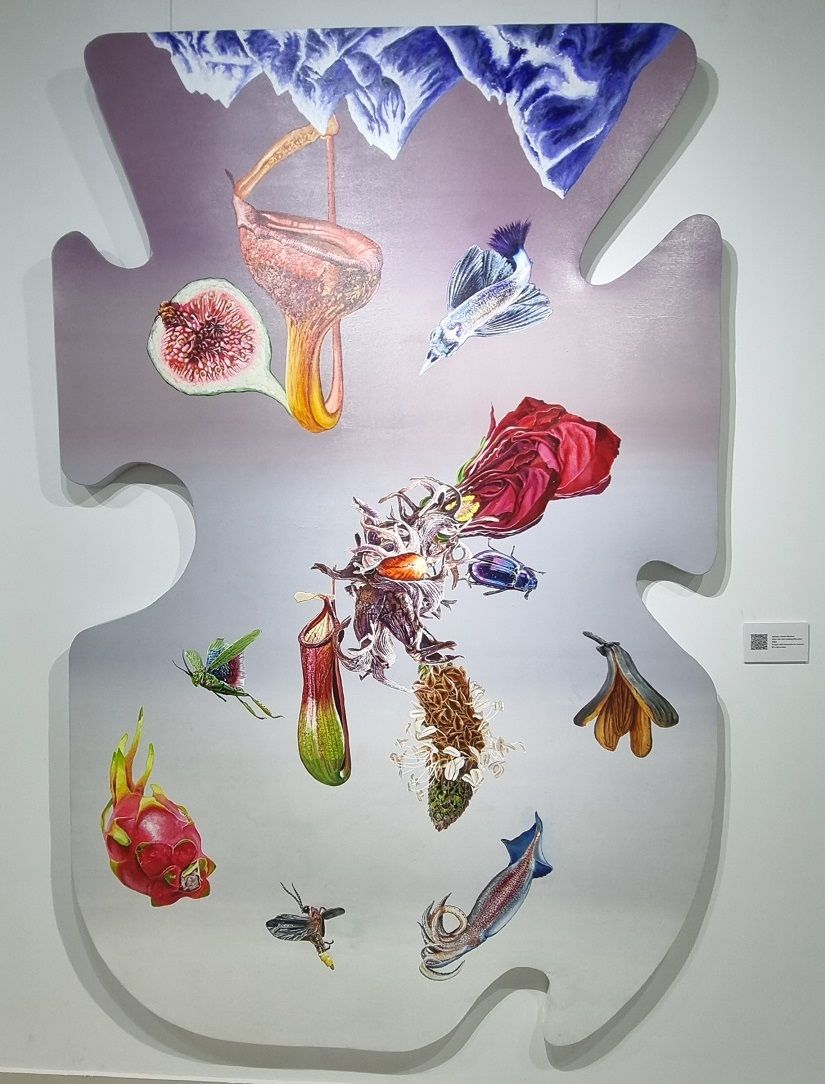
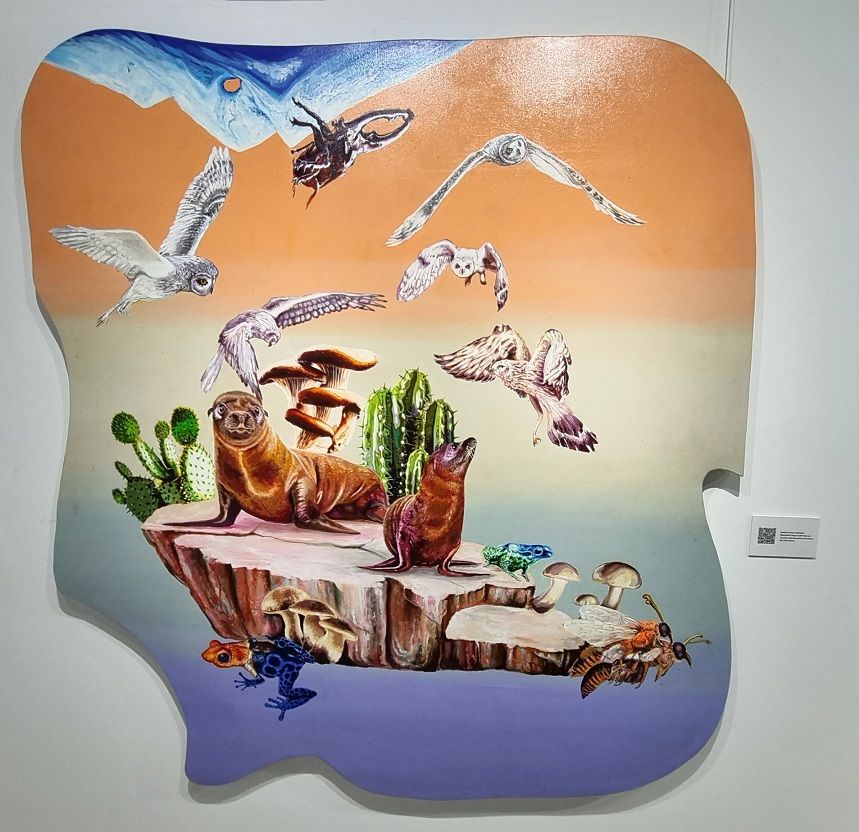
The artworks are multi-planar, and draw from the surrealist dissolution of rational perspective. “Figures mutate, terrains shift, species misalign,” he says.
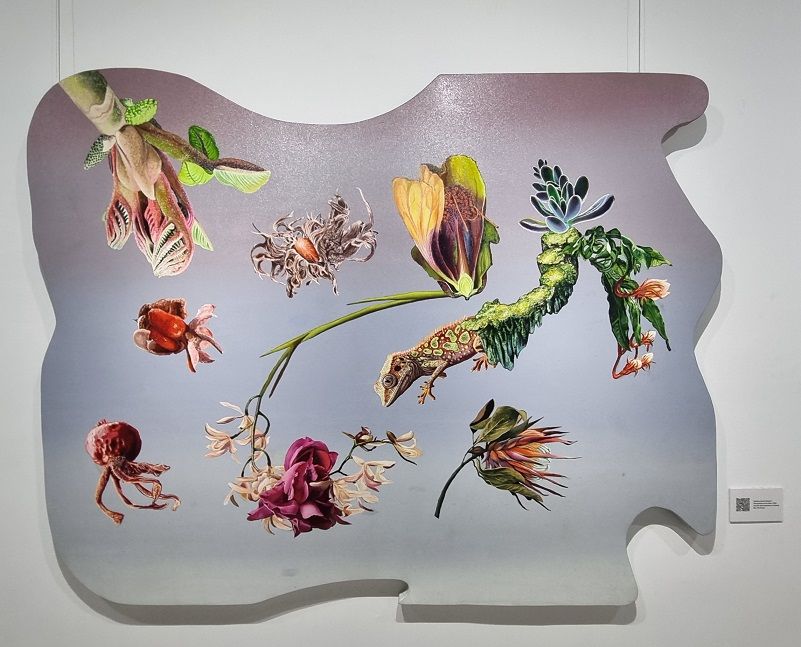
Banduri’s art is provocative, combining elements of decay, desire, and destination in creative ways. Many of the artworks are shaped like pieces of a jigsaw puzzle, inviting viewers to make their own connections between the themes.
.thumbnailWrapper{
width:6.62rem !important;
}
.alsoReadTitleImage{
min-width: 81px !important;
min-height: 81px !important;
}
.alsoReadMainTitleText{
font-size: 14px !important;
line-height: 20px !important;
}
.alsoReadHeadText{
font-size: 24px !important;
line-height: 20px !important;
}
}

“Within Banduri’s cosmology, the trauma of earthquakes and shifting tectonic plates become not just geological metaphor but political index,” Dave describes.
Many of the artworks seem to evoke the violent realignments wrought by urban development. “Entire animal habitats are hijacked to make way for skyscrapers,” he says.
“Banduri’s paintings demand that we feel with them, grieve with them and imagine through them. In a moment of planetary precarity, his visual cosmologies do not restore order. They re-enchant disorder as a site of speculative, pleasure, and possibility,” Dave explains.
.thumbnailWrapper{
width:6.62rem !important;
}
.alsoReadTitleImage{
min-width: 81px !important;
min-height: 81px !important;
}
.alsoReadMainTitleText{
font-size: 14px !important;
line-height: 20px !important;
}
.alsoReadHeadText{
font-size: 24px !important;
line-height: 20px !important;
}
}

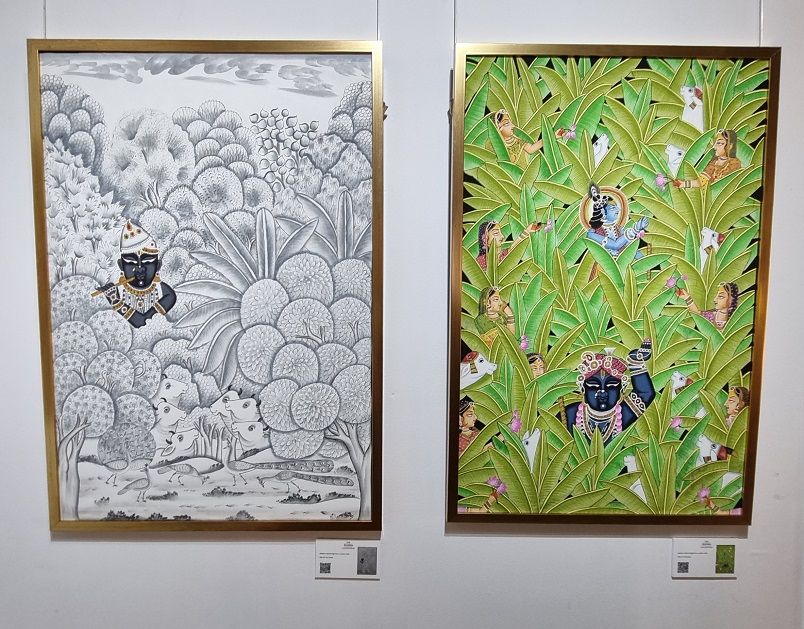
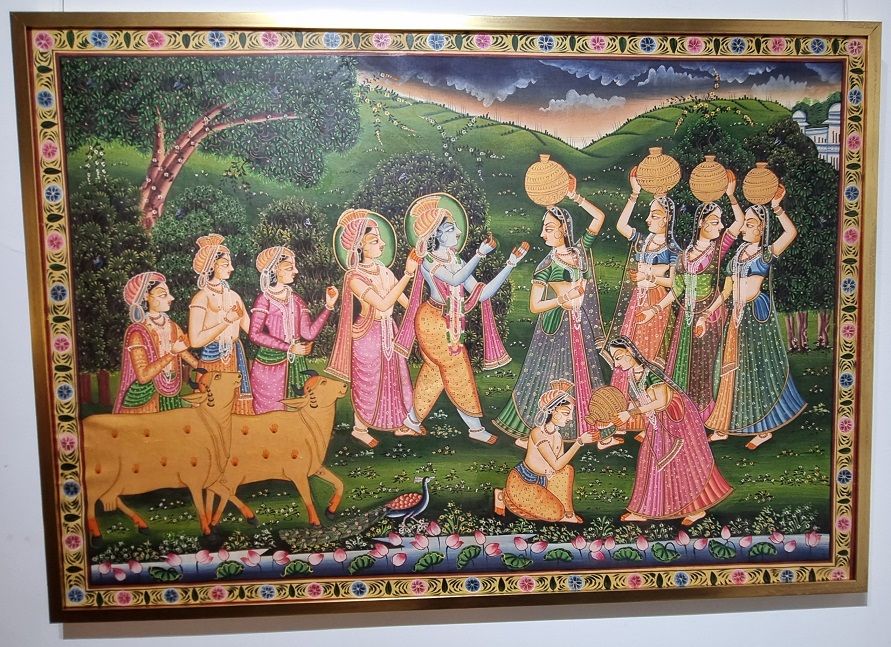
The second exhibition is titled Eternal Lotus: The Sacred Art of Pichwai, and is presented by Kalakriti Art Gallery in collaboration with ArtCafe. It is a celebration of tradition and transformation, with examples of both historical and contemporary Pichwai art.
This art form originated over 400 years ago in Nathdwara, Rajasthan. The artworks are intended to be offerings to Shrinathji, a form of Lord Krishna. They are intricate and hand-painted on cloth.
They traditionally depict mythological tales, festivals, and rituals. All the images are imbued with symbolism, rich colours, and sacred geometry. The exhibition presents a contemporary lens on Pichwai art forms, creating a dialogue between time-honored techniques and modern aesthetics.
.thumbnailWrapper{
width:6.62rem !important;
}
.alsoReadTitleImage{
min-width: 81px !important;
min-height: 81px !important;
}
.alsoReadMainTitleText{
font-size: 14px !important;
line-height: 20px !important;
}
.alsoReadHeadText{
font-size: 24px !important;
line-height: 20px !important;
}
}

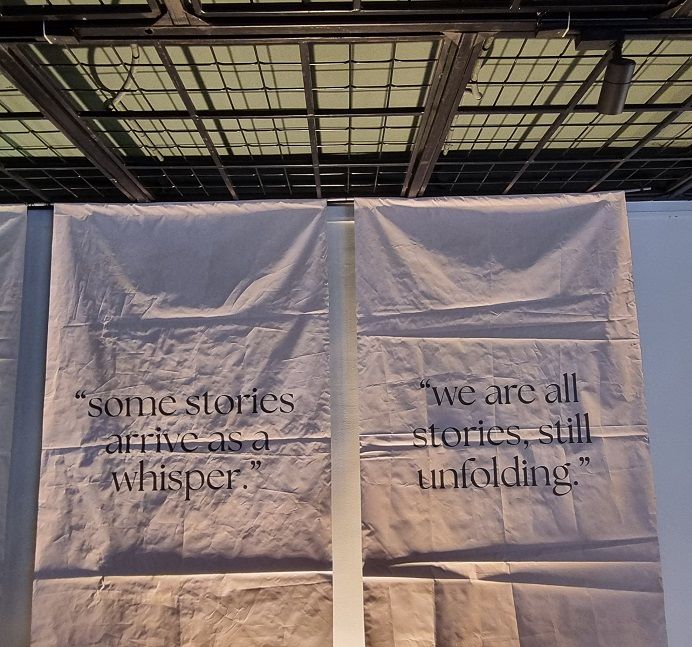
In addition to art exhibitions, Kalakriti Art Gallery features community meetups such as The Thinking Cup. They blend storytelling, quiet reflection, and meaningful connections.
Led by creative experts, the emphasis is more on curiosity and questioning than on speed networking or pitches. There are also deliberate quiet pauses between sessions for participants to absorb what has been shared.
Now what have you done today to pause in your busy schedule and harness your creative side for a better world?
(All photographs taken by Madanmohan Rao on location at Kalakriti Art Gallery, Hyderabad.)
