

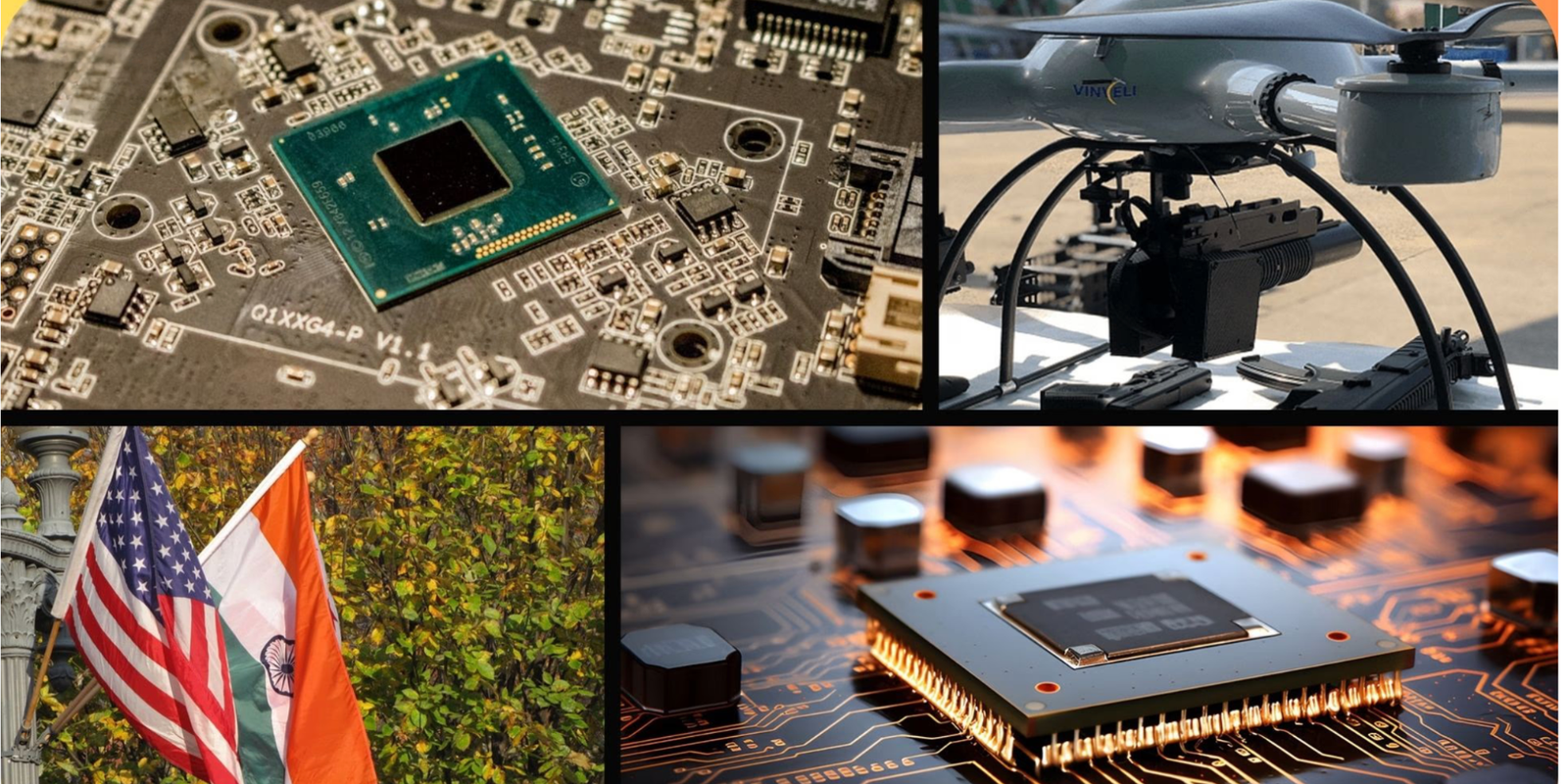
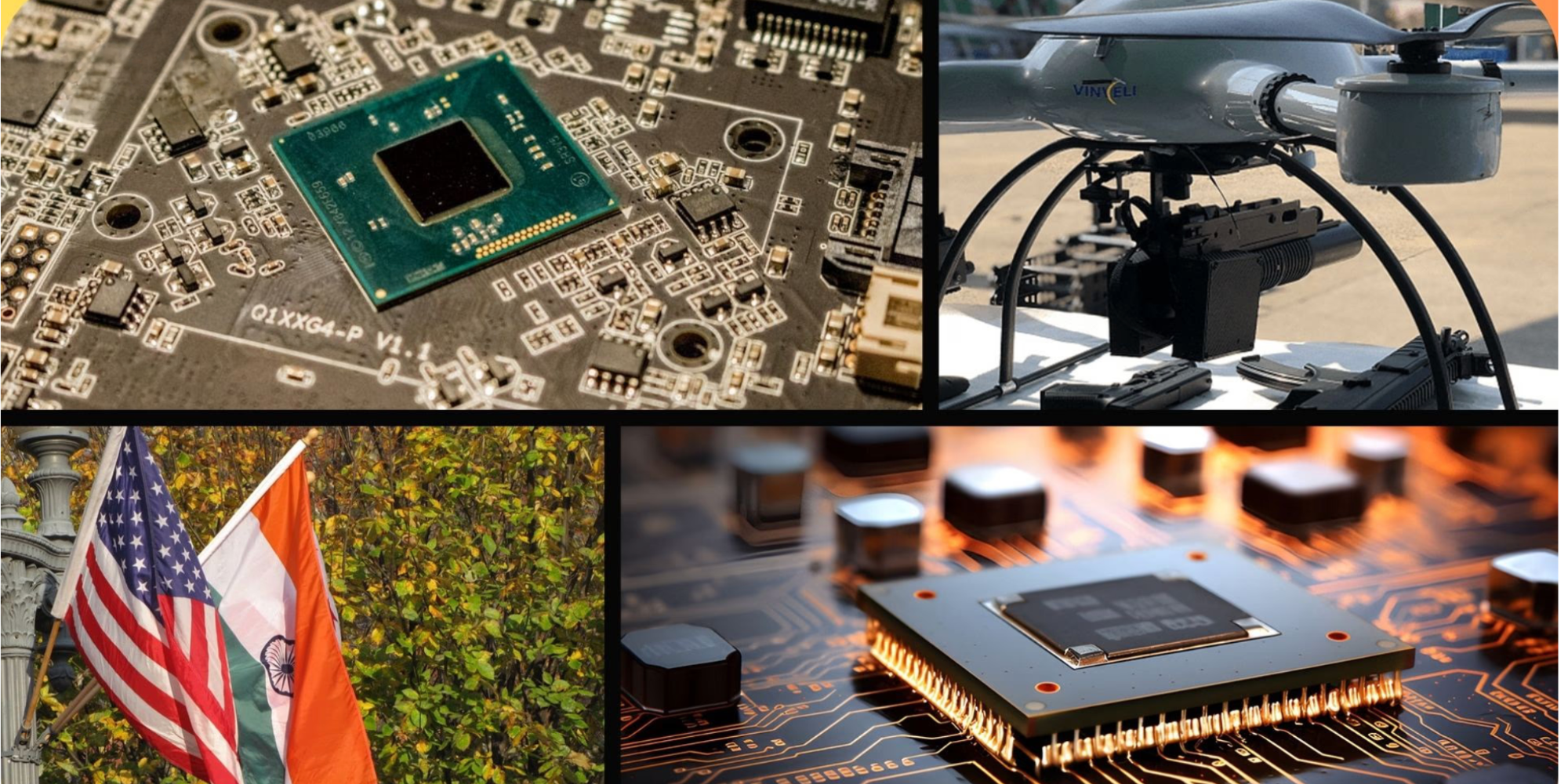
On the occasion of its 79th Independence Day, India stands tall with newfound confidence. In the early decades of freedom, the nation laid foundations through infrastructure, the Green Revolution, and industrialisation. The wave of Information Technology (IT) followed, earning India global recognition.
Now, in the third decade of the 21st century, India is at yet another historic turning point—where entrepreneurship, startups, and advanced technology are driving the nation towards self-reliance and innovation. Today’s India is not just a consumer, but a producer of cutting-edge solutions.
From defence to semiconductors, from robotics to Artificial Intelligence (AI), from deep tech to space research—India is progressing independently in every field. The vision of ‘Atmanirbhar Bharat’ (Self-Reliant India) is no longer just a government slogan—it is a shared reality embraced by millions of youth.
Startups and emerging entrepreneurs are at the forefront of this transformation—driven by fresh ideas, the courage to take risks, and an unwavering will to bring change. As a result, we are now witnessing bold experiments turning into tangible success stories.
Self-Reliance Takes Flight in Defence
According to Dr. Ajay Kumar, former Defence Secretary of India (2019–2022), for the first time, India is not merely importing defence equipment but has become an exporter as well. Defence exports have soared from ₹1,400 crore in 2016–17 to ₹25,000 crore this year—a 15-fold increase. Although this growth began from a small base, the potential for large-scale impact is now clearly visible.
The Defence Research and Development Organisation (DRDO) recently showcased the success of “Operation Sindoor,” where India’s indigenously developed systems—Akash, MRSAM, BrahMos, D4 anti-drone system, AWACS, Akashtir—were deployed in real operations. This is not just an example of defence prowess, but a flight of self-confidence.
The operation has sparked hopes of boosting defence exports from ₹23,000 crore to ₹50,000 crore. India is now running fast on the track of defence self-reliance.
Alongside traditional Public Sector Undertakings (PSUs), the private sector and startups are now leading the charge. Private companies played a key role in “Operation Sindoor,” enabled by relaxed regulations and government incentives.
Companies like Tata Advanced Systems (TAS), Alpha Design Technologies (ADTL), Paras Defence & Space Technologies, ideaForge, and IG Drones are shaping India’s military future. Larsen & Toubro (L&T) has bagged contracts worth over ₹13,000 crore for radars and weapons systems. Adani Group has launched two new plants in Uttar Pradesh for ammunition and missile production, aiming to meet 25% of India’s small-calibre ammunition needs.
Uttar Pradesh’s Defence Corridor has gained significant momentum through infrastructure and policy support. Tamil Nadu, too, is emerging as a major hub for drones and electronic defence systems for the armed forces.
According to a report by Global Corporate Venturing, initiatives like iDEX (Innovations for Defence Excellence) and government procurement policies have given rise to over 1,000 defence-tech startups, producing drones, surveillance equipment, body armour, and more.
Semiconductors: ‘Make in India’ Accelerates
Semiconductors—or chips—are the backbone of the modern world. India is now making major strides in chip design and production. Under the India Semiconductor Mission (ISM), the central government has launched several schemes:
- Semiconductor Fab Scheme
- Display Fab Scheme
- Compound Semiconductor & ATMP/OSAT Scheme
- Design Linked Incentive (DLI)
These initiatives provide up to 50% capital assistance for setting up units. Under the SPECS scheme, equipment and R&D receive up to 25% incentives.
Experts consider these schemes to be the foundation for maintaining India’s digital sovereignty.
Recently, under the DLI scheme, the government approved 23 chip-design projects from a budget of ₹1,000 crore, supporting startups, MSMEs, and academic institutions.
Four new semiconductor projects were recently approved with a total investment of ₹4,594 crore, involving major global players like Intel and Lockheed Martin. This move is expected to create 2,000 jobs.
The government also approved ₹4,009 crore worth of unique semiconductor plants in Odisha, along with additional units in Punjab and Andhra Pradesh—all key components of the self-reliance mission.
Union Minister Ashwini Vaishnaw posted on X that 20 student-designed indigenous chips have been successfully manufactured at SCL, Mohali—a shining symbol of India’s youth power.
India’s Rising Voice in AI and Deep Tech
India is carving out a niche in deep-tech—not just as a service provider, but as an innovation powerhouse.
In 2024, deep-tech startups (across defence, AI, space, quantum, and semiconductors) raised $1.6 billion in funding. The space-tech sector alone secured $76.8 million.
Startups like PixxelSpace, backed by Google, have been selected by IN-SPACe to work on the national satellite system—a move toward freedom from foreign systems.
Startups in AI, robotics, and semiconductors are advancing rapidly—quietly but powerfully. According to a report by Seafund, deep-tech funding grew by 78% in 2024, with AI accounting for 87% of it.
By 2027, deep tech is expected to contribute $350 billion to India’s GDP. A McKinsey report says sectors like semiconductors, industrial electronics, and robotics are becoming the foundation of India’s self-reliance.
Another report places India 8th globally in robotics adoption as a share of GDP—and predicts this will double in the next five years.
These developments clearly show how young entrepreneurs and startups are leading India down the path of Atmanirbhar Bharat—a new chapter of self-reliance in defence, semiconductors, deep tech, robotics, and AI.
Government Schemes: The Backbone of Startups
Various government schemes are now giving direction and momentum to the Indian startup ecosystem. They provide resources, funding, and guidance, turning dreams into reality.
- Startup India (launched 2016): A flagship initiative offering funding, tax exemptions, and easy registration. Since inception, 1.59 lakh startups, 117 unicorns, and 16.67 lakh jobs have been created (as of January 16, 2025).
- Digital India: Launched in July 2015, this initiative expanded digital infrastructure and accessibility. In 2023, the government approved an additional outlay of ₹14,903 crore to scale it further, benefiting AI and deep-tech startups.
- Deep-Tech Fund of Funds: In Union Budget 2025, the government launched a ₹10,000 crore Fund of Funds to invest in deep-tech startups.
- RDI Scheme and AI/Quantum Missions: The Research, Development & Innovation (RDI) scheme has allocated ₹1 lakh crore over six years (₹20,000 crore in FY 2025–26) to support deep tech, AI, and quantum tech. Additional missions include the National Quantum Mission and India AI Mission.
- Make in India: This campaign boosted domestic manufacturing, especially in sensitive sectors like defence and semiconductors.
- PLI (Production-Linked Incentive): Focused on electronics and semiconductor manufacturing to strengthen domestic value chains and increase India’s role in global supply chains.
- Atmanirbhar Bharat Abhiyan: Offers easy credit, grants, and incentives to promote entrepreneurial self-reliance.
Other schemes like the Credit Guarantee Scheme for Startups (CGSS) and Atal Innovation Mission further support entrepreneurs across India.
Bharat Bhagya Vidhata: The Master of Its Own Destiny
On this 79th Independence Day, the Tricolor waving high in the sky not only reminds us of our past—it calls us to shape the future. Today’s India is the author of its own destiny—writing its future with the pen of innovation, technology, and entrepreneurship.
Indigenous defence equipment, self-reliance in semiconductors and AI, and bold advances in deep tech and robotics are proof that our destiny is no longer in someone else’s hands—but in the hands of our youth.
When the national anthem sings “Bharat Bhagya Vidhata,” it reminds us that a nation’s future is not shaped by a single leader or policy—but by the collective dreams and efforts of its people.
India is living those dreams today. And tomorrow will take them even higher. It is our collective responsibility to continue this journey—so that the world remembers us not just as a country, but as an inspiration.
With bold ideas, breakthrough technologies, and new milestones—this Independence Day, we reaffirm our pledge to build a truly Atmanirbhar Bharat.
Team YourStory extends heartfelt greetings to you and your family on this Amrit Mahotsav of Independence!
