

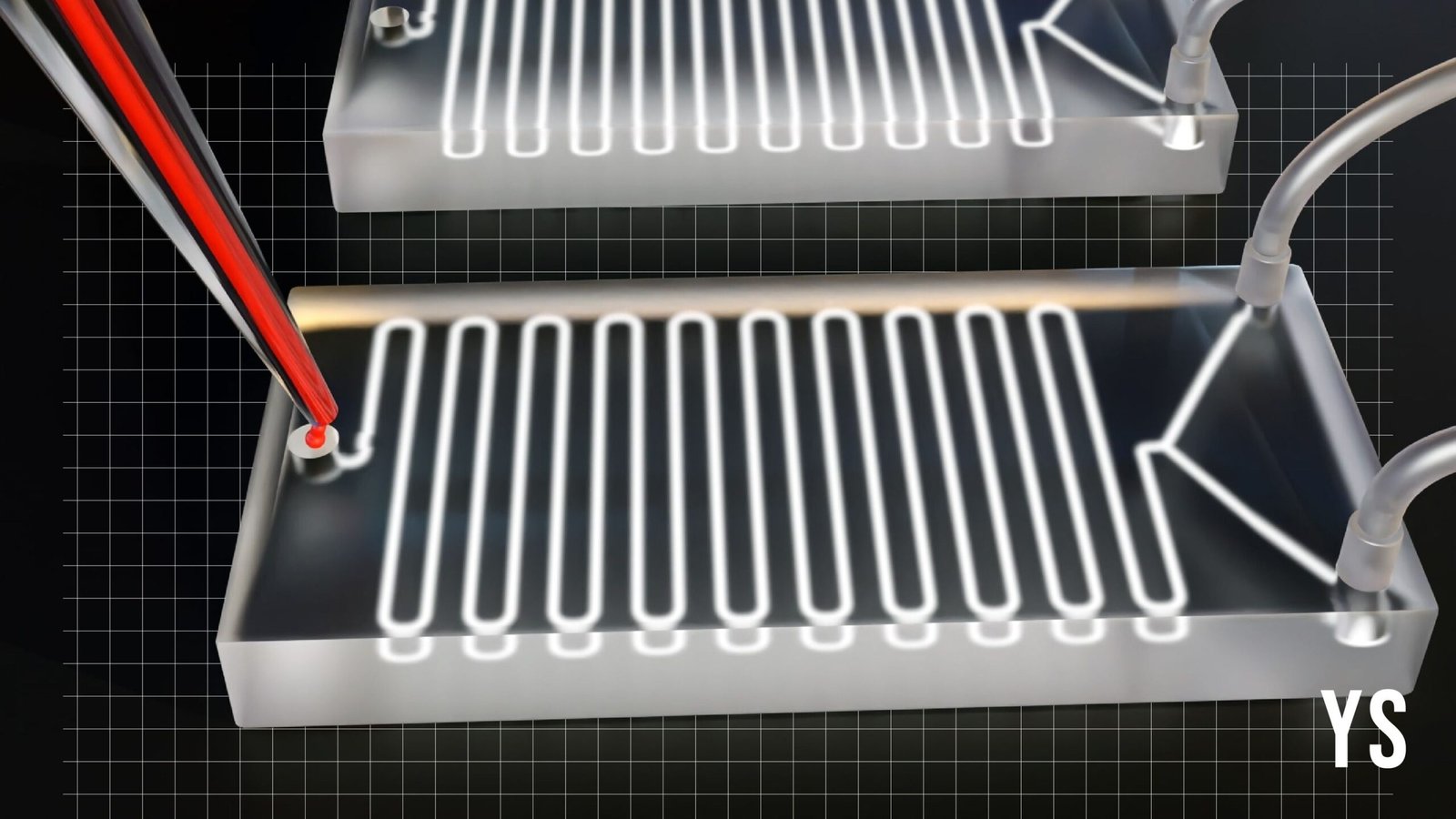
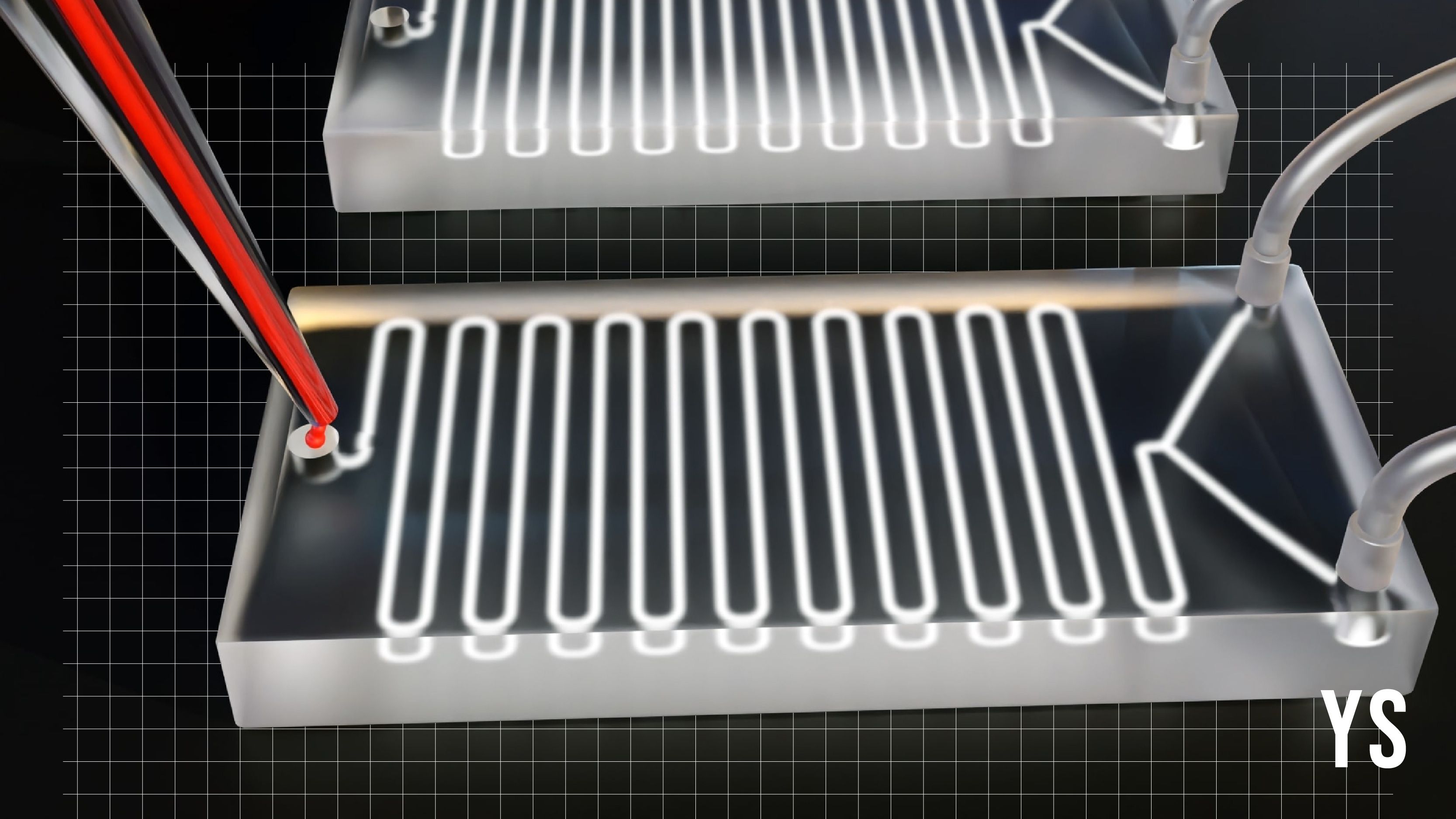
From diagnosing diseases on the spot to tracking pollutants in the field, labs are getting smaller—small enough to fit in your hand. At the heart of this shift is microfluidics, a technology that analyses tiny amounts of liquid through channels thinner than human hair.
By precisely guiding these small fluid volumes, microfluidic systems can perform complex biochemical tests faster, using fewer resources and at lower cost compared to traditional lab setups. The result is faster diagnosis, easier field testing, and broader access to advanced analytical tools, even in resource-limited settings.
In India, several startups are using this technology to build portable, efficient solutions for healthcare, research, and environmental applications, opening up new possibilities for point-of-care diagnostics and real-time monitoring.
Here are some startups leveraging microfluidic technology to design compact, efficient tools for healthcare, research, and beyond.
Tvashtr Biotech
Founded in 2023 by Parth Rajiv Shinde, along with directors Yash Saini, Shounak Amit Bhattacharya, and Nidhish Nagar, Jaipur-based Tvashtr Biotech is developing affordable, portable diagnostic and immunotherapeutic solutions, with a focus on early detection of conditions like Alzheimer’s disease and allergies.
Its solutuons integrate advanced microfluidic systems that handle biological sample separation, infection or antibody isolation, and rapid detection. The company uses methods such as phase separation, magnetic, electrophoretic, and acoustic techniques, as well as passive label-free chip designs.
The startup’s flagship offering is a rapid, at-home allergy testing kit aimed at reducing reliance on centralised laboratories. Tvashtr Biotech is also developing immunological assay kits for precision diagnostics and personalised therapy, and is exploring host–guest chemistry, where a specially designed ‘host’ molecule selectively traps and binds a target ‘guest’ molecule, within microfluidic platforms to enable highly selective, fast detection in complex samples.
Technoculture Research
Founded in 2020 by Satyam Tiwary, Sarthak Tiwary, and Savan Santoki, with assay and research expertise from Dr Permendra Kumar and Dr Damodhar Ghime, Technoculture Research operates from Bodhgaya, with centers in Patna and an R&D hub in Bengaluru.
The company builds scalable bio-instrumentation using microfluidics for low-cost molecular diagnostics. Its flagship device, Pwomise, integrates microfluidic cartridges with nanofabricated electrochemical electrodes to perform rapid protein, nucleic acid, and metabolite assays from minimal samples, such as a finger-prick, within minutes.
With applications ranging from SNP testing, DNA detection, and pharmacogenomics-based drug analysis, the system can cut costs by up to ten times compared to conventional methods. The R&D effort focuses on microfluidic chip design, fabrication, and simulation, as well as lean chemistry to reduce both hardware and per-test costs.
ISMO Bio-Photonics
Founded in 2019 by Shantanu Pradhan and Ikram Khan, Chennai-based ISMO Bio-Photonics, which is closely associated with the IIT Madras Research Park, develops advanced medical devices integrating microfluidics, bio-photonics, and organ-on-chip systems.
Its innovations include personalised organ-on-chip platforms for tailored drug screening and therapeutics, microfluidic bioreactors enabling 3D organoid culture with live imaging, and bio-photonics devices such as fiber lasers and optical sensors for diagnostics and cell culture. These technologies support real-time testing of drug efficacy and safety, as well as applications in pharmaceutical and biomedical research.
ISMO Bio-Photonics also provides customised protocols and quality-controlled products, collaborating with research institutions and industry partners to advance personalised medicine and healthcare solutions.
Point-of-Care Microfluidics
Vellore-based Point-of-Care Microfluidics, incorporated in 2021, specialises in developing micro- and nanofluidic lab-on-chip systems using polymer and silicon materials for applications in diagnostics, analytical sciences, and life sciences.
Founded by Arunkumar Pitchaimani and Sivakumarasamy Ragavendran, the startup develops FET-based biosensors integrated into PDMS lab-on-chip devices for medical diagnostics, pharmaceutical analysis, and food safety testing. Its capabilities include nanoelectrode array biosensors for highly sensitive biomolecule detection, microfluidic reactors for colloidal synthesis, and the creation of sub-100 nm nanofluidic channels for DNA sequencing, drug delivery, and energy-related applications.
.thumbnailWrapper{
width:6.62rem !important;
}
.alsoReadTitleImage{
min-width: 81px !important;
min-height: 81px !important;
}
.alsoReadMainTitleText{
font-size: 14px !important;
line-height: 20px !important;
}
.alsoReadHeadText{
font-size: 24px !important;
line-height: 20px !important;
}
}

Additional developments encompass real-time contaminant detection systems, organ-on-chip models, and chemical synthesis platforms. These solutions leverage advanced fabrication methods such as electron beam lithography to produce precise nanofluidic structures with selective gold nanoelectrode arrays, enabling rapid, sensitive, and portable point-of-care testing.
Ariken Labs
Founded in 2017, Chennai-based Ariken Labs is a healthcare technology startup specialising in microfluidics and Lab-on-Chip (LOC) diagnostics. Associated with the IIT Madras Research Park and led by Ashis Kumar Sen from the Department of Mechanical Engineering at IIT Madras, the startup develops microfluidic platforms for applications such as rare cell detection and isolation, blood plasma separation using capillarity and acoustophoresis, and detection of vascular gasotransmitters (NO, H₂S, H₂O₂) for early monitoring of vascular health.
Its solutions include microfluidics-based dengue diagnostics with colorimetric detection, as well as circulating tumor cell (CTC) isolation and genetic profiling for cancer diagnostics and personalised medicine. Ariken Labs also designs and fabricates microfluidic devices in materials such as PMMA, PDMS, and silicon, employing micromechanical and acoustic-based methods for biological sample processing and point-of-care testing.
Vidcare Innovations
Founded in 2017 by Rohan Aggarwal, Vidcare Innovations is a Pune-based medical diagnostics startup developing portable, accurate, and user-friendly testing solutions to improve healthcare accessibility and chronic disease management.
Its has developed Mu-sure—a credit card-sized disposable device—to deliver lab-like results within 25 minutes using two drops of blood without sample preparation, for a range of general and chronic disease-related blood tests.
The startup’s technology integrates microfluidics, biomedical engineering, and diagnostics to create compact, high-precision platforms, with patents granted in markets including the United States and Japan.
Edited by Megha Reddy
