



From Rapido and Uber resuming bike taxi services in Karnataka to Zia, the new large language model from SaaS firm Zoho Corporation, YourStory brings today’s headlines that highlight significant developments across industries.
Featured news
‘The zero-to-one moment for LLMs is gone’: Zoho AI Director Ramprakash Ramamoorthy
While most SaaS companies are haemorrhaging cash to OpenAI and Google for AI capabilities, SaaS unicorn has surfed on a different bet. After 22 months of grinding through GPU shortages, hallucination fixes, and five model iterations, the Chennai-based unicorn has something to show for it: Zia LLM, an entirely in-house large language model that keeps customer data locked within Zoho’s ecosystem.
The company has positioned the new LLM as a business-focused model with three parameter variants that keep enterprise data in-house.
“We dogfooded the baseline model extensively—Zoho runs on Zoho. Our employees tested it across products, gave feedback through a ticketing system, and we iterated continuously. It took us nearly two years to build and fine-tune the final version. We’re now on the fifth iteration of the model,” Ramprakash Ramamoorthy, Director of AI Research, Zoho Corporation, tells YourStory.
Enterprises to homes: Sustainable packaging provider Bambrew readies for next phase
Bengaluru-based sustainable packaging provider began its journey in 2019 as a B2B company, offering ecommerce platforms and quick-commerce players alternatives to plastic packaging.
Over time, it built a client base of over 100 companies, including Amazon and Flipkart. Six years down the line, as regulations on plastic use tighten and consumer awareness of eco-friendly alternatives grows, Bambrew is ready to launch a consumer-facing line of products.
“We’ve worked with businesses for years; now it’s time to step into consumers’ homes,” says Kunal Prasad, Co-founder of Bambrew. On August 15, the startup launched a direct-to-consumer (D2C) range including biodegradable garbage bags, bamboo paper towels, toilet rolls, sanitary disposal pouches, and pet waste bags, marking a new chapter in its sustainability journey.
Latest news
Rapido, Uber resume bike taxi services in Karnataka after court relief: Report
Ride hailing platforms and have reinstated their bike-taxi services in Karnataka, two months after the state government imposed a ban. The move comes a day after the Karnataka High Court challenged the ban.
Moneycontrol was the first to report on this matter.
The bike-taxi ban, which was implemented on June 16 in the state, left many commuters scrambling for affordable transport alternatives. Many office-goers were forced to opt for auto rickshaws, which saw prices skyrocket.
Bengaluru also witnessed an 18% rise in traffic congestion in the first week of the ban, according to the Moneycontrol report. In the city, bike-taxis are often used to travel short distances and as first and last-mile commute, helping individuals travel to and fro from bus and metro stations.
Human-AI symbiosis: The science of a blended workplace
A radiologist adjusts her reading glasses and leans closer to the monitor. On the screen, a chest CT scan glows in greyscale, the patient’s ribs casting shadows like prison bars.
A yellow outline pulses around a small nodule in the lower left lung, the AI’s quiet suggestion that something deserves attention. She clicks to enlarge the area, studies the texture, cross-references with the patient’s history. Her finger hovers over the mouse for a moment before she marks it for follow-up.
“Three years ago, I might have missed that one,” she admits, the hum of the hospital’s ventilation system filling the brief silence. “It’s subtle. But now I have this second pair of eyes that never gets tired, never has a bad day.”
This scene, playing out in radiology departments across India, captures a shift happening in workplaces worldwide.
Funding news
Edgehax bags Rs 1.39 Cr in seed round led by Inflection Point Ventures
Edgehax, an Edge AI hardware platform, has raised Rs 1.39 crore in a seed round led by Inflection Point Ventures to scale manufacturing, advance product development, and expand into international markets including Singapore, the United States, and Europe.
<figure class="image embed" contenteditable="false" data-id="579358" data-url="https://images.yourstory.com/cs/2/6c7d986093a511ec98ee9fbd8fa414a8/L-RSavitriPatilCOOCo-founderPrabhuStavarmathCEOandCo-founderEdgehax-1755768062327.jpg" data-alt="Edgehax" data-caption="
L-R_Savitri Patil, COO & Co-founder, Prabhu Stavarmath, CEO and Co-founder_Edgehax
” style=”float: right; margin-left: 20px; width:50%; height:auto”> L-R_Savitri Patil, COO & Co-founder, Prabhu Stavarmath, CEO and Co-founder_Edgehax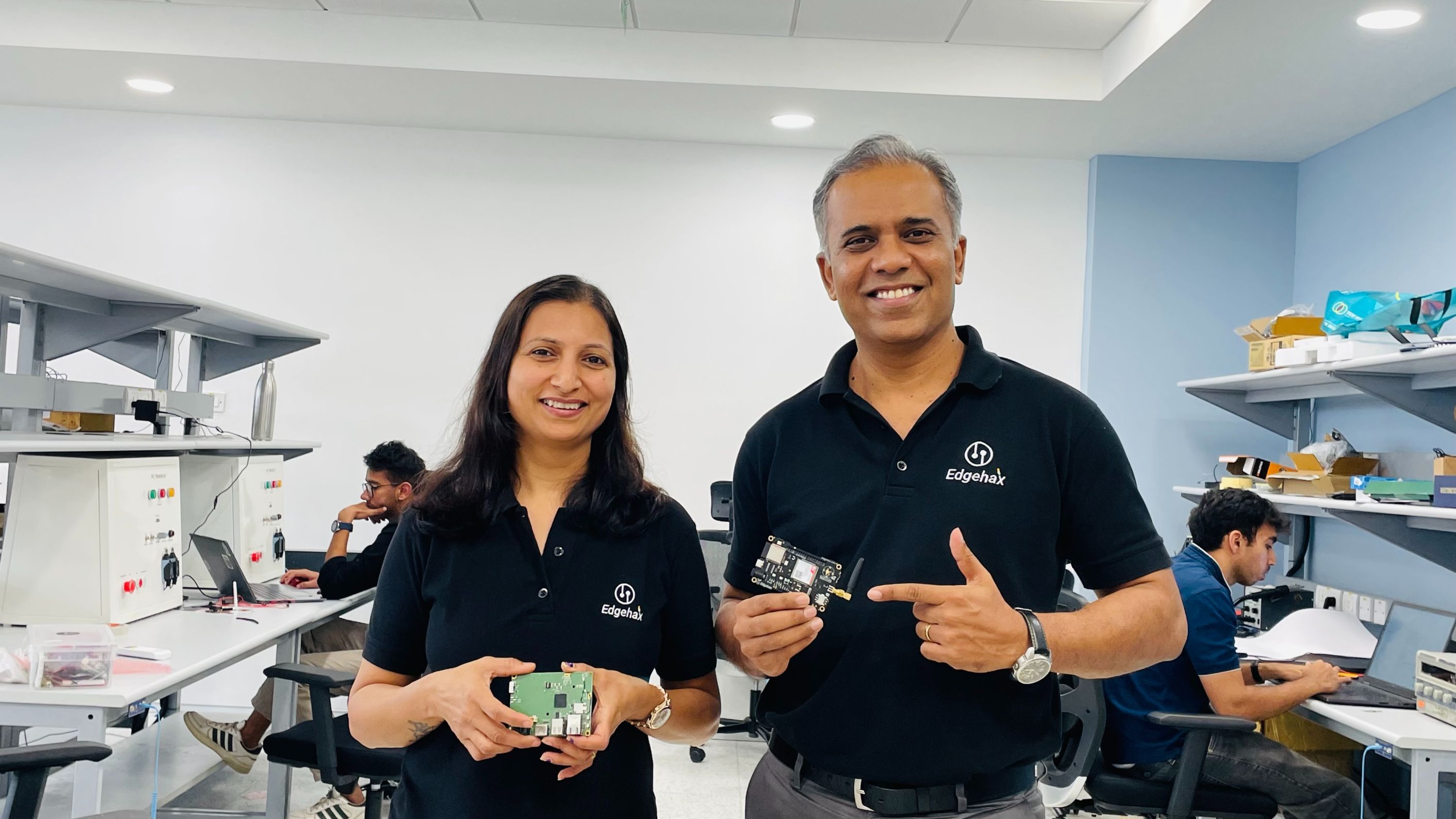
Its modular platform integrates compute, connectivity, and storage on a single board and is currently deployed by over 150 startups, OEMs, and large enterprises across applications such as industrial gateways, humanoid robots, autonomous vehicles, drones, NavIC-based tracking systems, 4G/5G connectivity, and defence use cases.
Edgehax recently won the NXP Silicon Seeds Startup Program 2025 to co-develop a low-cost Edge AI compute module for global automotive and consumer IoT applications, scheduled for launch in Singapore by December. It is supported by Software Technology Parks of India and was selected for the MeitY Bhashini Startup Velocity 1.0 programme to build hardware enabling wider adoption of the Digital India Bhashini Voice AI platform.
Mitra raises Rs 14 Cr in bridge round ahead of Series A
Mitra, a FMCG startup founded in 2023, has raised Rs 14 crore in a bridge equity round led by Bestvantage Investments, with participation from existing investors including a Dubai-based family office.
The startup plans to use the funds to expand its facilities, launch a 3,000-tonne refined flour plant in October, enter millet-based and lifestyle categories such as gluten-free and diabetic-friendly flours and organic spices, and strengthen its distribution network across India and GCC markets.
Mitra leverages a stone-grinding methodology to retain freshness and nutrition, catering to Tier II and III markets with mid-range pricing.
The startup has scaled revenue from Rs 11 crore in FY24 to Rs 40 crore in FY25 and is on track to cross Rs 120 crore this financial year. It is supported by 500+ distributors and 40,000+ retail outlets. Its upcoming flour plant is expected to lift monthly recurring revenue from Rs 12 crore to Rs 17 crore by November 2025. The business is already EBITDA-positive, says the startup.
Mitra is preparing for a Series A round in April 2026 at a targeted valuation of Rs 500 crore.
.thumbnailWrapper{
width:6.62rem !important;
}
.alsoReadTitleImage{
min-width: 81px !important;
min-height: 81px !important;
}
.alsoReadMainTitleText{
font-size: 14px !important;
line-height: 20px !important;
}
.alsoReadHeadText{
font-size: 24px !important;
line-height: 20px !important;
}
}

Mithila Foods raises Rs 1.5 Cr seed funding from Aviral Bhatnagar
Mithila Foods, a Dumka (Jharkhand)-based FMCG startup, has raised Rs 1.5 crore in its first funding round from early-stage investor Aviral Bhatnagar of AJVC, an investment firm.
<figure class="image embed" contenteditable="false" data-id="579359" data-url="https://images.yourstory.com/cs/2/6c7d986093a511ec98ee9fbd8fa414a8/TeamMithila-1755768170583.jpg" data-alt="Mithila Foods" data-caption="
Team Mithila Foods
” style=”float: left; margin-right: 20px; width:50%; height:auto” align=”center”> Team Mithila Foods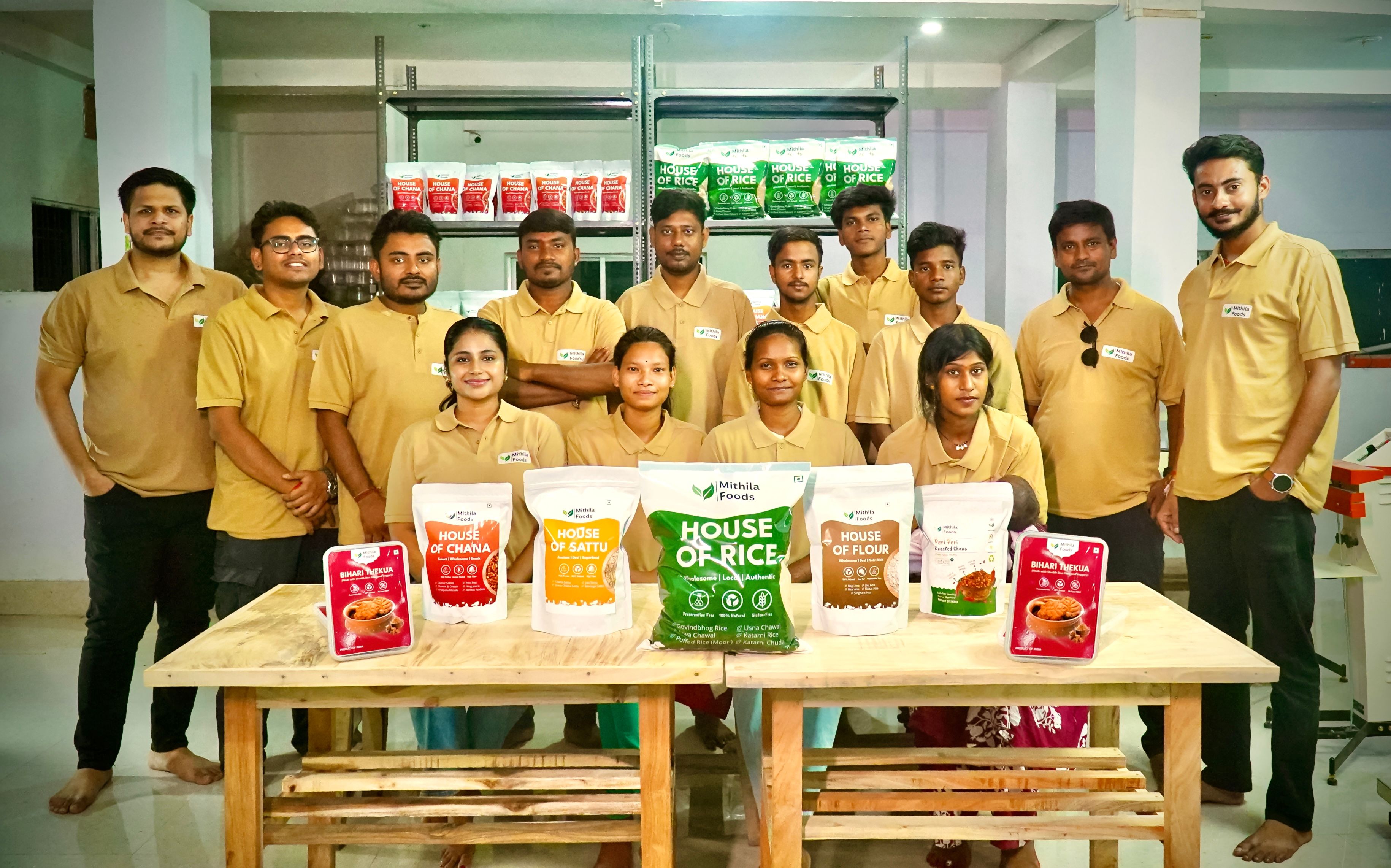
Founded in January 2025 by Shubham Sunderka, Ankit Kumar, and Anshu Kumar, Mithila Foods is building a packaged food brand around staples from Bihar, including sattu, roasted chana, makhana, and katarni chuda.
In under five months of operations, it has launched over 20 SKUs, delivered to more than 25,000 customers across 4,000 pin codes, and achieved an annualised revenue run rate of Rs 3 crore.
Mithila Foods operates from a warehouse in Dumka and has quickly expanded distribution nationwide, with strong traction on ecommerce platforms such as Amazon.
Other news
Uber, NCRTC join hands to boost last-mile connectivity on Delhi–Meerut corridor
Uber has partnered with the National Capital Region Transport Corporation (NCRTC) to provide app-based last-mile connectivity on the Delhi–Ghaziabad–Meerut Namo Bharat corridor, India’s first regional rapid transit system.
Under a memorandum of understanding (MoU), Uber’s cars, autos, and two-wheelers will be available at all operational stations, including Anand Vihar, Sahibabad, Ghaziabad, and Meerut South, and will be extended to the full network of 25 stations as new sections are commissioned.
The collaboration will establish designated pick-up points, station signage, and in-train announcements to streamline transfers between train and road. The Delhi–Meerut corridor is expected to cut commute times by two-thirds and serve over 8 lakh daily riders when fully operational.
NCRTC, a joint venture of the Government of India and Delhi, Haryana, Rajasthan, and Uttar Pradesh under the Ministry of Housing and Urban Affairs, is responsible for implementing the project to strengthen regional connectivity across the National Capital Region.
Edited by Swetha Kannan
