

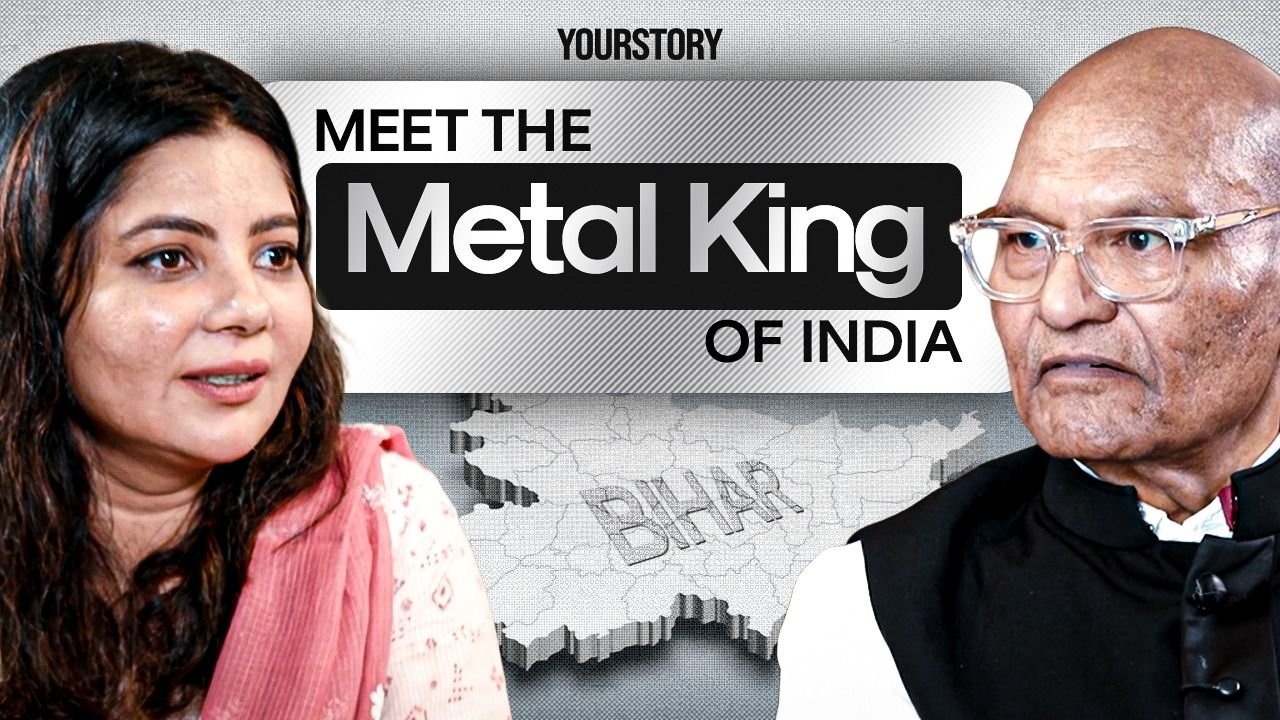
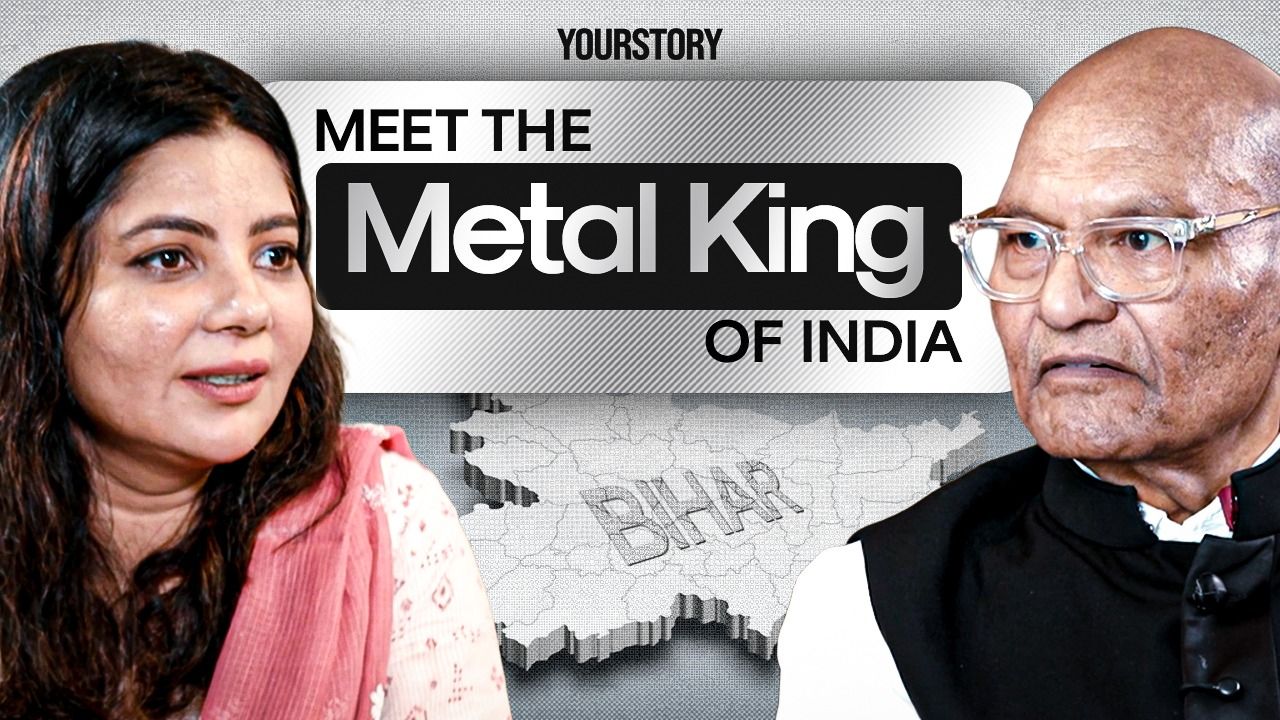
Anil Agarwal, the founder and chairman of diversified mining company Vedanta Resources, believes that the convergence of natural resources and technology can propel the entire country.
In a freewheeling conversation with YourStory founder and CEO Shradha Sharma in Hindi, the 71-year-old mining magnate discusses everything from his optimism for India’s economic future to how perceptions about mining are changing in the country, and from the role of women in the workforce to his memories growing up in Bihar.
Need to back entrepreneurs
“The beginning of India’s rise has started. We are impatient, we want it to happen within our own lifetime, but it could take time,” says Agarwal. “Natural resources and technology, these two will take the country ahead. Today, mining technology is so advanced you can extract copper directly from underground without digging out the soil.”
The founder of the London-headquartered company says, “The world’s best gold is here. At one time, India had almost 30% of the world’s GDP. All the wealth lies beneath our land, whether it’s copper, rare earths, or oil and gas.” And, he adds, “Without the Indian people, the world cannot function… Wherever you go, in the think tanks, it’s Indians who are there. Their mindset is such that they offer sound advice.”
<div class="externalHtml embed" contenteditable="false" data-val="”>
Agarwal talks about support for entrepreneurship. “In America and other countries, if you start a business, take a loan, and fail, and you didn’t pocket the money, but put it into the business, no one punishes you. You can start again. In India, if your money is lost, they’ll chase you for 10 years, the bank will chase you, everyone will. This must go. The most important thing is trust.”
He believes the present belongs to the private sector. “In a democracy, the public sector fails because there’s no entrepreneurship there. There isn’t a single democratic country where the public sector runs the economy. In democracies, it’s the private sector. In India, it’s a mix. Public sector officials have government access and can suppress the private sector.”
“Today, even private players hold back,” says Agarwal, who dreams of an India where everyone has a job, the economy becomes $10 trillion in size within five years, and the rich lead by example through simple living.
Doing mining the right way
Though born in Bharatpur, Rajasthan, Agarwal grew up in Patna, Bihar.
After Independence, he says, “If you see, the entire industry that came up in India was set up in Bihar. All the intellectuals lived in Bihar. Sindri (fertilizer plant) was in Bihar, the refinery was in Bihar, Bokaro (steel plant) was in Bihar. Bihar was the first choice for industrial culture.”
Acknowledging its economic decline over the last 3-4 decades, Agarwal, however, says, “It’s not all bad even now. But the biggest crime was separating Jharkhand. Because Jharkhand has the world’s best resources.” And, he continues, “They don’t have land. They can’t set up that factory there. All the processing should happen in Bihar…I keep saying again and again, ‘You two have split, but at least form an alliance once.’”
He recalls: “The mica we (in Bihar) had foreigners, the environmentalists didn’t allow us to mine it. And mica, at that time, was in shortage globally much like the shortage of rare earths today. Our entire Kodarma area produced mica, but they didn’t let us extract it. An alternative to mica was developed instead. And look at coal, we used to supply coal from Bihar to the whole of India, even to the entire world.”
“It’s like we are stuck on just one point,” Agarwal says, recalling an instance when her niece was asked to write an essay on mining in school. “So she wrote one, but the teacher said, ‘No, mining is a bad thing.’ She (His niece) stood up and said, ‘No, mining is the best thing. Without mining, nothing is possible.’ She said, ‘But do mining the right way, not the wrong way.’”
Earlier, people were afraid to even utter the word “mining”; now, the government is also paying attention to the sector, he says, highlighting the changing perceptions.
What’s for Bihar?
Bihar is in Agarwal’s thoughts.
“People keep telling us, get us jobs right here. They keep saying, ‘Why don’t you just set up a factory?’ But where should we set it up, how should we set it up, in what way should we set it up? After all, it’s shareholders’ money. Or they say, ‘Build a hospital,’ or ‘Build a wedding hall,’ or ‘Start a school or college.’ If the government comes along as a partner, then maybe. But industry is for doing business, right? And business has to have feasibility.”
And he says, he thinks of two things to do in public service. One, build hospitals, colleges, museums, and institutions like that. He can’t do that alone, he says, “but if the government invites, we can join hands.” He says, “I have always wished that not even one child in Bihar goes hungry, and that all get educated.”
Second, “If every girl could earn Rs 10,000–15,000 a month, and once she’s financially independent, she won’t care about anything else…I tell every parent: make your daughters financially independent.”
“Today is the era of girls…This confidence is in the girls, and it is the girls who will change the country, change their surroundings, and change society as well.”
Agarwal says he has placed 75% of his own equity into a foundation.
“When I first arrived in Mumbai 50 years ago, I said, ‘Mumba Devi, I’ve come, now take care of me.’ When I came to London, 30 years ago, I saw a small sign saying ‘Govinda Restaurant and Krishna Temple’. Seeing it, I felt just like I used to at the Hanuman temple near Patna station, where we lived.” Agarwal says, “Believe me, in 27 years, there hasn’t been a single day I haven’t gone, every day. There are no special rituals, but He is my master. I am His servant. That feeling kept me going. He’ll show a path.”
He says, “We’ll find a way somehow. In Bihar, there’s this thing, we don’t make the full plan.”
Edited by Sriram Srinivasan
