

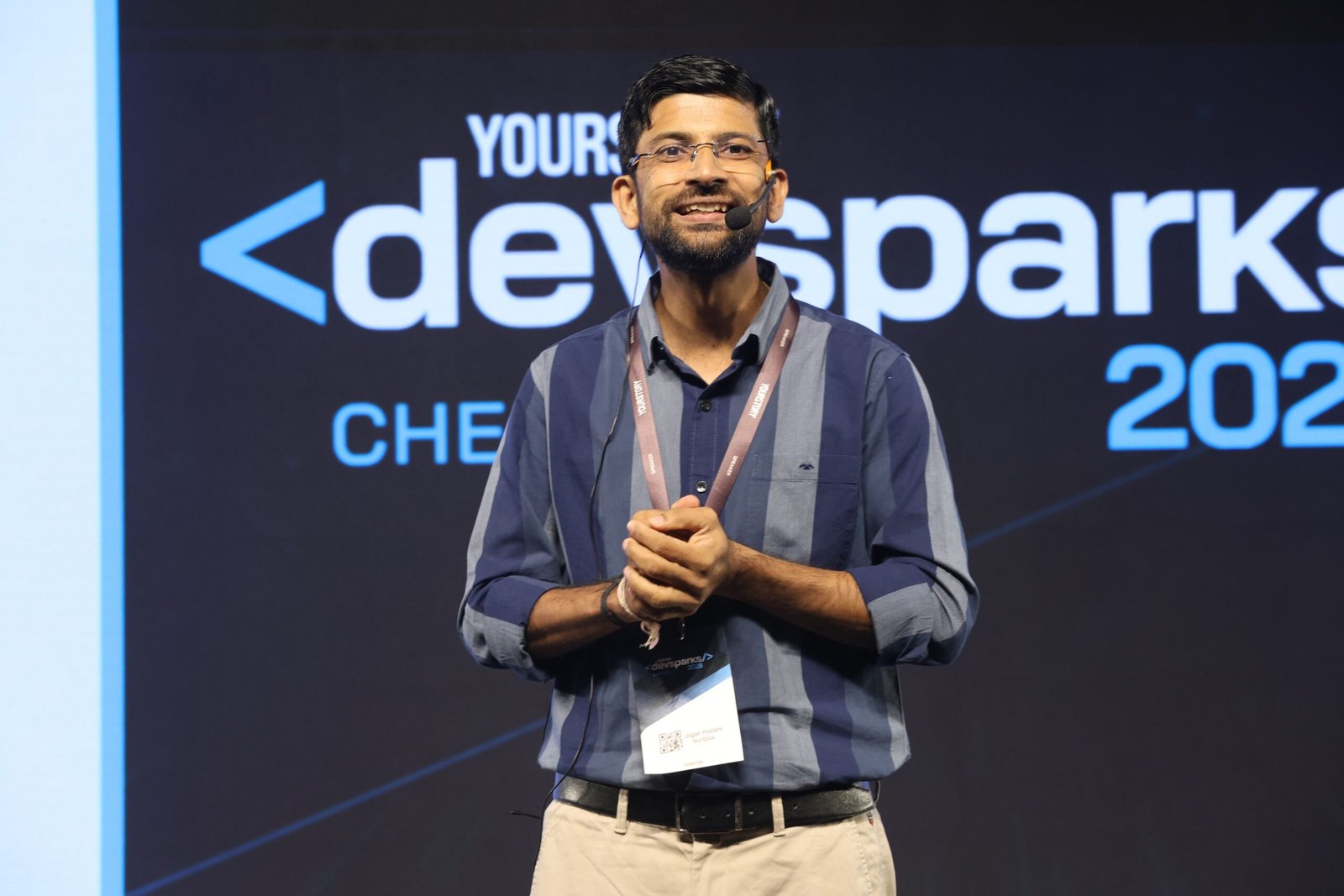
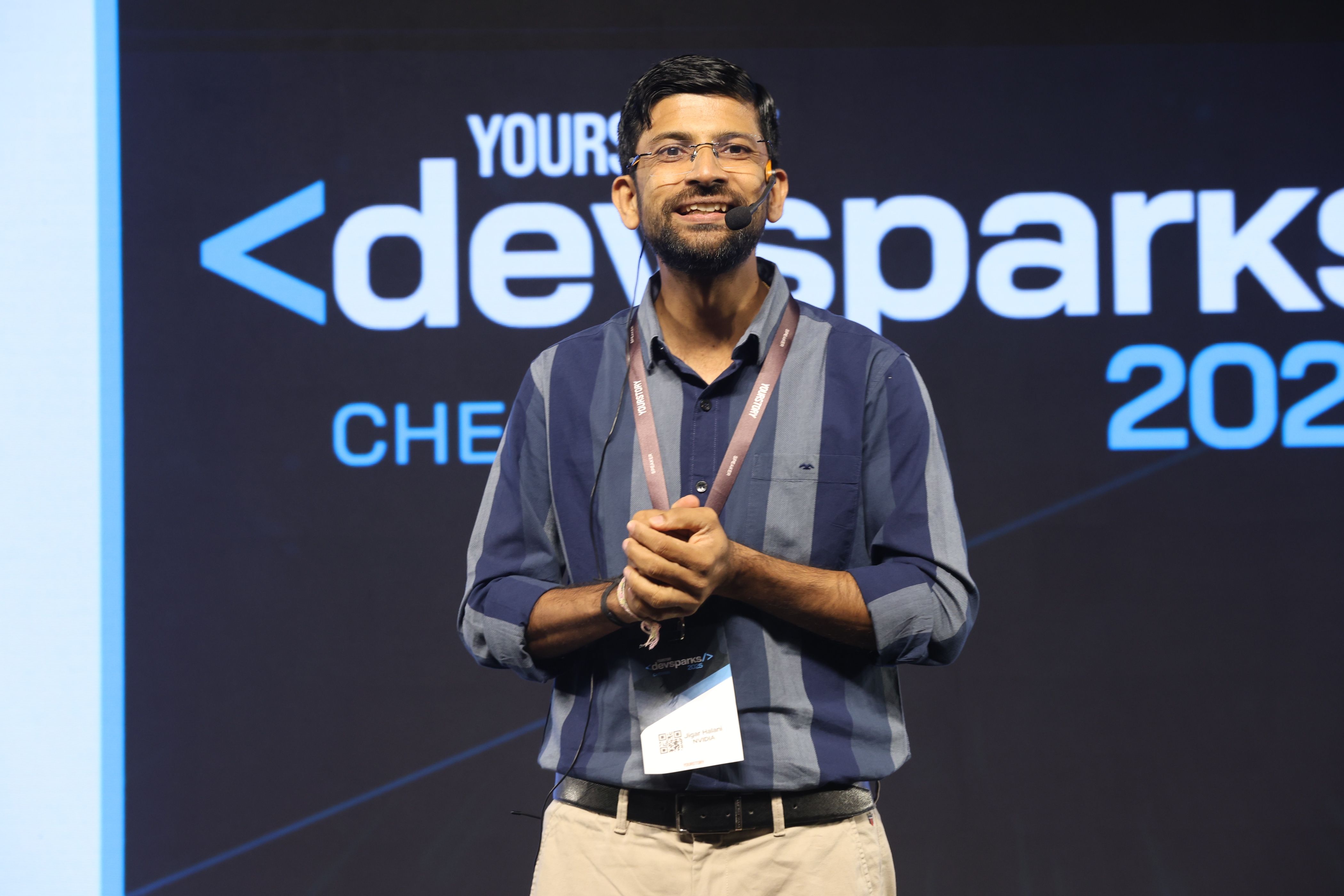
At DevSparks 2025, Jigar Halani, Director, Solution Architect & Engg at NVIDIA, laid out a bold vision for how artificial intelligence, particularly agentic AI, will reshape industries across the country.
During the talk, Halani drew examples from a series of real-life examples to support his statement. As a case study, Halani pointed out that India’s biometric identity system Aadhaar, which covers nearly 1.4 billion citizens, has started using large language models (LLMs) to automatically respond to citizen grievances.
Even complex services, such as address updates for senior citizens using handwritten documents, are being streamlined through AI-powered OCR (optical character recognition) and verification. “That was the most complex problem Aadhaar picked up,” Jigar noted, underlining the system’s role as a proving ground for large-scale, real-world AI use cases.
AI is also tackling India’s language barriers. The country has around 23 official languages and more than 230 dialects that have acted as barriers to digital inclusion. Halani highlighted that Bhashini, a government-backed platform, can now provide machine translation and speech technologies across languages.
.thumbnailWrapper{
width:6.62rem !important;
}
.alsoReadTitleImage{
min-width: 81px !important;
min-height: 81px !important;
}
.alsoReadMainTitleText{
font-size: 14px !important;
line-height: 20px !important;
}
.alsoReadHeadText{
font-size: 24px !important;
line-height: 20px !important;
}
}
One of the key points highlighted by Halani was the rise of reasoning models, which allow AI to handle constraints and logic in ways earlier systems could not. This ability, he argued, is especially relevant to India’s judiciary, where more than 52 million cases remain pending. Multi-agent AI systems could help judges and lawyers process evidence, summarise documents, and draw from precedents in multiple languages and formats.
Today, NVIDIA has developed tools and frameworks to power this technological shift, which includes its NeMo and AIQ stacks for building agentic AI pipelines optimised versions of open-source models like Llama and Mistral AI as well as high-speed retrieval tools that accelerate reasoning.
From digital twins to autonomous robots, the goal is not just efficiency, but collaboration between humans and machines. “Every single industry that we live with today is going to transform 100% in a new shape completely,” Halani said.

