

Hollywood didn’t just invent stardom, spectacle, or mass entertainment. It invented the attention economy — the same system that’s now threatening to destroy it.
Just a decade or two ago, Hollywood didn’t chase attention. It commanded it. Movie premieres shut down city blocks. A single poster could tease a whole season. Lining up was part of the ritual.
Now? The spectacle is everywhere — and almost none of it sticks.
Long before TikTok turned eye contact into currency — before autoplay dictated bedtimes and influencers monetized breakdowns — Hollywood industrialized the human gaze. It didn’t just tell stories. It engineered obsession. Blockbusters weren’t just entertainment; they were cultural weapons. Gone with the Wind didn’t simply open — it landed like a national event. Jaws didn’t just swim — it circled us until not seeing it felt like negligence.
Studios weren’t asking for attention. They were extracting it.
But obsession is a dangerous thing to scale. Once you teach people what to crave, you also teach them how to find it without you.
That’s exactly what happened. The monster didn’t escape. It evolved.
Hollywood trained audiences to expect spectacle, adrenaline, narrative dominance — and then froze while TikTok, YouTube and Instagram delivered all three with more speed, less polish and no permission required.
It wasn’t just a shift in technology. It was a shift in power.
When Britney Spears shaved her head in 2007, the internet didn’t report it — it metabolized it. Fame became serialized. Visibility replaced craft. Hollywood lost control of the narrative, and with it, the audience.
Suddenly, a TikTok filmed in a bedroom could generate more cultural heat than a $200 million blockbuster. And often did.
What used to be concentrated in 120 minutes now dissipates in milliseconds. Trailers feel like spam. Press junkets resemble hostage videos. VFX bloat doesn’t awe — it numbs.
Even Marvel — Hollywood’s most reliable attention-capture engine — is losing altitude. The Marvels flopped. Fan engagement sank. Continuity without consequence feels like homework. Saturation without surprise breeds scroll.
Hollywood mistook scale for loyalty. Noise for impact. Content for meaning. And now the audience it trained to sit still and marvel flicking through 30 reels in 30 seconds.
This wasn’t some accidental stumble into the attention economy. Hollywood mapped it, branded it, perfected it.
From Howard Hughes crash-stunting his way into headlines to The Blair Witch Project manufacturing mythology on early forums, the industry always understood that the story lived as much offscreen as on. The hype wasn’t separate from the show — it was the show.
But that gravitational pull doesn’t come from the top anymore. It’s been democratized.
Influencers prototype in public. They respond in real time. They wield rawness like a weapon. No test screenings. No greenlights. No waiting.
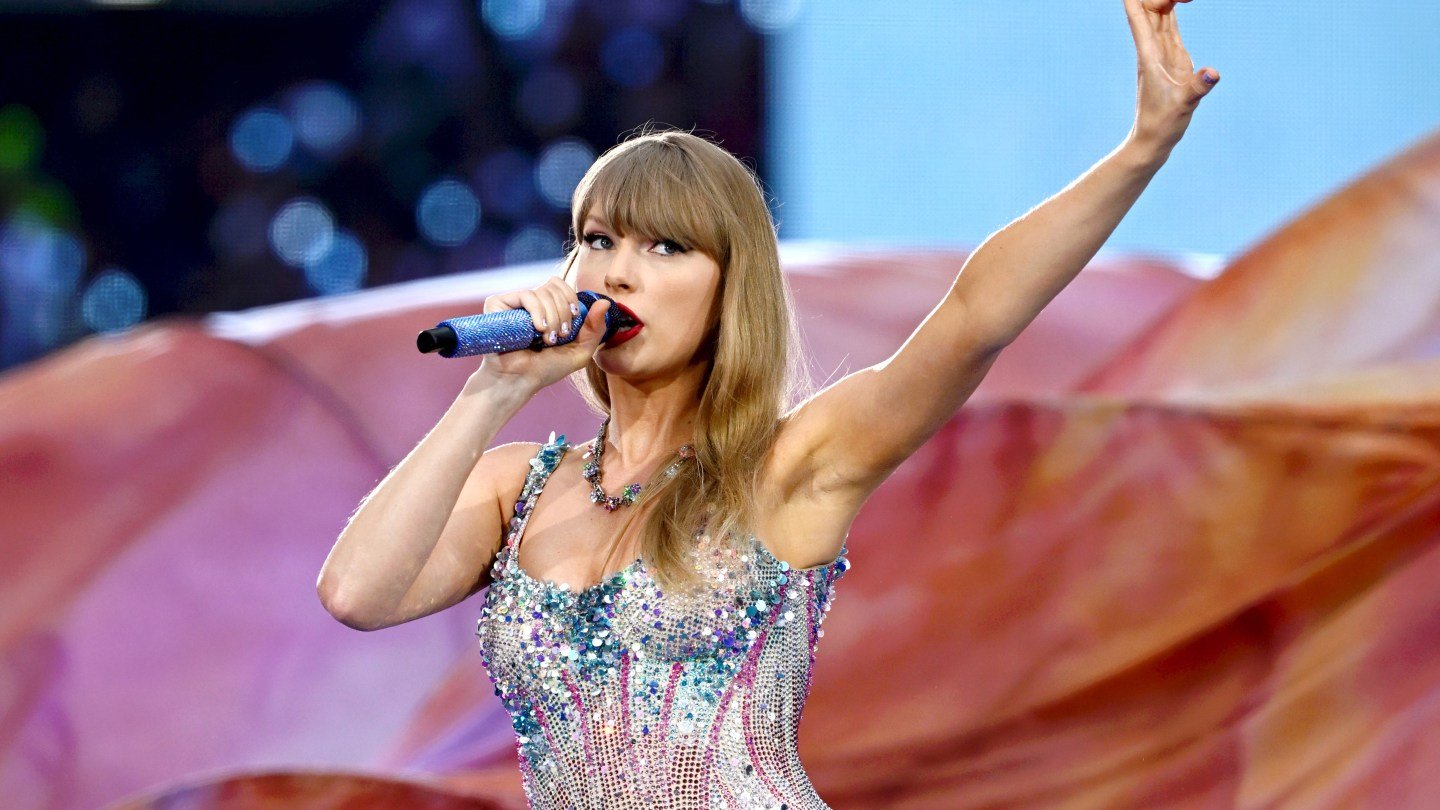
Taylor Swift didn’t ask a network to validate her tour. She made it global. The Eras Tour wasn’t content — it was canon. She didn’t just perform. She re-authored the relationship between artist and audience. MrBeast, with his clickbait philanthropy and real-time spectacle, pulls in more views than most studios get in a year. He doesn’t need a distribution arm. He is the algorithm.
These aren’t flukes. They’re blueprints. And they’re working.
Meanwhile, Hollywood is still trying to manufacture FOMO with embargoes and billboard takeovers. It’s bringing a press pack to a meme war.
Executives talk about box office fatigue and streaming churn like they’re weather patterns. But these aren’t external forces. They’re internal failures:
– The myth that audiences will always come back.
– The myth that IP alone can hold attention.
– The myth that volume equals value.
While the system doubles down on scale, creators are burning out. Viewers are checking out. Executives are cashing out.
This isn’t an obituary. It’s a reckoning.
The old toolkit — platform monopolies, launch windows, press rollouts — hasn’t disappeared. It’s just lost its edge. The audience no longer waits. It no longer wonders. It no longer obeys.
And yet, one thing still works: the story.
Not the franchise. Not the trailer. Not the metrics. The story.
The kind that pierces the noise because it carries something algorithms can’t replicate: risk, truth, meaning. Something made for humans, not platforms.
Everything Everywhere All At Once. Barbie. Oppenheimer. Each ignored the rulebook. Each made a moment — not by maximizing impressions but by taking creative risks no spreadsheet could predict.
For creators — especially the ones I work with — this is your cue. Stop waiting for the machine to call you back. You’re not in a queue anymore. The tools are in your hands. You get to build your audience, on your terms, with your version of unforgettable.
The question isn’t how to compete with the algorithm. It’s what you’re willing to say that it can’t.
Hollywood won’t win by chasing virality. It can’t. Its power lies in crafting the things people choose to keep.
Because when everything else is disposable, memory is the only platform that still matters.
Hollywood didn’t lose the game. It built the machine, got high on its own supply — and forgot why the world ever cared in the first place.
