

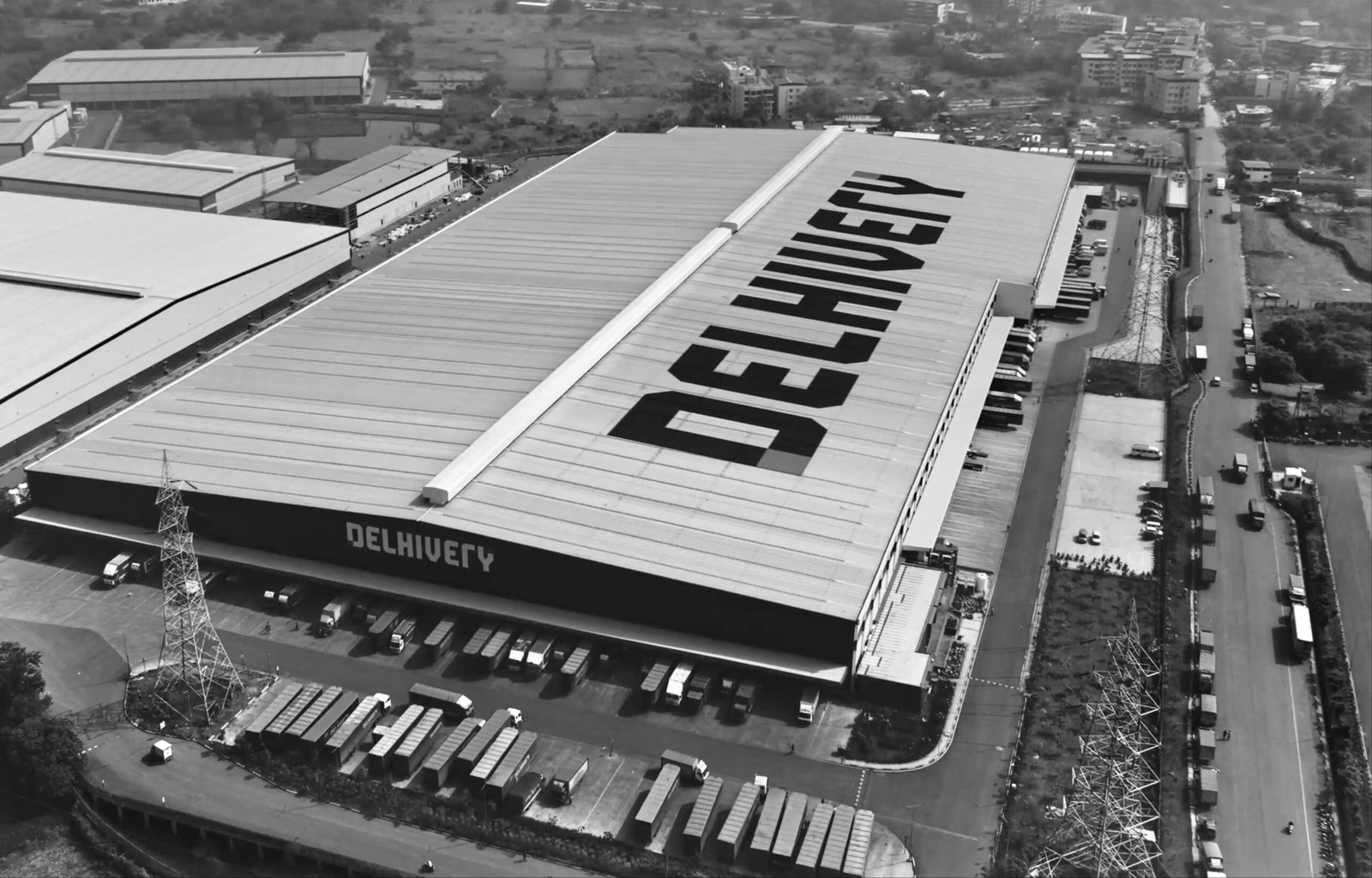
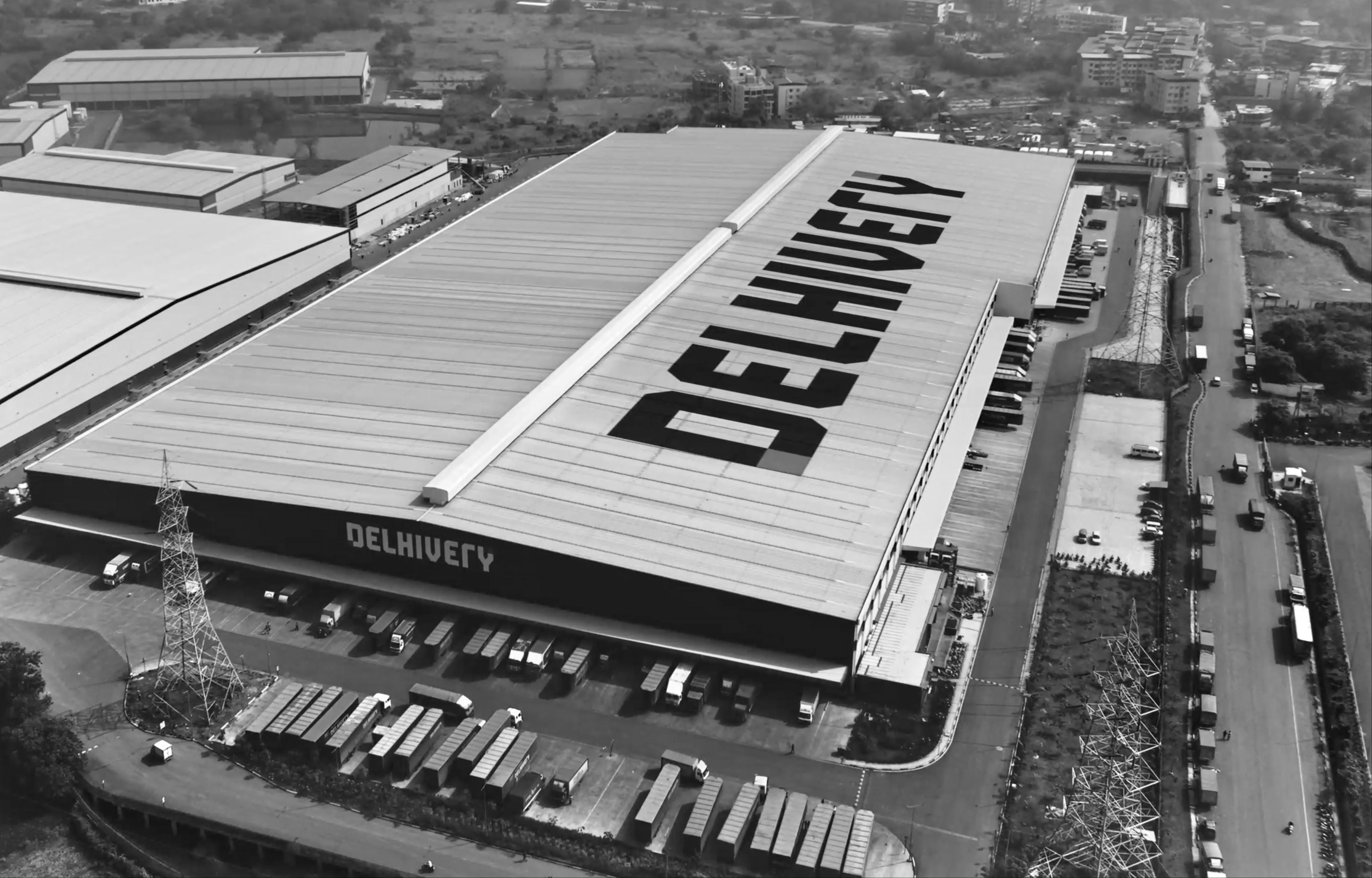
Delhivery began fiscal 2026 with a sharp improvement in profitability, as India’s largest integrated logistics provider reported a 68.5% year-on-year jump in net profit for the June quarter. The company posted a net profit of Rs 91 crore in Q1 FY26, compared to Rs 54 crore a year earlier, with profit margins expanding to 3.8% from 2.4%.
EBITDA (Earnings Before Interest, Taxes, Depreciation, and Amortisation) rose to Rs 149 crore, a 6.5% margin, up from Rs 119 crore in the previous quarter and Rs 97 crore a year earlier, reflecting ongoing efficiency gains and better cost control. The strong margin expansion came despite modest growth in revenue, which rose 6.2% year-on-year to Rs 2,424 crore. Service revenue, which excludes other operating income, grew 5.6% to Rs 2,294 crore.
“Our capex cycle for infrastructure buildout peaked in FY22 to FY25. Going forward, we expect our steady-state capital expenditure to normalise to around 4% of revenue by FY28,” the company said in its shareholder letter.
Corporate overheads dropped to 9.1% of revenue in the quarter, compared to 11.4% in FY23. Management is targeting a further decline to 6–7% over the medium term. Working capital days, another key indicator of operating health, were reduced to approximately 20 days, with further improvements expected over the next three years.
Growth driven by core businesses
Delhivery’s express parcel segment shipped 208 million packages, growing 14% year-on-year and 17% sequentially. The express business benefited from price rationalisation, improved shipment mix, and cost efficiencies, although the company remains cautious about external macro conditions.
The partial truckload (PTL) freight segment, another core revenue driver, handled 458,000 metric tons, a 15% increase over the previous year. Margins in PTL improved by 1.9 percentage points sequentially. The company reaffirmed its ambition to expand PTL tonnage at 20% annually, with a target of steady-state EBITDA margins of 16 to 18%.
Meanwhile, supply chain services (SCS) continued to mature, achieving an EBITDA margin of 7.2% in the quarter. Delhivery outlined a medium-term plan to scale SCS to Rs 1,800 to Rs 2,000 crore in annual revenue within three years, with a targeted 12% EBITDA margin and over 20% return on capital employed.
Broadening the service portfolio
In parallel with its core operations, Delhivery has begun rolling out a new suite of value-added services aimed at consumers, SMEs, and freight operators, further diversifying its business model.
The company launched Delhivery Direct, a same-city, on-demand delivery service for consumers and small businesses, in Ahmedabad, Delhi NCR, and Bengaluru. Built into the Delhivery app, the service targets a segment largely untapped by national logistics providers, including intra-city shipments from individuals and local SMEs.
Another addition was Delhivery Protect, a transit insurance product integrated with the company’s self-serve shipping platform, Delhivery One. The offering caters to SMEs looking for greater control over shipment risk and fulfillment reliability.
In the Rapid Commerce vertical, better known as quick commerce, Delhivery expanded its dark store network from 20 locations and plans to reach 35 to 40 stores by Q4 FY26. It is targeting Rs 80 to Rs 100 crore in annualised revenue. While the segment is still nascent, it represents Delhivery’s entry into faster-turnaround, inventory-led delivery models that could attract B2B and quick-commerce brands.
The company is also preparing to launch an economy cross-border parcel product in Q3 FY26, in partnership with global logistics players FedEx and Aramex. The service will aim to capture value in small-package export and import flows, particularly from Indian SMEs tapping into global marketplaces.
In the full truckload (FTL) segment, Delhivery continues to build its digital freight platform, Orion, which is currently transacting about Rs 110 crore in monthly freight volumes. Management indicated that Orion would soon include services such as fuel financing, asset loans, and working capital products, echoing models adopted by logistics platforms in the U.S.
Integration of Ecom Express
One of the biggest strategic moves this year was Delhivery’s acquisition of Ecom Express, a rival logistics player. The transaction closed on July 18, 2025, and while it did not impact the Q1 results, the company noted that integration costs, capped at Rs 300 crore, will reflect in Q2 and Q3 FY26.
.thumbnailWrapper{
width:6.62rem !important;
}
.alsoReadTitleImage{
min-width: 81px !important;
min-height: 81px !important;
}
.alsoReadMainTitleText{
font-size: 14px !important;
line-height: 20px !important;
}
.alsoReadHeadText{
font-size: 24px !important;
line-height: 20px !important;
}
}

“The financial results of Ecom Express will be consolidated starting Q2 FY26,” the company said. The integration process is already underway. Analysts expect the acquisition to bolster Delhivery’s last-mile and express infrastructure, though the short-term impact on margins remains to be seen.
The integration marks the culmination of Delhivery’s multi-year plan to consolidate scale in India’s fragmented logistics space. Having spent heavily on warehousing, automation, and fleet expansion between FY22 and FY25, the company now appears to be entering a more measured phase. The focus is on monetising assets, expanding service offerings, and improving return on invested capital.
Outlook
Management commentary was cautiously optimistic. Despite global macro volatility and rising operational costs, Delhivery sees strong medium-term visibility in its core segments and adjacent businesses. The combination of high-volume express delivery, expanding PTL operations, maturing supply chain contracts, and newly launched services offers a diversified runway for growth.
The company did not offer explicit full-year revenue guidance but reiterated its focus on improving unit economics, platform engagement, and capital efficiency.
For investors, the results underscore Delhivery’s transition from growth at all costs to a more disciplined, margin-led growth strategy. While the logistics sector remains competitive and price-sensitive, Delhivery’s asset base, technology infrastructure, and broadening product suite position it well as Indian commerce continues to digitise.
Edited by Jyoti Narayan
