

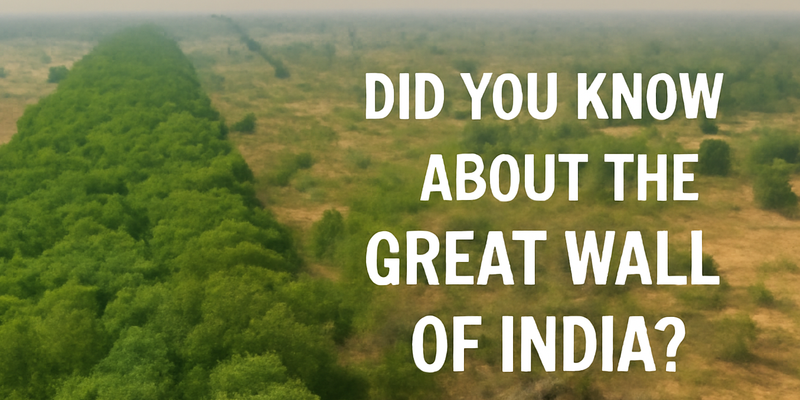
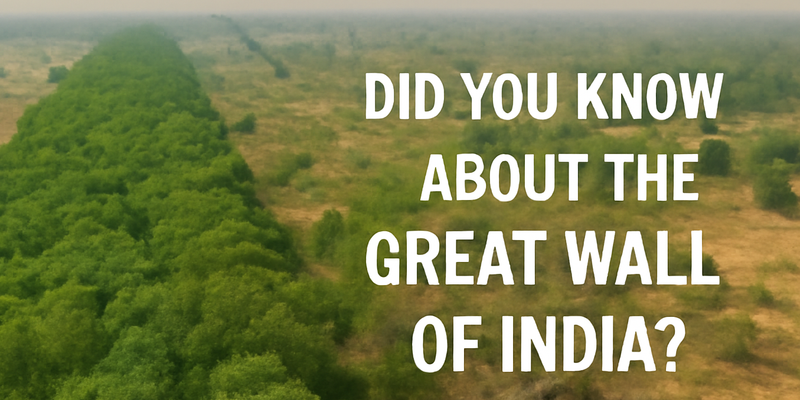
India is constructing a monumental green barrier a 1,400 km-long, 5 km-wide tree-based wall stretching from Gujarat to Delhi. This ambitious project, known as the Aravalli Green Wall, aims to combat the encroaching Thar Desert and restore the ecological balance of the Aravalli Range.
The Silent Invader: Thar Desert’s Encroachment
The Thar Desert, India’s largest arid region, has been steadily advancing eastward. In the past 15 years alone, it has degraded over 3.46 crore acres of land. This encroachment threatens agriculture, water resources, and the livelihoods of millions in northwestern India.
The Broken Shield: Aravalli Hills Under Siege
Historically, the Aravalli Hills acted as a natural barrier, preventing desert winds and dust from spreading eastward. However, decades of illegal mining and deforestation have severely degraded this once-vibrant ecosystem. Between 1975 and 2019, nearly 8% of the Aravalli hills vanished, with projections indicating a 22% loss by 2059 if current trends continue. The Supreme Court has expressed concern over the disappearance of 31 hills in Rajasthan due to illegal mining, highlighting the urgency of protecting this vital region.
The Green Wall: A Strategic Response
In response to these challenges, India is implementing the Aravalli Green Wall Project, inspired by Africa’s Great Green Wall. This initiative aims to restore 1.1 million hectares of degraded land by 2027, spanning across Gujarat, Rajasthan, Haryana, and Delhi.
Key Features of the Green Wall:
- Afforestation: Planting native tree species such as Arjuna, Dhau, Khejri, and Banyan to restore biodiversity and act as carbon sinks.
- Water Conservation: Reviving 75 water bodies and implementing rainwater harvesting techniques to recharge groundwater levels.
- Soil Restoration: Enhancing soil fertility and preventing erosion through sustainable land management practices.
- Community Engagement: Involving local communities in plantation drives and providing employment opportunities to foster a sense of ownership and responsibility.
The Urgency: Acting Before It’s Too Late
The degradation of the Aravalli Hills and the advancing Thar Desert pose significant threats to the ecological and economic stability of northwestern India. Without immediate intervention, large parts of this region may succumb to desertification, leading to loss of arable land, water scarcity, and displacement of communities.
Conclusion: A Call to Action
The Aravalli Green Wall Project represents a critical step in safeguarding India’s ecological future. By restoring the Aravalli Hills and halting the eastward march of the Thar Desert, this green barrier will protect biodiversity, conserve water resources, and ensure the sustainability of agriculture and livelihoods in the region.
As India embarks on this monumental task, it is imperative for all stakeholders government agencies, environmental organizations, and local communities to collaborate and contribute to the success of this initiative. The Great Wall of India is not just a structure; it is a testament to the nation’s commitment to preserving its natural heritage for future generations.
Edited by Rahul Bansal
