

In India, pickleball has grown from a niche pastime into a rapidly emerging recreational movement. The sport combines elements of tennis, badminton and table tennis, and its simplicity has made it appealing to players across generations.
However, the sport’s growth has been hampered by fragmented infrastructure and a lack of organisation. Players often struggled to locate proper courts, tournaments frequently ran behind schedule due to poor planning, and the community relied on scattered WhatsApp groups for communication.
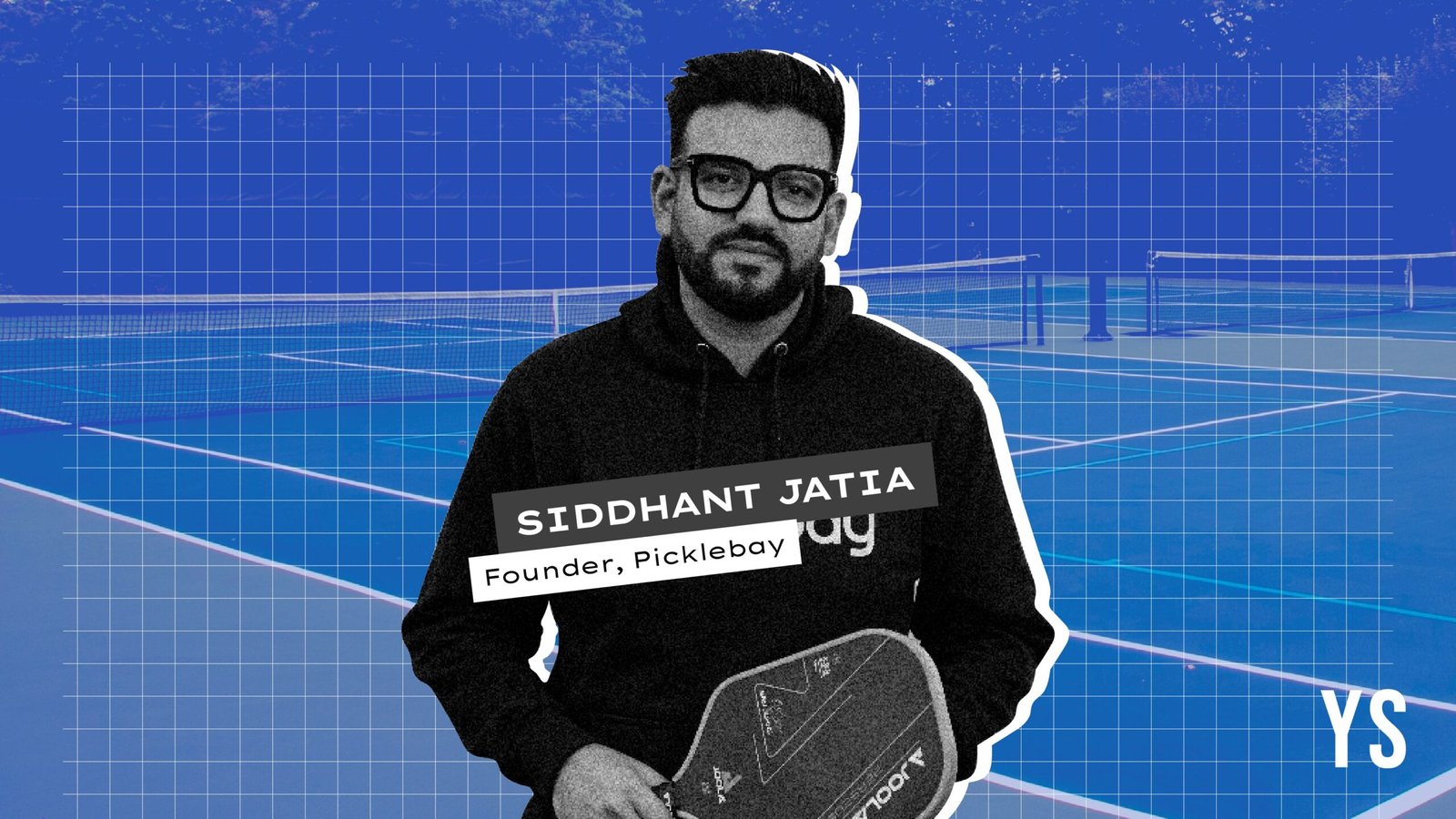
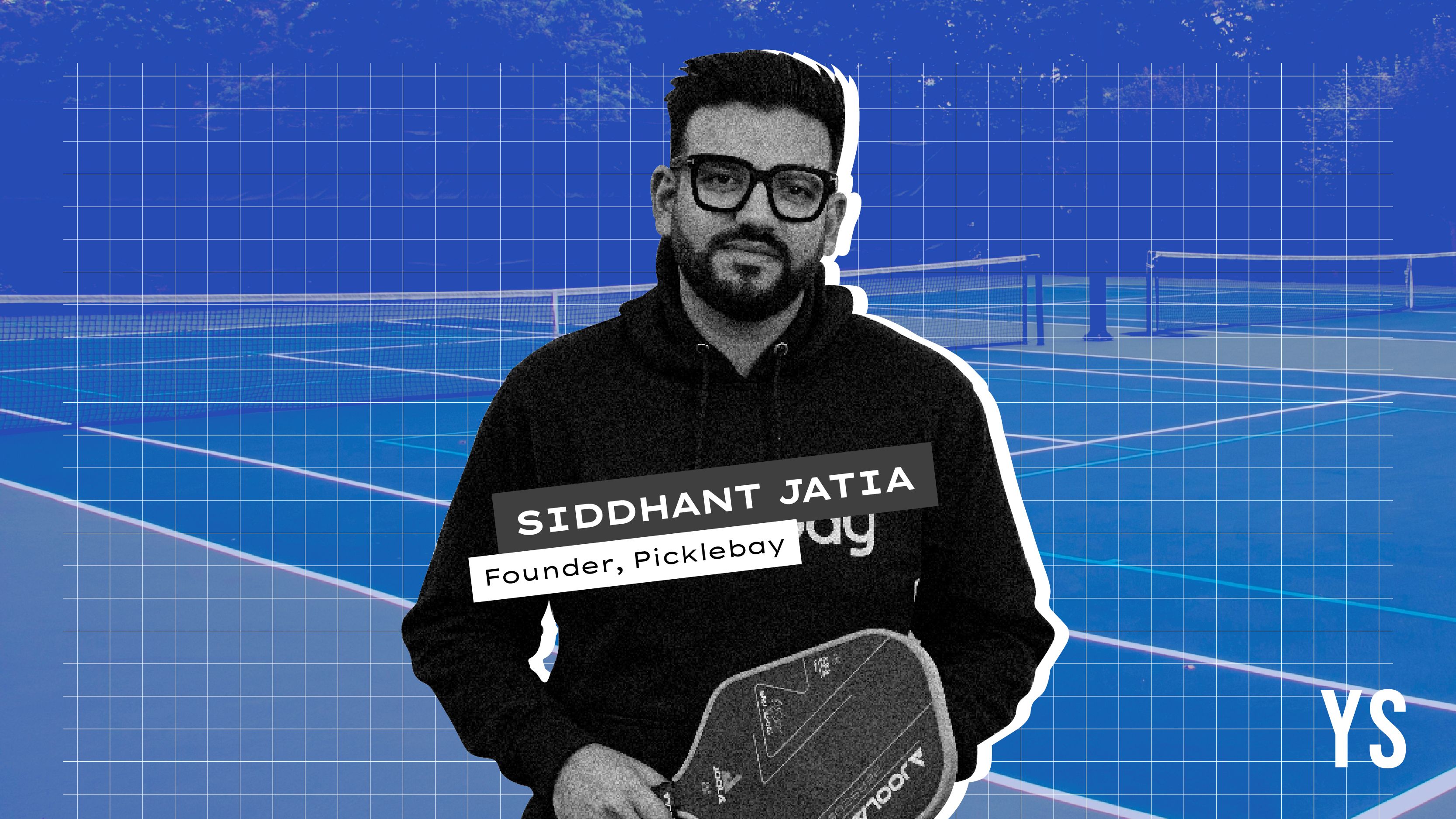
Founded this May, Picklebay has emerged as India’s first tech-integrated, end-to-end platform dedicated entirely to pickleball.
“It was a sport with tremendous energy but no structure,” recalls Siddhant Jatia, founder of Picklebay. “Every time I played, I could sense how much people loved the game, but I also saw the frustration. I was playing four to five times a week, but there was no easy way to find regulation-sized courts or players of my skill level. Tournaments would drag on for hours because of poor scheduling.”
To create a reliable database of facilities, the team physically visited every pickleball court across six major cities: Delhi, Hyderabad, Chennai, Kolkata, Mumbai, and Bengaluru. Today, Picklebay lists around 225 facilities representing 600-650 courts. Each listing includes live images, verified measurements, and details of amenities such as lighting, parking, and washrooms.
“We wanted to eliminate the guesswork that players face and build trust through data accuracy,” Jatia says. “For instance, if a court measures slightly less than the regulation size of 60 by 30 feet, say 54.6 feet, we ensure that players are informed about it.”
In the near future, Picklebay plans to expand from a discovery platform to include real-time booking features, allowing users to reserve courts directly, a crucial step toward building a transactional ecosystem.
The birth of Picklebay
The idea for Picklebay emerged in late 2024, when Jatia, who comes from a 120-year-old business family with experience across healthcare, hospitality, and automotive sectors, encountered these challenges firsthand as a player.
<figure class="image embed" contenteditable="false" data-id="577861" data-url="https://images.yourstory.com/cs/2/6c7d986093a511ec98ee9fbd8fa414a8/WhatsAppImage2025-07-25at8-1753702177576.jpeg" data-alt="Picklebay" data-caption="
Picklebay players
” style=”float: right; margin-left: 20px; width:50%; height:auto”> Picklebay players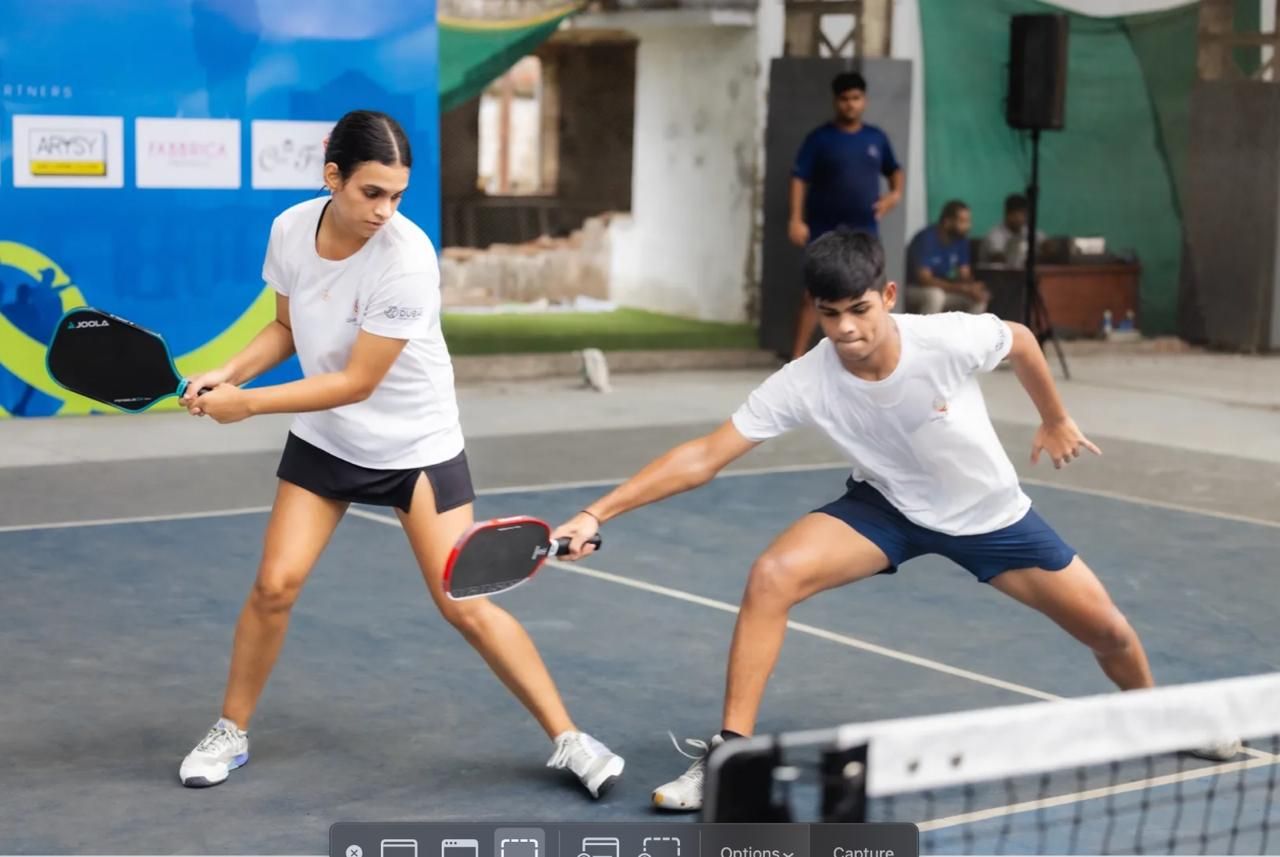
Having started working at the age of 16 and explored several entrepreneurial ventures, Jatia had both the vision and drive to address the gaps he witnessed. A 10-month management programme at the University of California, Berkeley, further shaped his belief in building scalable, tech-enabled platforms that solve real-world problems.
Work on Picklebay began in October 2024, and after seven months of development, the platform officially launched in May 2025. Bootstrapped with an initial investment of Rs 1.5 crore, Picklebay started by addressing one of the sport’s most pressing needs: verified court discovery.
.thumbnailWrapper{
width:6.62rem !important;
}
.alsoReadTitleImage{
min-width: 81px !important;
min-height: 81px !important;
}
.alsoReadMainTitleText{
font-size: 14px !important;
line-height: 20px !important;
}
.alsoReadHeadText{
font-size: 24px !important;
line-height: 20px !important;
}
}

Beyond digital solutions, Picklebay actively supports the development and maintenance of pickleball facilities. The company partners with schools, hotels, real estate developers, and institutions to design and implement courts that comply with global benchmarks.
“Recognising the importance of quality infrastructure in shaping the sport’s future, we’ve taken on the role of a trusted partner for facility development. Through strategic consulting and hands-on execution, we ensure that every court we help build supports both community-level engagement and professional play,” Jatia explains.
User growth and market potential
Within just two months of its launch, Picklebay has over 1,100 registered users, with metro cities like Mumbai, Bengaluru, and Kolkata showing the strongest traction. Delhi-NCR, Hyderabad, and Ahmedabad are next in line for expansion.
“We started with around 250 users in our first month, grew to over 750 in the second, and we’re now adding users at 70-80% month-on-month,” Jatia notes. “By the end of 2025, our goal is to reach 20,000 users.”
According to The CapTable, India’s pickleball courts grew from about 200 in early 2024 to over 1,200 today, with 3–4 new courts opening weekly in cities like Mumbai, Bengaluru, Delhi, Hyderabad, Ahmedabad, and Surat. With active players expected to reach 1 million by 2028 (a 1,500% rise), demand is projected to soar to 2,500 courts.
“We know the challenges, limited sponsorships, lack of media coverage, but we’re building the foundation now. This sport is inclusive, exciting, and on the verge of a boom. Picklebay will be there to lead that growth,” Jatia adds.
.thumbnailWrapper{
width:6.62rem !important;
}
.alsoReadTitleImage{
min-width: 81px !important;
min-height: 81px !important;
}
.alsoReadMainTitleText{
font-size: 14px !important;
line-height: 20px !important;
}
.alsoReadHeadText{
font-size: 24px !important;
line-height: 20px !important;
}
}

Tournament technology and operations
Picklebay has built a custom tournament management platform designed to automate the entire process, from digital registrations and fixture creation to live scoring, progression tracking, and real-time results.
<figure class="image embed" contenteditable="false" data-id="577862" data-url="https://images.yourstory.com/cs/2/6c7d986093a511ec98ee9fbd8fa414a8/WhatsAppImage2025-07-25at8-1753702373628.jpeg" data-alt="Picklebay " data-caption="
Picklebay tournament
” style=”float: left; margin-right: 20px; width:50%; height:auto” align=”center”> Picklebay tournament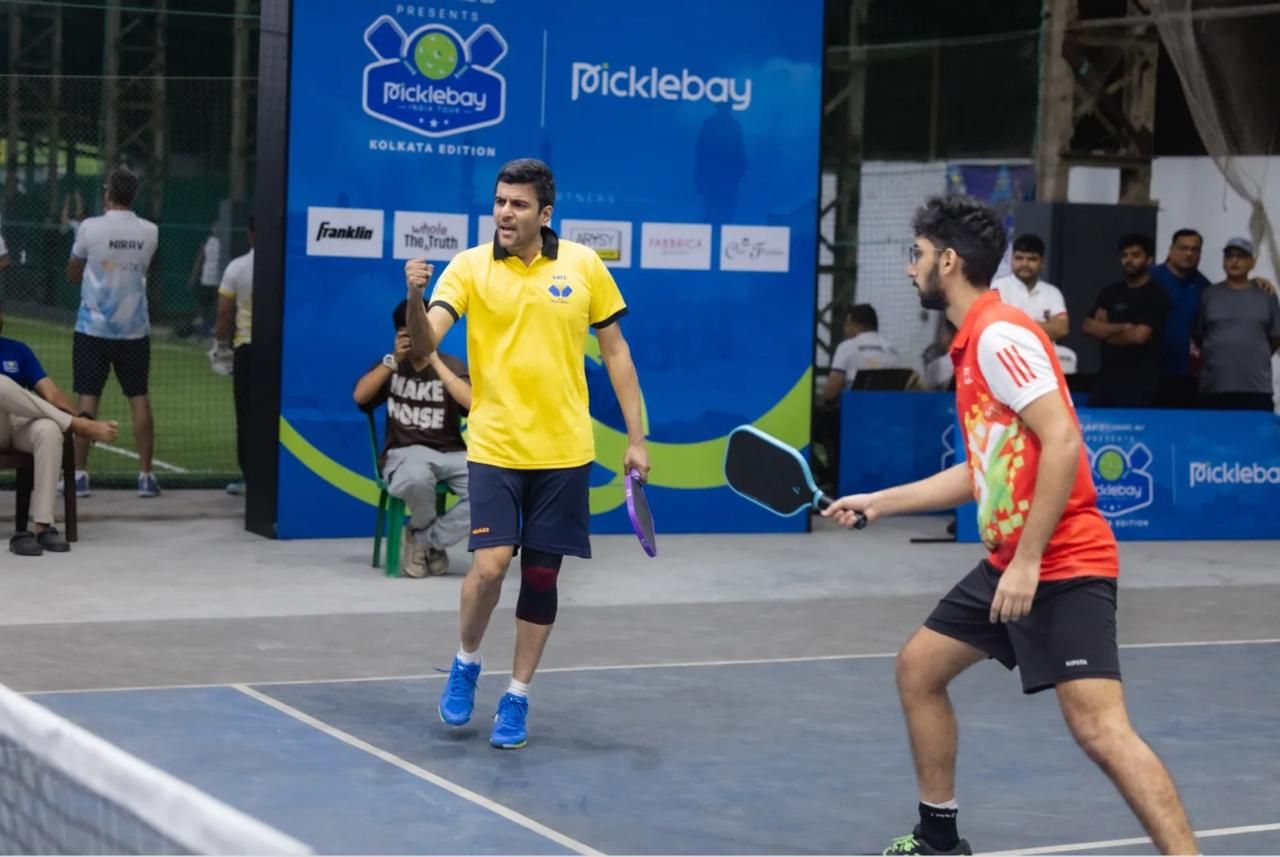
“Tournaments used to be frustrating for both organisers and players. We wanted to remove that frustration. Our system ensures that events run like clockwork. Players know exactly when they’re playing, and everything is transparent,” he says.
The technology has already been deployed in Picklebay’s 10-city India Tournament Series 2025. Its events have drawn overwhelming participation, with over 400 players in Mumbai and 500 in Kolkata, including 300+ singles and doubles registrations. “In Mumbai, the event even finished 10 minutes ahead of schedule, something that rarely happens in Indian tournaments,” Jatia recalls.
Multi-channel revenue model
Picklebay operates on a diversified monetisation strategy spanning court bookings, tournament registrations, infrastructure consulting, corporate engagements, and community events. Tournament fees typically range between Rs 1,000 and Rs 2,000 per player, while brand sponsorships from companies like Gold’s Gym, Bluetokai, SC Bank, and Draft Motors further contribute to revenue.
“We’re still in the early stages of monetisation, but our model is designed to scale across multiple touchpoints. Our retreats, events, and corporate leagues are already attracting interest from brands that want to associate with this growing sport,” he says.
Community building and corporate engagement
Picklebay’s efforts go beyond infrastructure and tournaments; community building is a core pillar of its strategy. The platform is set to launch a dedicated community feature, enabling players to create games, connect with partners of similar skill levels, and interact directly without relying on fragmented WhatsApp groups.
“We’ve outgrown WhatsApp groups,” Jatia says. “What players need is a digital home where they can connect, plan matches, and grow the community in an organised way.”
To foster engagement, Picklebay organises social events like DJ breakfast games and glow-in-the-dark pickleball nights. These initiatives have helped build a community of over 1,300 active users in just 2.5 months.
In July 2025, Picklebay also launched its corporate engagement programme, offering masterclasses by national players, structured coaching sessions, intra-corporate tournaments, and inter-company leagues.
“The beauty of pickleball is that it’s simple to learn and doesn’t require huge investments. Setting up a professional-grade court costs just Rs 3-3.5 lakh, which makes it perfect for corporates,” Jatia notes.
Picklebay has also introduced curated travel experiences that blend sport with leisure. Its first international retreat, a 20-person trip to Phuket in August 2025, combines professional coaching sessions during the day with social experiences like evening beach clubs.
“Having played across the world, I value how professionally these events are managed here — on-time matches, attention to detail, and technology that keeps everything transparent and accessible. It’s a platform that truly understands what players need.” Vinay Sethia, India No. 12 (DUPR (Dynamic Universal Pickleball Rating) Rankings)
“Picklebay has redefined my experience with the sport in India. It’s not just about finding courts or players, it’s about how seamlessly everything comes together, from information to tournament updates,” he adds.
Looking ahead
The startup is preparing to integrate AI-driven features such as automated skill categorisation (beginner, intermediate, advanced), smart player matchmaking, and performance analytics based on match history.
“We’re collecting data now to build a smarter system. By the end of 2025, AI will help players find equally skilled partners and track their progress over time, making the entire experience more competitive and engaging,” Jatia adds.
Picklebay’s 10-member core team includes seasoned professionals with over a decade of experience in global sporting events such as the IPL, Australian Open, and World Cups — a testament to its vision of building a structured, scalable pickleball ecosystem in India.
Globally, platforms like Court Reserve, PodPlay, PicklePlay, Global Pickleball Network, Club Automation, PB360, and Gametime Hero dominate the pickleball management and engagement space. However, in India, such platforms are limited. PickleBay primarily competes with organisations like the All India Pickleball Association (AIPA), World Pickleball League (WPBL), and regional initiatives such as Konnect Pickleball.
“With Picklebay, our aim is to create an inclusive ecosystem where players of all levels feel at home, making the game accessible across cities and communities,” he concludes.
Edited by Affirunisa Kankudti
