

Consumer demand for live and out-of-home entertainment remains high, but Generation Z consumers — born between 1996 and 2020 — are particularly motivated to pay extra for convenience, upgraded experiences and sustainable options, according to a new EY survey.
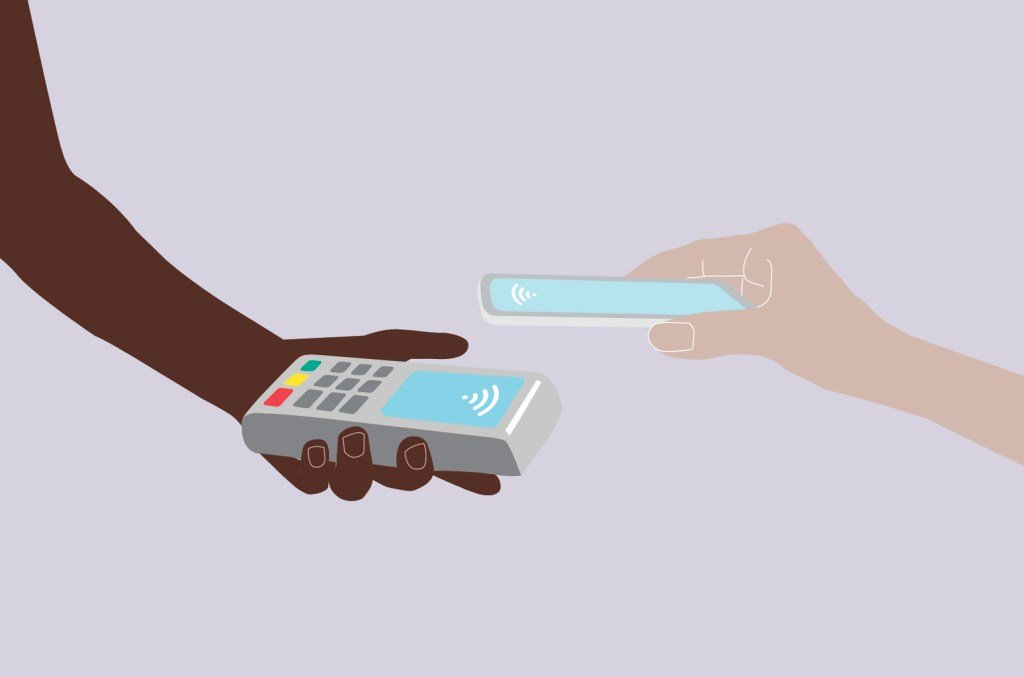
Perhaps not surprisingly, Gen Z is less patient than the average consumer. Nearly two-thirds (66%) of Gen Z respondents plan to buy a “fast pass” or priority pass to theme parks in the next year compared to 59% of all consumers, according to the inaugural EY Media & Entertainment (M&E) Pulse Poll, which surveyed 4,000 consumers across the U.S., U.K., Western Europe and the Asia-Pacific region. According to Javi Borges, EY global media and entertainment sector leader, companies that build convenience into their experiences can take advantage of consumers’ comfort with smartphone apps that offer digital ticketing and contactless payment and check-in.
“When you look at the Millennials and Gen Z, there’s an expectation of a certain level of tech enablement and frictionless experience,” he says. “And even older generations post-pandemic, that maybe had never ordered Uber Eats until the pandemic, now they’re just much more accepting of the apps and the frictionless experience.”
Speaking of Uber Eats, consumers’ desire for faster service is also reflected in a new McKinsey study, which found that delivery’s share of global food spending increased from 9% in 2019 to 21% in 2024, while takeaway’s share was flat and in-person dining fell to 55% from 69%. Though respondents weren’t polled specifically about music, this same trend toward speed and convenience can be traced in terms of modern-day music consumption habits, where streaming accounts for 69% of global music consumption in 2024 vs. 56% in 2019, according to the IFPI. And on the live front, concert promoter Live Nation says it now expects VIP offerings to account for 30% to 35% of its amphitheater business. Overall, McKinsey predicts that consumer tolerance for inconvenience will continue to decline as their desire for speed and service increases.
Despite news headlines that consumers are at a financial breaking point, local entertainment (i.e., entertainment that doesn’t require travel) and live entertainment were purchased by 48% and 46% of respondents, respectively, according to EY’s poll. The poll focuses on companies’ pursuit of consumers’ “fun money,” which Borges calls the 10% to 15% of income people set aside for leisure activities. This segment of discretionary spending goes toward everything from music and video streaming services to concerts and vacations.
“Globally, but especially in the U.S., we have more options battling for our fun money than ever before,” says Borges.
Spending on live music, which offers an increasing menu of VIP options that provide greater convenience than basic offerings, is especially strong. As Billboard noted in May, a Bank of America study found that U.S. consumers spent an average of $150 a month on entertainment — such as live music and theme parks — from May 2024 to April 2025. Over the same period, credit card holders spent double that amount on live event tickets, racking up an average of $300 per month. In the same study, a third of respondents said they plan to attend more events this year than last year.
Indeed, the trend in consumer spending — especially for the young, and especially since the COVID-19 pandemic — is toward experiences over material items. That said, people are willing to pay extra to make their experiences more pleasant or special. EY found that about half (49%) of respondents who visited theme parks or went on a cruise paid extra for premium options, while about a third did so for sporting events and casino/resorts.
Younger demographics are also willing to spend a premium of 26% or more on sustainable features when it comes to buying entertainment experiences. For example, 12% of all consumers will spend more on carbon offsetting compared to 25% of Gen Z and 15% of Millennials. Willingness to spend extra based on water conservation practices also splits the age groups: 11% of all consumers globally, but 23% of Gen Z and 15% of Millennials.
Live music has made strides to satisfy Gen Z’s preference for sustainable consumerism. Festivals are turning to batteries, sometimes powered by biodiesel or solar panels, instead of diesel-powered generators. That should be music to Gen Z ears: EY found that 24% of Gen Z would pay more for entertainment options that use renewable energy sources (versus 11% of all consumers) and 22% of Gen Z would pay a premium for lower energy consumption (versus 10% of all consumers).
Looking ahead, Americans are more likely to spend money at a casino in the next year than people in other regions surveyed (66% versus 49% globally), while Asia-Pacific respondents have a greater preference for theme parks (74% versus 65% globally). About half (48%) of respondents expect to spend the same amount of money on live entertainment in the next 12 months as the past 12 months. The percentage of people who expect to spend more and spend less is almost equal at 21% and 20%, respectively.
