

GST tax rates on common use items ranging from hair oil to corn flakes, TVs, and personal health and life insurance policies were slashed after the all-powerful GST Council on Wednesday approved a complete overhaul of the tangled Goods and Services Tax regime.
The GST Council approved rate overhaul by limiting slabs to 5% and 18% effective from September 22, the first day of Navaratri.
Almost all personal use items will see rate cuts as the government looks to boost domestic spending and cushion the economic blow of the US tariffs.
Briefing reporters after a marathon daylong GST Council meeting, Union Finance Minister Nirmala Sitharaman said all decisions were taken unanimously, with no disagreement with any state.
The panel approved simplifying the goods and services tax (GST) from the current four slabs—5%, 12%, 18% and 28%—to a two-rate structure—5 and 18% . A special 40% slab is also proposed for a select few items such as high-end cars, tobacco and cigarettes.
The new rates for all products, except gutkha, tobacco and tobacco products and cigarettes, will be effective September 22—the first day of Navratri, she said.
While daily use food items will continue to attract nil tax rate, common use food and beverages ranging from butter and ghee to dry nuts, condensed milk, sausages and meat, sugar boiled confectionery, jam and fruit jellies, tender coconut water, namkeen, drinking water packed in 20-litre bottles, fruit pulp or fruit juice, beverages containing milk, ice cream, pastry and biscuits, corn flakes and cereals, and sugar confectionery are likely to see a cut in tax rate to 5% from the current 18%.
All forms of chapati and paratha will be charged nil tax, down from the current rate of 5%.
<figure class="image embed" contenteditable="false" data-id="580204" data-url="https://images.yourstory.com/cs/2/d99b1110116911ed9e63f54395117598/FMImages2WithoutLogo7-1738503550012.jpg" data-alt=" Finance Minister Nirmala Sitharaman" data-caption="
Credit: Nihar Apte
” align=”center”> Credit: Nihar Apte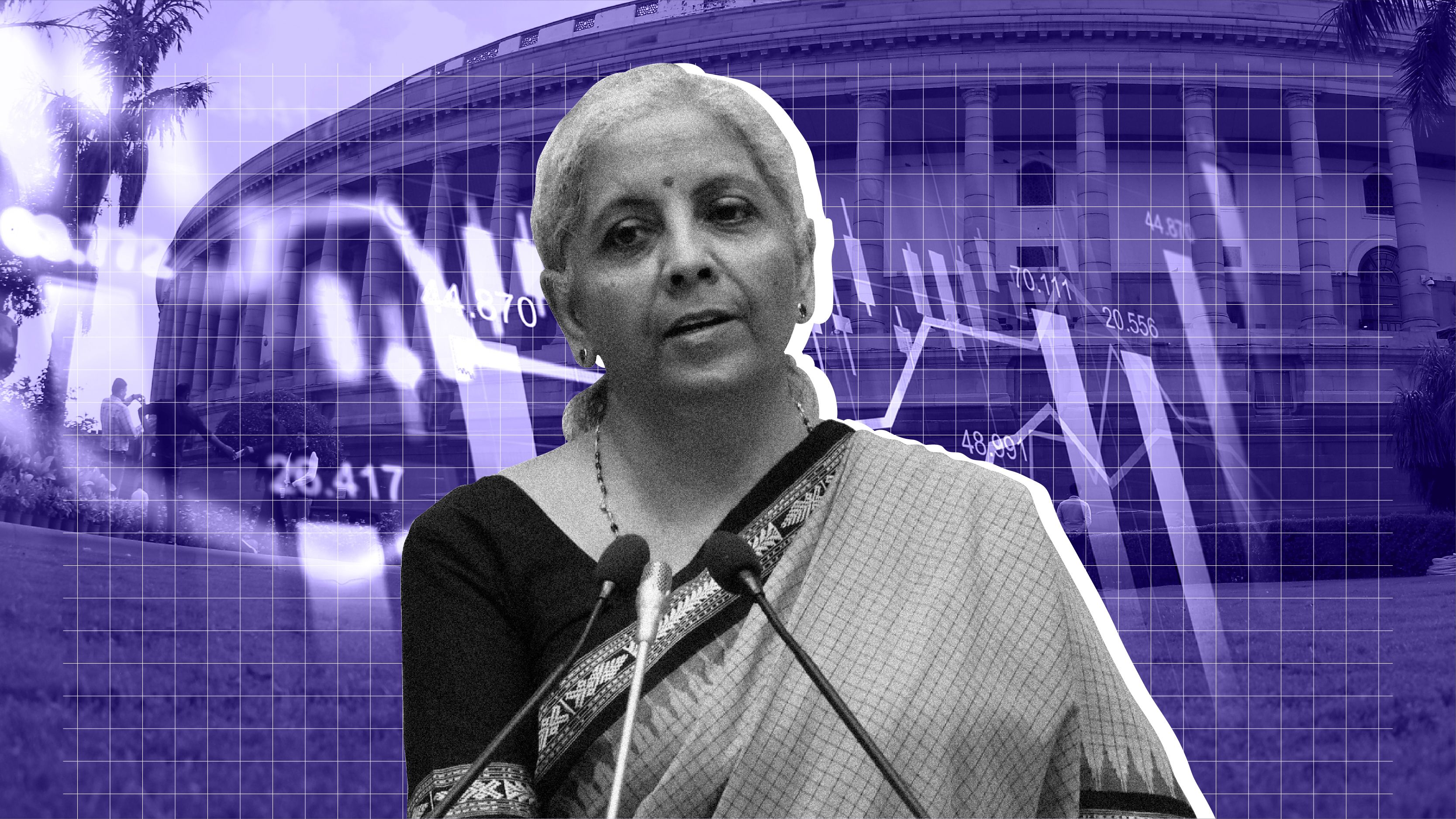
Consumer goods such as tooth powder, feeding bottles, tableware, kitchenware, umbrellas, utensils, bicycles, bamboo furniture, and combs will see rate cut from 12% to 5%. The rates on shampoo, talcum powder, toothpaste, toothbrushes, face powder, soap and hair oil has been cut down to 5% from 18%.
Sitharaman said all individual life and health insurance policies will now attract nil tax in a bid to boost coverage.
Cement will cost less with the tax rate coming down from 28% to 18%. Petrol, LPG and CNG vehicles of less than 1,200 cc and not more than 4,000 mm length and diesel vehicles of up to 1,500 cc and 4,000 mm length, too, would move to 18% rate from 28%.
All cars larger than 1,200 cc for petrol and 1,500 cc for diesel will be charged at 40%, the finance minister said.
Motorcycles up to 350 cc, consumer electronics like air-conditioners, dishwashers, and TVs, too, will be taxed at lower GST of 18% as against 28% currently.
All automobiles above 1,200 cc and longer than 4,000 mm as well as motorcycles above 350 cc, yachts and aircrafts for personal use, and racing cars will be attract a 40% levy.
EVs will continue to be charged at 5% GST.
The financial implication of the rate rationalisation would be Rs 48,000 crore and this would be fiscally sustainable, Revenue Secretary Arvind Shrivastava told reporters here.
.thumbnailWrapper{
width:6.62rem !important;
}
.alsoReadTitleImage{
min-width: 81px !important;
min-height: 81px !important;
}
.alsoReadMainTitleText{
font-size: 14px !important;
line-height: 20px !important;
}
.alsoReadHeadText{
font-size: 24px !important;
line-height: 20px !important;
}
}

The decision by the GST Council would bring down the overall premium as the tax component has significantly come down.
The government has collected Rs 16,398 crore from goods and services tax (GST) levied on healthcare and life insurance in FY24.
Of this, Rs 8,135 crore from life insurance and Rs 8,263 crore from health insurance. Additionally, Rs 2,045 crore was also raised as GST from re-insurance on life and health insurance last fiscal, including Rs 561 crore from reinsurance on life and Rs 1,484 crore on health care.
The move to simplify the tax regime, first announced by Prime Minister Narendra Modi in his Independence Day speech, comes as India’s exports to the US face a 50% tariff, the highest in the world.
The Indian economy is heavily reliant on consumption with private consumption accounting for 61.4% of the nominal GDP last fiscal.
The GST reforms are likely to boost the economy by up to 0.5 percentage points by the second year of its implementation, effectively neutralising the full impact of the US tariff, economists said.
Tobacco, gutkha, tobacco products and cigarettes will continue to be charged at current 28% plus a compensation cess till such time that loans taken to pay states for revenue loss is fully paid back, Sitharaman added.
Edited by Megha Reddy
