

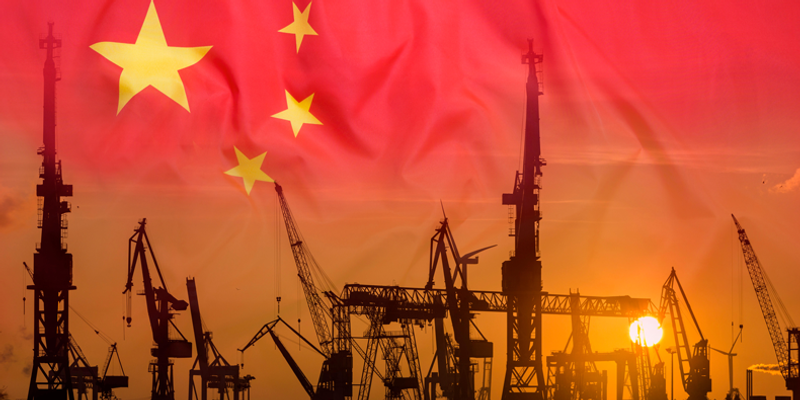
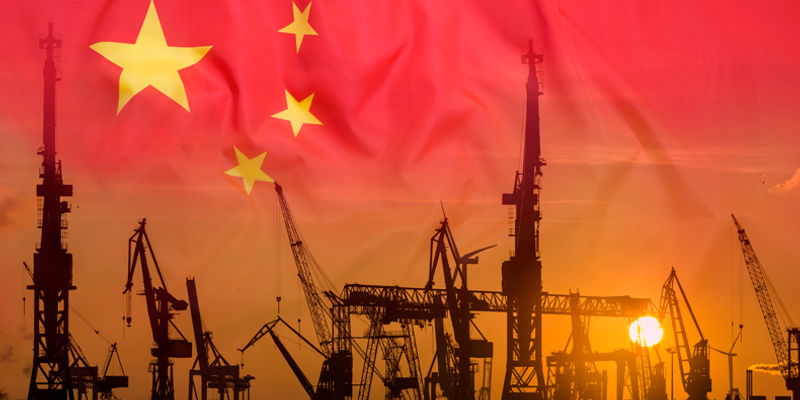
China’s rise as a global industrial powerhouse is nothing short of remarkable. Over the past few decades, the country has transitioned from a largely agrarian society to an advanced technological leader. At the heart of this transformation is a new industrial revolution, one that hinges not only on traditional manufacturing but on cutting-edge technologies such as clean energy, electric vehicles, and smart manufacturing. From the world’s largest solar plants to the emergence of a green energy superpower, China is reshaping industries at an unprecedented pace.
The Gonghe Talatan Solar Park: A Monumental Leap in Renewable Energy
One of the most striking symbols of China’s commitment to clean energy is the Gonghe Talatan Solar Park, located in the vast, sun-drenched deserts of Qinghai Province. Covering an area equivalent to 609 square kilometers (roughly the size of Singapore), this massive solar plant has an installed capacity of 15.6 gigawatts (GW). To understand the scale of this achievement, consider this: if the plant operates at full capacity, it would generate enough electricity to power the entire country of Norway.
But the Gonghe Talatan Solar Park is far from the only ambitious solar initiative in China. The country’s vast deserts are now home to some of the largest solar and wind farms in the world, and China continues to lead in the installation of solar panels and wind turbines. In 2024 alone, China added more than 244GW of new solar and wind energy capacity, a record-breaking achievement that highlights its global leadership in renewable energy development.
This massive investment in clean energy infrastructure is a direct response to the environmental challenges posed by overreliance on fossil fuels. As China strives to meet its carbon neutrality goals by 2060, the transition to clean energy is not just an economic imperative—it’s a matter of national survival.
China’s Clean Energy Investment: A $940 Billion Gamble
China’s commitment to transforming its energy sector is reflected in its astronomical investments. In 2024, the country invested a jaw-dropping $940 billion in clean energy technologies, more than the GDP of Poland and nearly on par with global fossil fuel investments. These investments are not just aimed at building the infrastructure necessary to meet domestic energy needs; they also serve a dual purpose: China aims to dominate the global renewable energy supply chain and set the stage for an export-led growth strategy in clean technologies.
This strategy is already bearing fruit. China now accounts for 64% of the world’s new renewable energy capacity, a number that far outpaces other nations. In the realm of electric vehicles (EVs), China produces nearly 70% of the world’s EVs, solidifying its status as the global leader in the electric mobility revolution.
Made in China 2025: A Vision for Technological Sovereignty
In 2015, China launched a comprehensive industrial strategy known as Made in China 2025, aimed at transforming the country from a manufacturing giant into a high-tech leader. The strategy emphasized five key industries: robotics, aerospace, biotechnology, electric vehicles, and renewable energy. The overarching goal was clear: China was determined to reduce its dependence on foreign technologies, create world-class domestic companies, and become a true industrial superpower.
The core of Made in China 2025 is state intervention. The Chinese government plays an active role in shaping the country’s industrial trajectory, providing direct subsidies, tax breaks, state-backed loans, and strategic investments to industries deemed crucial to national development. This level of state support has allowed Chinese companies to rapidly scale up, often at the expense of international competitors who cannot match the level of financial backing provided by the state.
In just a decade, China has made significant strides in achieving these goals. Companies like BYD, Longi Solar, and Goldwind have not only become global leaders in their respective industries but have also set new benchmarks for cost-effectiveness and innovation.
The Role of State Support in China’s Industrial Success
State support has been a critical factor in the success of China’s industrial revolution. In 2019, the Chinese government spent an eye-popping $400 billion to support various industrial sectors, including clean energy, electric vehicles, and advanced manufacturing. This spending takes many forms:
- Direct subsidies to companies, such as the $5 billion allocated to the electric vehicle sector in 2022.
- Tax incentives and exemptions to encourage innovation and investment.
- Loans from state-owned banks, often offered at favorable terms to ensure rapid growth in strategic sectors.
- Procurement policies, where government agencies purchase domestic products to create demand and boost local industries.
This extensive network of state-backed support has enabled Chinese companies to produce high-quality goods at extremely competitive prices, allowing them to dominate global markets. The government’s role in this process is undeniable, and it serves as a key differentiator between China and other industrialized nations.
Global Implications: Trade Wars and Market Dynamics
As China’s manufacturing power continues to grow, so too does its influence in global trade. However, China’s dominance in the renewable energy sector has sparked significant trade tensions with countries like the United States and members of the European Union. These nations have raised concerns that the flooding of cheap Chinese-made products, such as solar panels and electric vehicles, could decimate local industries.
For instance, Chinese-made solar panels have become so affordable that they now account for 80% of global production capacity, leading to accusations of dumping—selling products below market value to undermine competitors. Similarly, Chinese electric vehicles, which benefit from significant government subsidies, are seen as undercutting foreign manufacturers like Tesla and Volkswagen.
Despite these trade tensions, China’s approach to industrial development has proven resilient. The country continues to scale up its production capacity at a pace unmatched by other nations. In 2023, China produced 861 GW of solar panel modules, a figure that dwarfs global demand, pushing prices lower and making renewable energy more affordable worldwide.
The Overcapacity Dilemma: A Double-Edged Sword
While China’s production dominance in clean energy technologies has made renewable energy more affordable, it also comes with its challenges. The country’s overcapacity—the ability to produce far more than the domestic market can consume—has led to pricing pressures. Chinese manufacturers face intense competition within the domestic market, often selling products at a loss to maintain market share.
In the solar panel industry, for example, China had the capacity to produce more than 861 GW of solar panels in 2023, yet global demand was less than half that amount. This overcapacity has forced companies like Longi Solar, Trina Solar, and Goldwind to grapple with slim profit margins, even as they dominate global markets.
Despite these financial challenges, China’s strategy remains clear: produce more, sell cheaper, and continue to expand its global influence. The trade surplus that China has generated from its manufacturing sector is a testament to the effectiveness of this strategy.
Conclusion: A New World Order in Industrial Power
China’s industrial revolution is reshaping the global economic landscape. Through strategic state support, massive investments in clean energy, and a relentless drive to innovate, China is positioning itself as the dominant force in industries like renewable energy, electric vehicles, and advanced manufacturing.
While China’s model of state-led capitalism has raised concerns among international trade partners, the country’s economic success is undeniable. As the world moves towards a more sustainable future, China is at the forefront of this change, making green technologies more affordable and accessible to global consumers. The question now is whether other nations can keep pace or if China will continue to lead the charge in the global industrial revolution.
Ultimately, China’s rise as an industrial superpower marks the beginning of a new era. One where green energy and technological innovation are at the forefront, and the dynamics of global trade are fundamentally altered. Will the world embrace this new industrial order, or will it resist the dominance of Made in China? Only time will tell.
