

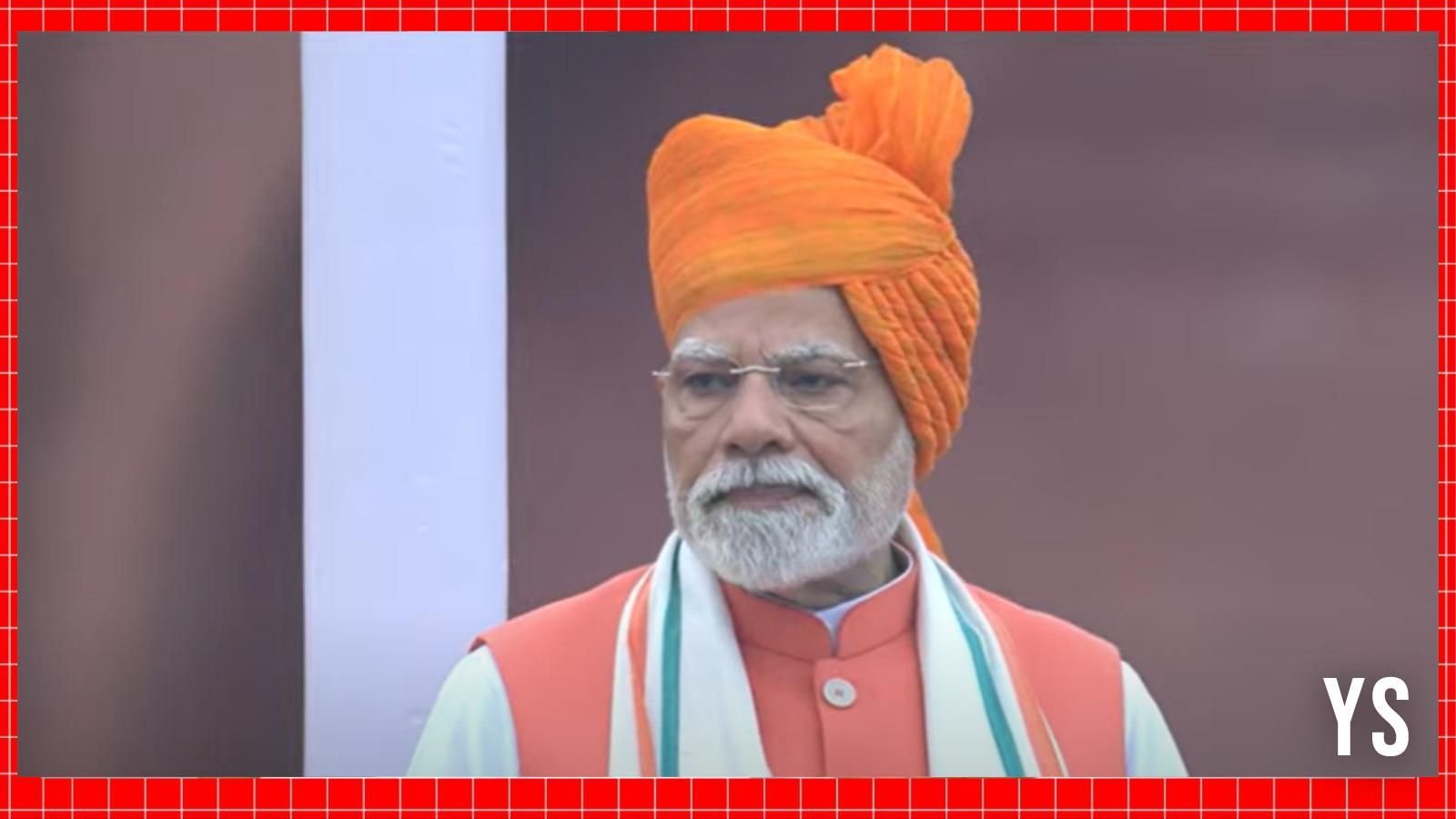
India has achieved its ambitious climate target of having 50% of its cumulative installed electricity capacity from non-fossil-based sources five years ahead of schedule, Prime Minister Narendra Modi said on Friday.
Addressing the nation on the 79th Independence Day, he said, “When the world today worries about global warming, India had decided that by 2030, we would increase the contribution of clean energy (to cumulative installed power capacity) to 50% in the country.
“Look at the capability and determination of my fellow citizens that the goal we had set for 2030, we achieved in 2025 itself, five years ahead of schedule… We are just as sensitive towards the world as we are responsible towards nature,” the PM said.
As of June 30, 2025, India’s total installed electricity capacity stood at 484.8 GW, of which 242.8 GW (or 50.08%) came from non-fossil-fuel sources, including renewables, large hydropower, and nuclear energy.
The PM added that India is opening up the private sector for nuclear energy, allowing private firms to mine, import, and process uranium and strengthen India’s position in the global clean energy transition.
“In the field of energy, we are heavily dependent on several countries to meet our energy needs… whether it is petrol, diesel, or gas… We have to spend billions to import them. We have introduced major changes in the nuclear energy sector. The field of nuclear energy has now been opened up to the private sector,” he said.
(With additional inputs from PTI)
