

Despite India’s booming startup ecosystem and its prowess in IT services, the country’s deeptech startups are fighting to leap ahead. India has only over 5,800 deeptech companies, according to Traxcn data, and is plagued with challenges such as insufficient R&D culture, long gestation period, regulatory hurdles, and reliance on component imports.
But enablers like NVIDIA are turning the tide and powering deeptech innovation from the ground-up. “At NVIDIA, acceleration is not just a buzzword; it’s the core of what we enable,” said Unnikrishnan A R, Head Developer Relations – South Asia, NVIDIA. “From domain-optimized libraries to protocol-driven agents, our platform helps startups move from concept to scale with unmatched speed.”
Unnikrishnan was delivering a keynote address on how NVIDIA helps startups accelerate technical innovation and business growth at every stage at the NVIDIA Inception program, held last month in Gurugram. The gathering brought together AI startups, founders, venture capitalists, and Inception members to innovate, scale potential, and network with industry leaders.
He laid out NVIDIA’s three foundational pillars for deeptech innovation:
- Graphics– Simulating the physical world through high-fidelity rendering.
- Physics simulation– Modeling real-world behavior in virtual environments.
- Intelligence simulation– Infusing AI into digital agents that can perceive, reason, and act autonomously.
“We’re transitioning from traditional APIs to autonomous agents that operate workflows, trigger other agents, and execute tasks end-to-end,” Unnikrishnan explained. “Founders must design not just for function, but for autonomy and scale.”
The deeptech stack behind the scenes
Bharath Gidwani, Senior AI Data Scientist & Solutions Architect at NVIDIA, in a deep-dive session, unpacked the infrastructure powering this future. From powerful GPUs to optimized libraries like TensorRT, CUDA, and NeMo, NVIDIA’s full-stack ecosystem enables efficient scaling across all stages of AI development.
“An agent doesn’t just respond; it decomposes the prompt, reasons, calls tools, accesses memory, and acts,” Gidwani noted. “To make this real at scale, you need orchestration, long-context models, tool-calling, and a robust compute backbone.”
Tools like NeMo Curator for data curation and synthetic data generation techniques are helping startups build high-performance models with domain-specific accuracy. This is especially important as inference costs balloon — sometimes demanding 100x more compute than training — due to the rise of reasoning-intensive, multi-step AI agents.
India’s window of opportunity
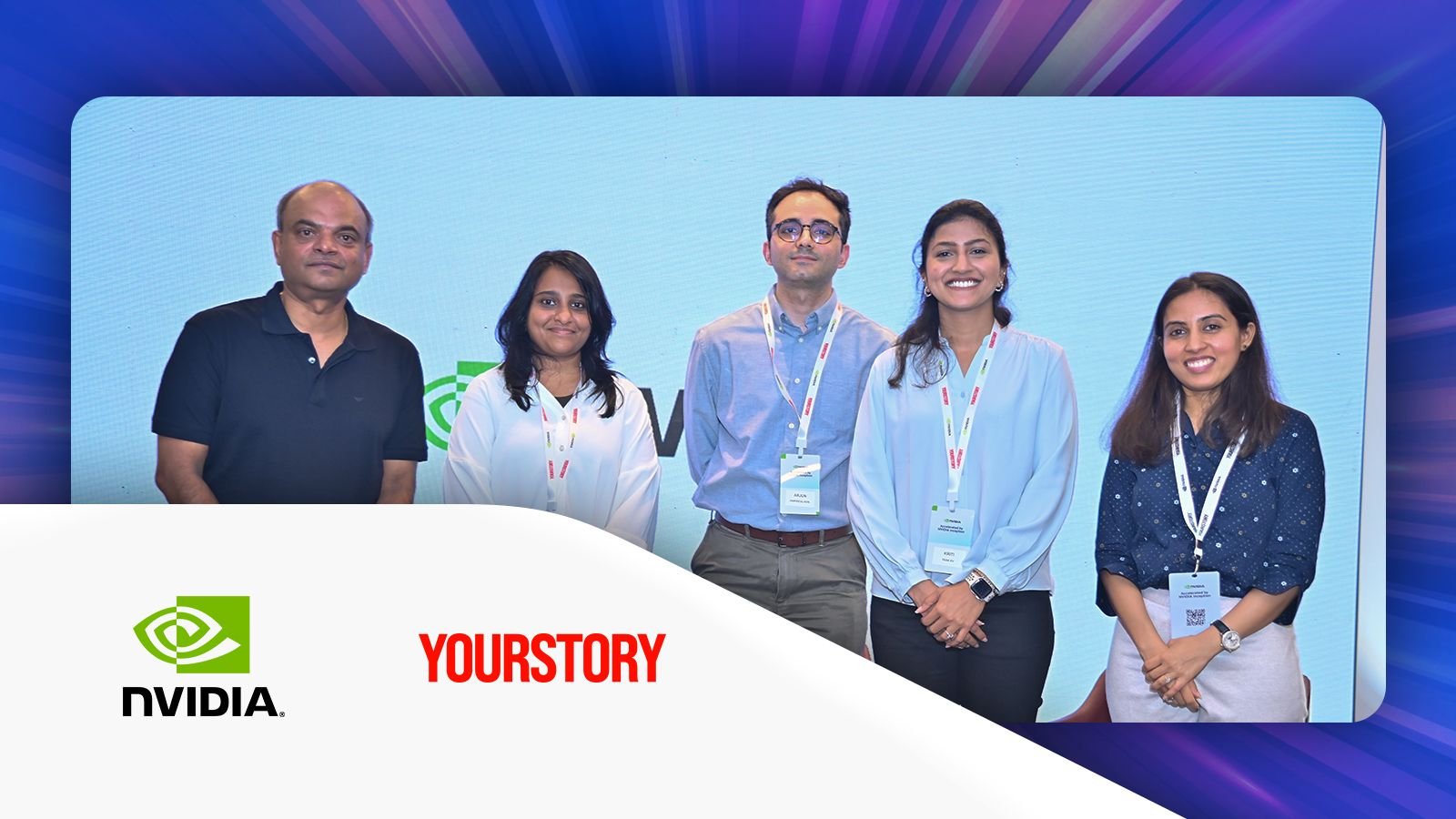
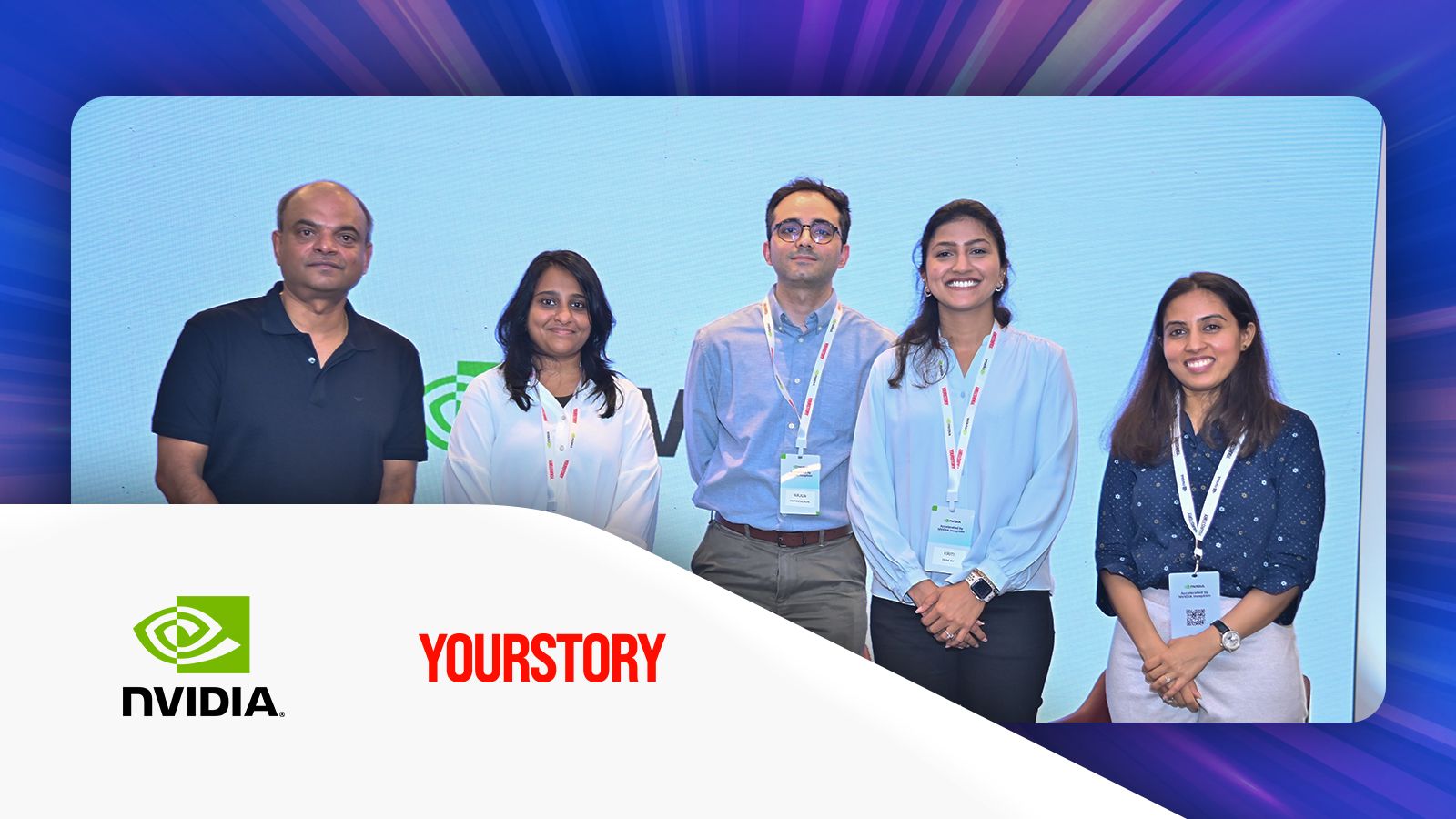
In a panel discussion titled ‘Accelerating India’s journey to becoming a global AI powerhouse and net producer of AI’, investors and founders offered a ground-level view of the opportunity and the urgency.
Pearl Agarwal, Founder and Managing Partner, Eximius Ventures, highlighted how India’s unique public digital infrastructure involving Aadhaar, UPI, Account Aggregator, and Ayushman Bharat Digital Mission could fuel the creation of foundational models in domains like healthcare and fintech, provided datasets are opened up securely.
“India has the data and the developer talent,” she said. “What we need is public-private collaboration to turn this into deep tech leadership.”
Kriti Gupta, Vice President, Peak XV (formerly Sequoia Capital India & Southeast Asia), spotlighted the rise of solo and small-team AI builders, calling it a “builder explosion”. With tools becoming more accessible, startups are reimagining traditional workflows through an agentic lens, especially in manufacturing, healthcare, and BFSI.
“We’re finally in the ‘vibe revenue’ moment”, she quipped. “Procurement cycles are breaking, and AI solutions are being embraced.”
Arjun Attam, Co-founder and CTO, Empirical.run urged educational institutions and companies to invest more in soft skills like communication and structured thinking that are now essential for collaborative, problem-solving-driven engineering.
Divya Manohar, Co-founder and CEO, DevAssure offered a candid view from the trenches of building a deeptech product in India.
“Data is your moat,” she said. “It’s not just about collecting it; you have to structure, label, and train on it in a way that’s defensible and specific. And that takes time. The VC ecosystem must learn to back this kind of long-term play with patience and conviction.”
Charting India’s deeptech future
As India contends with long-standing challenges in its deeptech journey, platforms like NVIDIA Inception are providing startups with the infrastructure, tools, and mentorship to build production-grade AI systems.
From protocol-driven agents to foundational models built on public digital infrastructure, the vision for India as a global net producer of AI is no longer distant. But realizing that vision will require more than just cutting-edge tools; it will take bold founders, long-term capital, and a systemic shift toward nurturing deeptech with conviction and patience.
As Unnikrishnan put it, the future belongs to those who architect for autonomy and scale, not just execution.
