

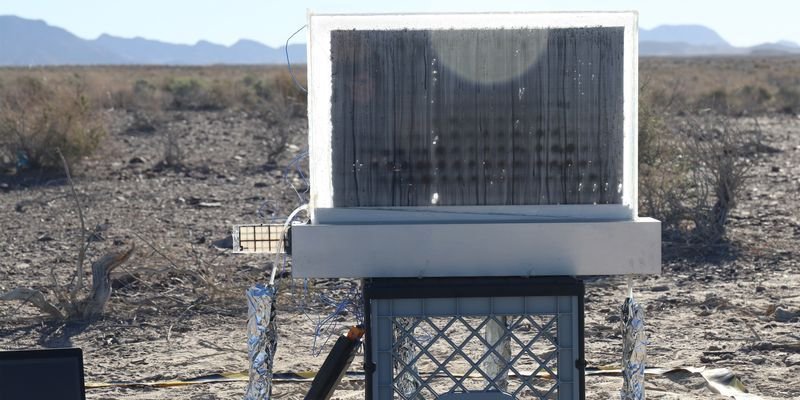
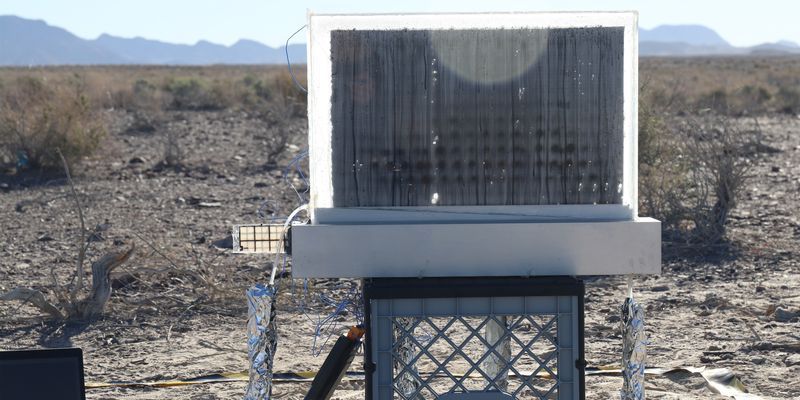
In a breakthrough that feels straight out of science fiction, engineers at the Massachusetts Institute of Technology (MIT) have developed a device that can pull clean, drinkable water straight out of the air—even in some of the driest places on Earth. The compact, window-sized panel operates without any electricity, relying entirely on passive solar power and clever material science. Its successful test in California’s Death Valley marks a major step forward in decentralized water solutions.
At a time when 1 in 4 people globally face water scarcity and climate change is making droughts more common, this technology offers new hope for off-grid households, disaster relief operations, and remote communities.
How it works: The science behind the device
At the heart of the system is a newly engineered desiccant hydrogel—a spongy material similar to the silica gel packets often found in shoeboxes, but far more advanced. The material is formed into dome-like bubble-wrap sheets that dramatically increase the surface area available to absorb moisture from the air.
During the night, when humidity is relatively higher, the hydrogel captures water vapour from the atmosphere. In the morning, solar heat triggers the gel to release this stored moisture in the form of water vapour. The vapour then condenses on a transparent glass cover and is collected as purified liquid water, ready to drink—all without needing electricity, batteries, or moving parts.
The entire system functions passively, powered only by daily temperature changes. It’s essentially a self-sufficient water harvester that can run indefinitely under sunlight.
Engineering around the salt problem
Many past attempts at atmospheric water harvesting used salt-based desiccants like lithium chloride to absorb moisture. While effective, these often leached salts into the drinking water, posing a contamination risk.
The MIT team tackled this challenge by modifying the structure of the hydrogel. They added glycerol, a safe and non-toxic compound that helps trap the salt inside the gel. By also eliminating microscopic pores where salt particles typically escape, they created a sealed matrix that keeps contaminants locked in while allowing water molecules to pass freely.
Tests showed the collected water contained less than 0.06 parts per million (ppm) of lithium—well within safe drinking water guidelines.
Real-world performance: From lab to Death Valley
To prove their invention could withstand real-world conditions, the team installed a prototype in California’s Death Valley—one of the hottest and driest places on Earth. Even in conditions where relative humidity dropped below 30%, the panel was able to consistently extract between 57 to 161 millilitres of water per day from the air.
That may not sound like much, but the design is modular. Scaling up with multiple panels could easily meet the daily drinking water needs of a small household, especially in arid regions where water infrastructure is lacking or unreliable.
And since the system requires no grid connection, it’s an ideal fit for remote villages, military outposts, or disaster zones where traditional water access is disrupted.
Sustainable, scalable and cycle-tested
Durability is key to any infrastructure-level innovation, and the MIT system doesn’t disappoint. In lab tests, the hydrogel panels retained over 90% of their water-harvesting ability after 340 daily cycles, equivalent to nearly a full year of use.
Moreover, because the materials used—polymer gels, glycerol, and glass—are inexpensive and widely available, mass manufacturing of the system is viable. Researchers believe future iterations could include foldable or flexible panels, integration into building walls, or even portable kits for hikers, campers, and emergency responders.
The road ahead: More water from thinner air
With climate change exacerbating droughts across Asia, Africa, and even parts of North America, demand for passive, localised water generation is rising fast. The MIT team’s invention offers a compelling solution that blends clever design with sustainability.
The next steps involve scaling production, optimising water output through material tweaks, and customising setups for different environments. Researchers are also exploring bio-based alternatives for the hydrogel, potentially turning food waste into the next-generation water harvester.
It’s a remarkable example of how material science can directly improve quality of life. By turning “thin air” into a reliable source of hydration, MIT engineers may have just solved one of humanity’s oldest challenges—with zero carbon emissions and a lot of creativity.
