

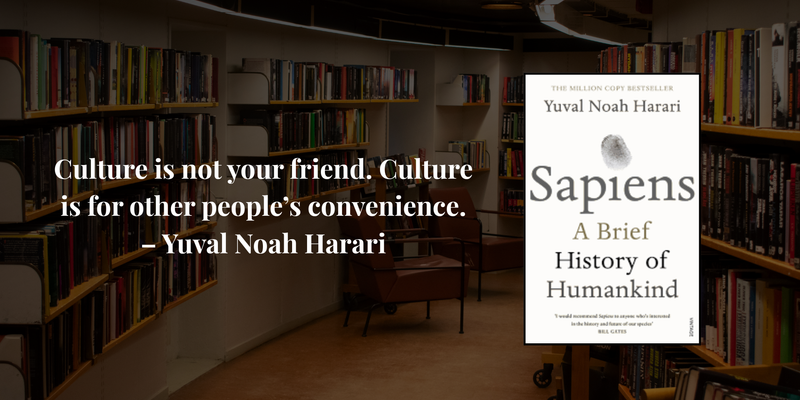
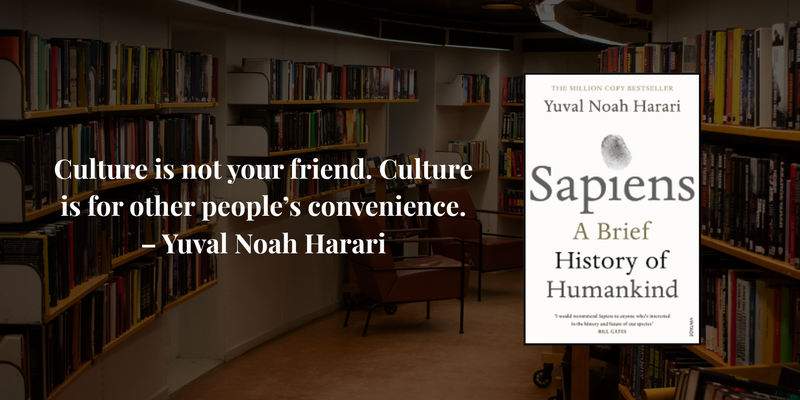
Imagine compressing the entire history of humanity, from the first stirrings of our species to the modern age, into a single, gripping narrative. That’s exactly what Yuval Noah Harari accomplishes in his bestselling book Sapiens: A Brief History of Humankind. This isn’t just another history book stuffed with dates and events, it’s a sweeping exploration of who we are, how we got here, and why our species turned out the way it did.
Harari invites readers to step back and see humanity from a bird’s-eye view, tracing our journey over 70,000 years. He shows how a relatively insignificant species of ape evolved into the planet’s dominant lifeform, not by sheer strength or physical prowess, but through unique mental abilities, shared myths, and collective cooperation. Sapiens challenges what we think we know about civilisation, religion, economics, politics, and even happiness, forcing us to re-examine the stories we tell ourselves about progress and meaning.
If you’ve ever wondered how humans rose from the middle of the food chain to controlling the fate of the planet, or why we believe in money, nations, and gods, this book offers surprising, and sometimes unsettling, answers. Let’s dive into its key lessons.
Key lessons from Sapiens
1. The cognitive revolution changed everything
About 70,000 years ago, Homo sapiens developed the ability to think abstractly, imagine scenarios, and create complex languages. This “Cognitive Revolution” allowed us to share stories, myths, and ideas, giving us a massive edge over other species.
Key takeaway: The power of shared imagination enabled large-scale cooperation, forming the foundation of civilisations.
2. The agricultural revolution was a double-edged sword
While farming allowed populations to grow and societies to settle, Harari argues it also created hierarchies, increased labour, and sometimes reduced individual well-being. Humans went from foraging freely to toiling in fields.
Key takeaway: What we call “progress” can sometimes bring unintended costs.
3. Shared myths hold societies together
Money, nations, religions, and laws are not tangible objects; they are collective beliefs that exist only in our shared imagination. Yet, these myths allow millions of strangers to cooperate toward common goals.
Key takeaway: Much of human civilisation is built on ideas we agree to believe in together.
4. The scientific revolution accelerated our dominance
Beginning around 500 years ago, the Scientific Revolution ignited a thirst for knowledge, leading to technological breakthroughs, industrialisation, and globalisation. Science reshaped economies, politics, and even our understanding of ourselves.
Key takeaway: Curiosity and innovation are among humanity’s most powerful drivers—but they also create ethical dilemmas.
5. The future may redefine what it means to be human
Harari warns that biotechnology, genetic engineering, and AI could fundamentally change our species in the coming centuries. We might soon face choices about what kind of “humans” we want to become.
Key takeaway: Our next chapter could be the most transformative—and the most dangerous—yet.
Final thoughts
Sapiens isn’t just a book about history; it’s a mirror reflecting humanity’s triumphs, flaws, and possibilities. Harari doesn’t give easy answers, but he equips us with the perspective to ask better questions about who we are and where we’re headed. Whether you’re fascinated by anthropology, curious about our shared myths, or concerned about our technological future, Sapiens offers an unforgettable journey through time.
