

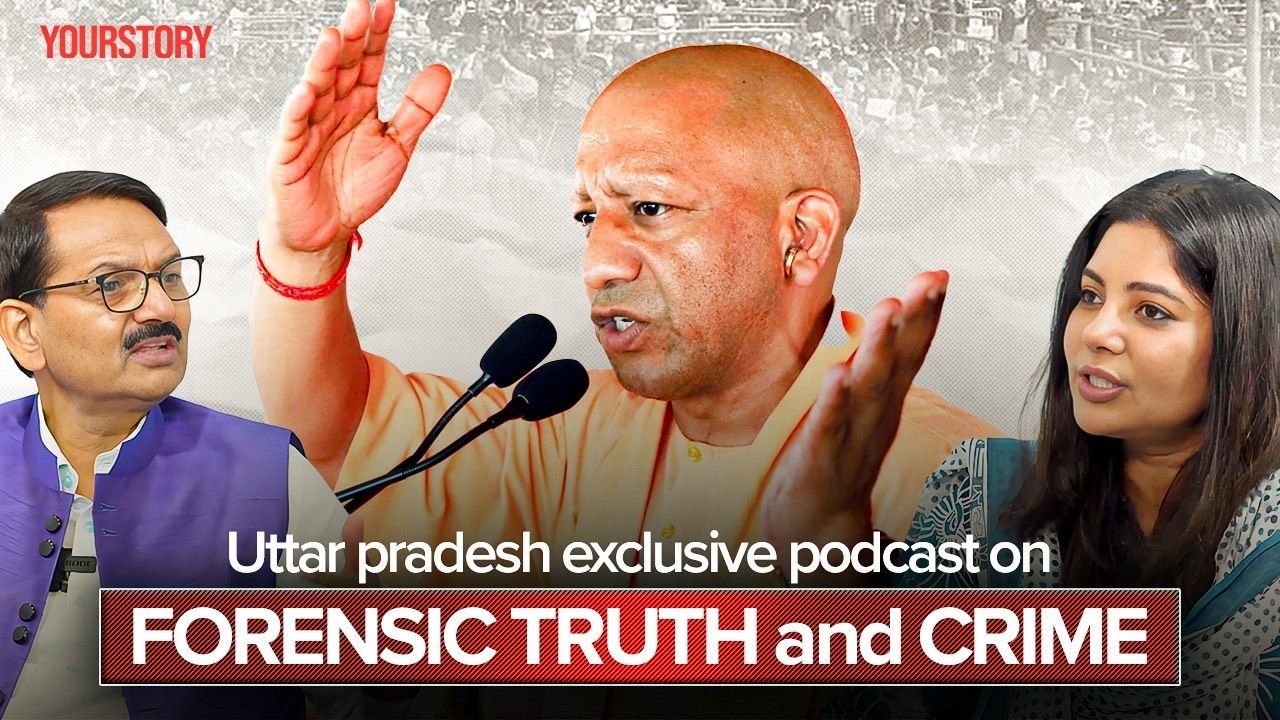
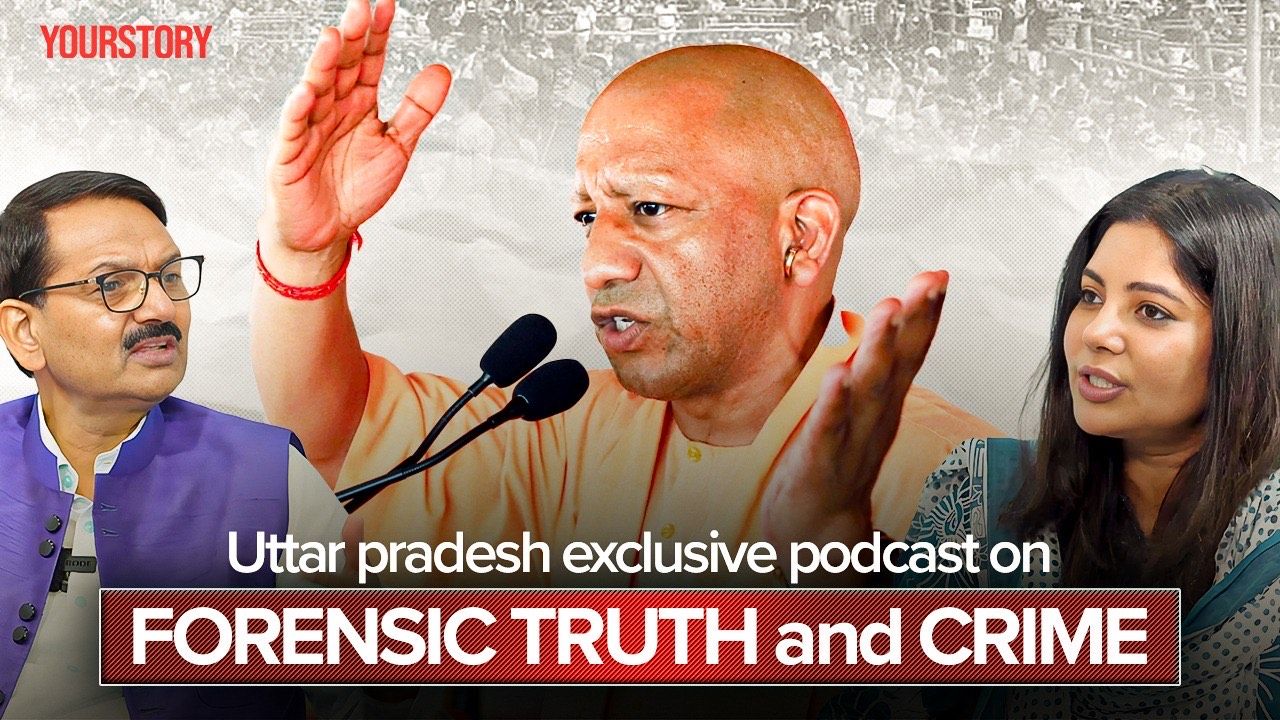
In a quiet corner of Lucknow, the UP State Institute of Forensic Science (UPSIFS) is attempting something unprecedented: merging law and laboratories to build a world-class model for justice in the digital age.
At the centre of this project is Dr. GK Goswami, Additional Director General of Police and the institute’s founding director. He believes that the integration of science, law, and technology is the only way to tackle the rapidly growing menace of cybercrime.
“Science plus law equals forensic science,” Dr. Goswami said summing up his philosophy. “Without law, science alone cannot bring out truth in a courtroom. You need the combination.”
A chief minister’s dream project
The institute, inaugurated two years ago under the vision of Uttar Pradesh Chief Minister Yogi Adityanath, has already established itself as an innovation hub. In a short span, it has launched a DNA Diagnostic Centre capable of identifying even charred or mixed samples, an AI Drone and Robotics Lab to investigate emerging threats, and the Atal Library for research.
Dr. Goswami, who as a young police officer handled India’s first DNA-based criminal case, has spent decades at the intersection of science and law. A cancer researcher turned IPS officer, he went on to study law, serve in the CBI and at the United Nations, and became the only recipient of the Fulbright FLEX award in Law.
“Many people mocked me for being too educated to join the police. But should the police be uneducated? We need them to be technical, professional, and sensitive,” he said.
The “Law with Labs” concept
Perhaps the institute’s most striking innovation is its “Law with Labs” model, where law students train in forensic laboratories, and science students learn the legal frameworks governing evidence. Judges, prosecutors, and defence lawyers trained under this system, Dr. Goswami argues, cannot be misled by forensic reports.
“Forensic science has two parts, the principle and the procedure. The principle may be perfect, but if the procedure is flawed, the truth is lost. That is why our model teaches both law and science, side by side,” he said.
This hybrid approach is already drawing international attention. “Tech experts often don’t know law, and lawyers don’t know tech. But we combine both. That’s why our model is unique,” Dr. Goswami explained.
Cybercrime, data, and new laws.
<div class="externalHtml embed" contenteditable="false" data-val="”>
At the heart of the institute’s work is the challenge of cybercrime, which Dr. Goswami sees as the third wave of criminal evolution after blue-collar crimes (physical crimes) and white-collar crimes (financial frauds). The stakes today, he said, are higher than ever: “Your most precious asset today is your data. Losing your phone is more terrifying than losing your wallet.”
India, he reminded, was the first country to declare the Right to Privacy a fundamental right in 2017, around the same time Europe was rolling out GDPR. Now, with the Digital Personal Data Protection Act of 2023, a new framework has been laid for safeguarding data.
“Data protection and cyber security are two sides of the same coin,” he said, urging students and citizens alike to stay informed. “Before you go to bed, ask yourself: what new thing did I learn today? Curiosity is life.”
The new criminal law framework, the Bharatiya Nagarik Suraksha Sanhita (BNSS), further strengthens the role of forensics. Section 176(3) makes forensic evidence mandatory in all serious crimes, a shift Dr. Goswami calls “revolutionary.” This, he said, will not only create jobs for forensic graduates but also ensure scientific crime scene management.
Looking ahead: digital audit and data insurance
The institute is also betting on three trends that could redefine forensic science: Digital Audit (routine checks of devices for tampering), Data Insurance (protecting individuals and organisations against risks to personal data), and Forensics-as-a-Service, where citizens could access on-demand forensic tools as easily as ordering food online.
“Wherever truth is needed, forensic science will stand there,” Dr. Goswami said. “From courtrooms to homes, this science will touch everyone’s lives.”
For Dr. Goswami, building UPSIFS has been both a professional and personal mission. “When the Chief Minister asked me to take this up, nothing was in place—no staff, no resources. But how often do you get a chance to build an educational institution of this kind from scratch?” he recalled.
Every step, he added, was guided by one instruction from the CM: “Make it world-class.”
From training army and police personnel in cyber forensics to teaching ordinary citizens about data safety, the institute is pushing boundaries. An upcoming state-level cybercrime strategy, built on preventive, diagnostic, and curative pillars, aims to make Uttar Pradesh the first Indian state with a comprehensive plan against digital threats.
“Justice, truth, and evidence—that is our triangle,” Dr. Goswami said. “Justice cannot exist without truth, and truth has meaning only through evidence. That is the essence of forensic science.”
