

At a moment of cord-cutting and disruption in the traditional TV business, can an upstart cable news channel find a path to growth? NewsNation has only been operating as a 24-hour news operation for a year (and it has only been in the news business for four), but the Nexstar-owned cable channel thinks it has figure out a lane to operate in, combining straightforward news reporting (smartly leveraging Nexstar’s 200 or so local stations and their reporters), with strong but sometimes hard-to-pin down opinion shows from the likes of Chris Cuomo and Leland Vittert.
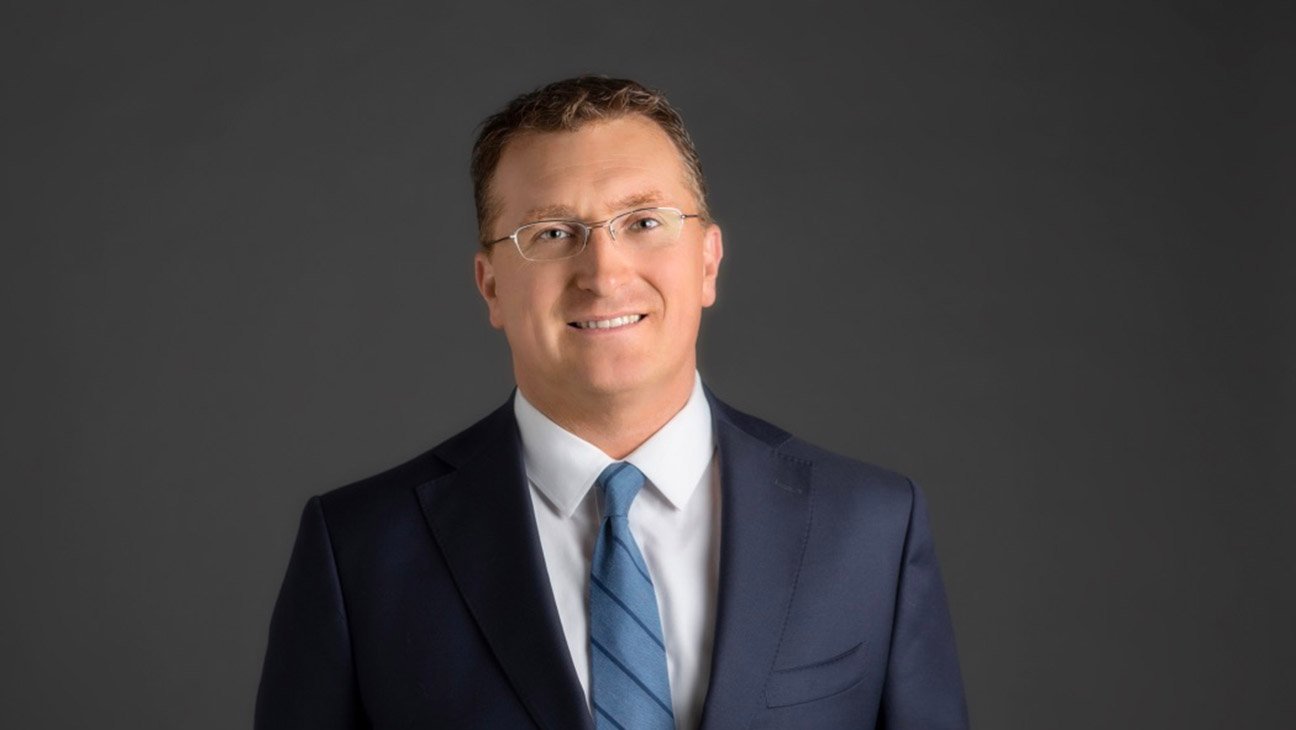
Sean Compton, the president of Nexstar networks and the executive who oversees NewsNation (Michael Corn leads NewsNation’s primetime operations while Cherie Grzech runs daytime), tells The Hollywood Reporter that he and his team embrace a “scrappy” ethos. They don’t have the budgets or reach (or the ratings) of a CNN or Fox News, but they have been able to generate mid-double digit growth in viewership, according to Nielsen numbers from June, by leaning into their strengths:
“I would rather take creativity over money every day, because creativity will ultimately make you money,” Compton says. “And I think a lot of the more established folks in the business are used to just throwing money at things.”
From NewsNation’s point of view, from Nexstar’s point of view, why do you think you’re seeing this growth and do you think it’s something that that you can sustain over time?
I think we’re getting it because if you watch the channel, it’s becoming something more enjoyable to watch each day. We work every day to make it better. And what I mean by that is, when we started out, years ago, we knew we weren’t going to be a breaking news destination immediately. That takes time to build, and that’s been building. We didn’t want to just jump into a lot of talk television, the primetime talk fare at day one. So we started with just the news product to start building that, making sure our reporters knew what our mission was, and that was: We don’t give you talking points.
I think the audience is starting to see that we are an alternative to what you get from the polarized three cable competitors. And obviously we all compete in the news space, against multiple competitors, but from a competitive landscape, our three main competitors are the more established cable news competitors from from the linear feed. And I think we’re continuing to get traction because we were the first to break the [Brian] Kohberger plea deal [Kohberger was charged with murder in a high-profile case out of Idaho]. I mean, that was Brian [Entin]’s great reporting. He was also the only American reporter in Qatar, when the missiles were hitting, or at least flying, they didn’t hit anything, but they were flying into our military base. So we’ve got great reporters and a great team of reporters and anchors that people are starting to find, and so that’s that’s why we’re seeing the growth and certainly a marketplace for what we’re doing.
I wanted to ask about that because you don’t have the same resources that some of the competitors have when it comes to newsgathering. But as you said, you’ve been able to break some some pretty notable stories, both from Qatar and the Kohberger case, as you mentioned. How do you make sure that you’ve got the country covered in a really difficult, competitive news environment?
In some ways, you’re 100 percent right, we don’t have as deep of resources. In other ways, we have far superior resources. When you look at the wildfires in LA we had between the KTLA team and then the folks that we sent out there, KTLA had north of a dozen in different spots doing live hits. They were 24 hours wall to wall, and we went wall to wall with that overnight, carrying KTLA dipping in and out between our coverage and their coverage. They even took some of our reporting. We were able to pool our resources together. We went back to the fires, where Mel Gibson exclusively gave us a tour when he went back to his house, we used our credentials to get him back to look at all the stuff that he had lost, that that was far superior depth in reporting.
So we had footage from different locations that others couldn’t compete with. Now, when the Pope dies, we don’t have 40 reporters over there, we have two. So, you know, I think it’s by grabbing the things that we can do well, like the fires, like the Kohberger plea … I didn’t even see the Kohberger story being reported on the other news channels that night, because I don’t think they found it to be of that much interest because they want to talk about Trump all the time, or D.C. politics. And we’re doing more than just politics. There’s plenty of politics on our air, but there’s also plenty of other news.
We have absolutely been leveraging Nexstar’s vast number of resources during breaking news events. From Hurricane Helene in Tampa last fall, to the attack on Bourbon Street in New Orleans to the fires in southern California, and most recently, the deadly flooding in Central Texas, NewsNation has been utilizing Nexstar’s local stations to support our efforts – carrying the station live overnight or in the example of Texas, taking live reports from correspondents on the ground. What’s great is the support is mutual. For example, when senior national correspondent Brian Entin was in Doha, Qatar two weeks ago when Iran retaliated, he did hits for our local station group and when the fires occurred in Los Angeles, the NewsNation team was also on the ground and provided stories and coverage to the local station KTLA. Nexstar’s 110+ station newsrooms/operations allow us to have every region of the country covered.
You’ve tried to approach what I would describe as opinionated news programming. You’ve got some some hosts that have pretty strong points of view, but are not necessarily easily boxed in by a particular ideological framing, I guess is how I would describe it. How have you tried to kind of make sure that you have personalities on air as hosts that that would appeal to an audience looking for sharp takes, but also that fits into that larger mission of trying to avoid the ideological boxes that some of the competitors?
Very easy. We have a couple of opinionated hosts, they are labeled as such, and they tell you that’s their opinion. I always tell Leland Vittert, who tends to lean a little right, although I wonder sometimes about Leland, it’s a mixed bag with him. I think he just calls balls and strikes, but he tends to personally lean a little to the right, and Chris Cuomo would be a little more to the left, but you never see Cuomo disrespecting a conservative. Never see him disrespecting a conservative member of house. A lot of tough questions. They’ll challenge them, like he did Ron Johnson two nights ago, but he was very respectful.
When Leland has someone from from the Democrat Party on, he has the congresswoman Debbie Wasserman Schultz, she was on a couple of weeks in a row, and he challenged her with some good, tough questions, and I was like, wow, I’m surprised she came back, because he hit her with some tough questions. But her response was, you were fair. And that’s where I think certainly decision makers in this country and lawmakers in this country know that you’re going to be treated fairly. The audience recognizes that you’re not going for an ambush. Again, it’s not going to be easy. We’re not going to make it easy on you, but we make it clear that all of our hosts that have opinions are going to respect you, don’t get into a lot of shouting matches. I mean, every now and then [Bill] O’Reilly and Cuomo will start a little bit, or it will get a little tense. We just don’t want the sensationalized stuff that you get at other networks.
When you look at the larger landscape, it’s not lost on me that consumers are watching a lot less entertainment on TV, and they’re definitely consuming more news and sports. So as you see cord-cutting continue, and the larger changes that are impacting the TV business at large, what are the opportunities that you see for NewsNation?
Look, we’re a linear product, but we cut up our linear product and make it available on multiple platforms through deals that we have. And at the end of the day, while that’s our core business, the linear feed, we are building a news brand. NewsNation should outlive me. It should outlive all of us. That’s what we’re trying to build. It’s something that’s got a long-lasting legacy. I think that’s why, when we launched this network, we did it in phases. We didn’t just launch it overnight, because when you launch something that big overnight, you’re going to make so many mistakes and lose so much credibility. That’s why the grand opening of a restaurant is four weeks after the restaurant’s already open. I’ve got to make sure the kitchen is working.
It was carefully crafted so that we could continue to build and play the long game with this brand. So we recognize that the audiences will shift over time, and they will go to different platforms, and there’ll be stuff that’ll be thought of, that you and I can’t even think of right now, that we’ll have to engage in the next, 18 to 36 months, and what’s going to happen with AI and how does that impact us? So we’re thinking about that at all times. But let’s just focus on the core: What is NewsNation? And that’s the brand. That’s what we’re trying to build with an audience, is a brand that they know they can trust, that way it can live on any platform.
Editor’s note: The interview was conducted before the tragic July 4 flooding in Texas, which prompted all major news networks to mobilize resources for breaking coverage.
