

When India landed the Chandrayaan-3 lander on the Moon, the world hailed its scientific ambition and achievements. But back on Earth, a less publicised race is being lost; one that will shape the next century, not in space, but in silicon.
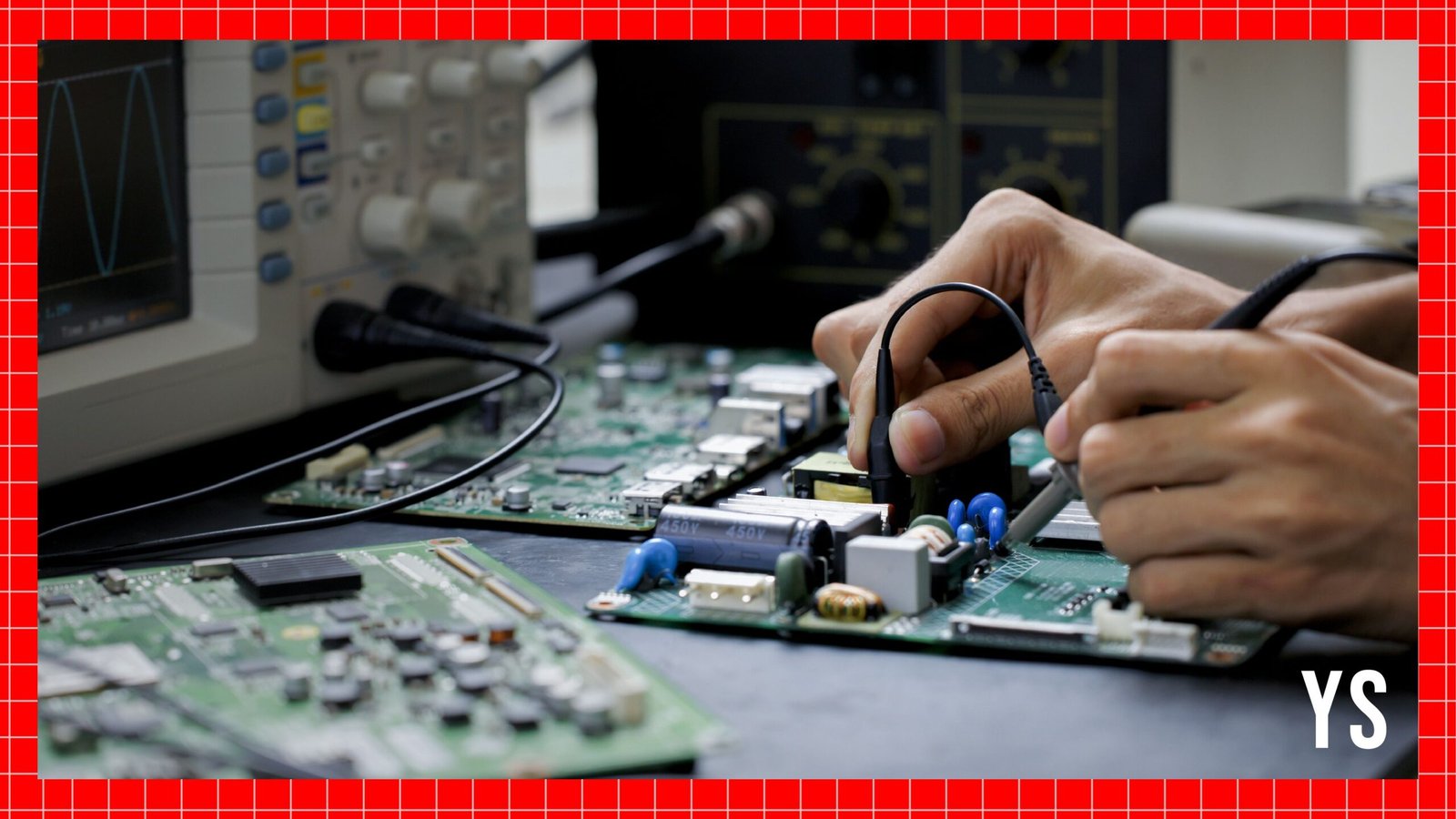
In labs across Bengaluru, Hyderabad, and Pune, rockstar engineers are designing advanced chips, creating next-generation processors, and testing novel algorithms. However, much of this intellectual property is owned by foreign corporations, and these innovations may never see the light of day in India.
Talent is plentiful, but access to capital is not; and therefore, the daily drudgery forces innovators to become employees rather than entrepreneurs. If India wants to be a global technology leader, its deeptech venture ecosystem needs to transform from occasional toe-dipping into a well-planned deep diving mission.
The areas of AI and semiconductors are very exciting for new innovations that can leapfrog beyond the current global leaders in this space.
The talent is already here
India already provides some of the most important human capital to the world’s AI and chip ecosystem. Indian chip designers design for leading global players, perform sophisticated high-dimensional AI research at premier universities, and build next-generation global-scale software infrastructure for hyperscalers. There are Indian-origin stalwarts at the head of global AI behemoths, and Indian chip design engineers are a part of every leading semiconductor company’s tiger team.
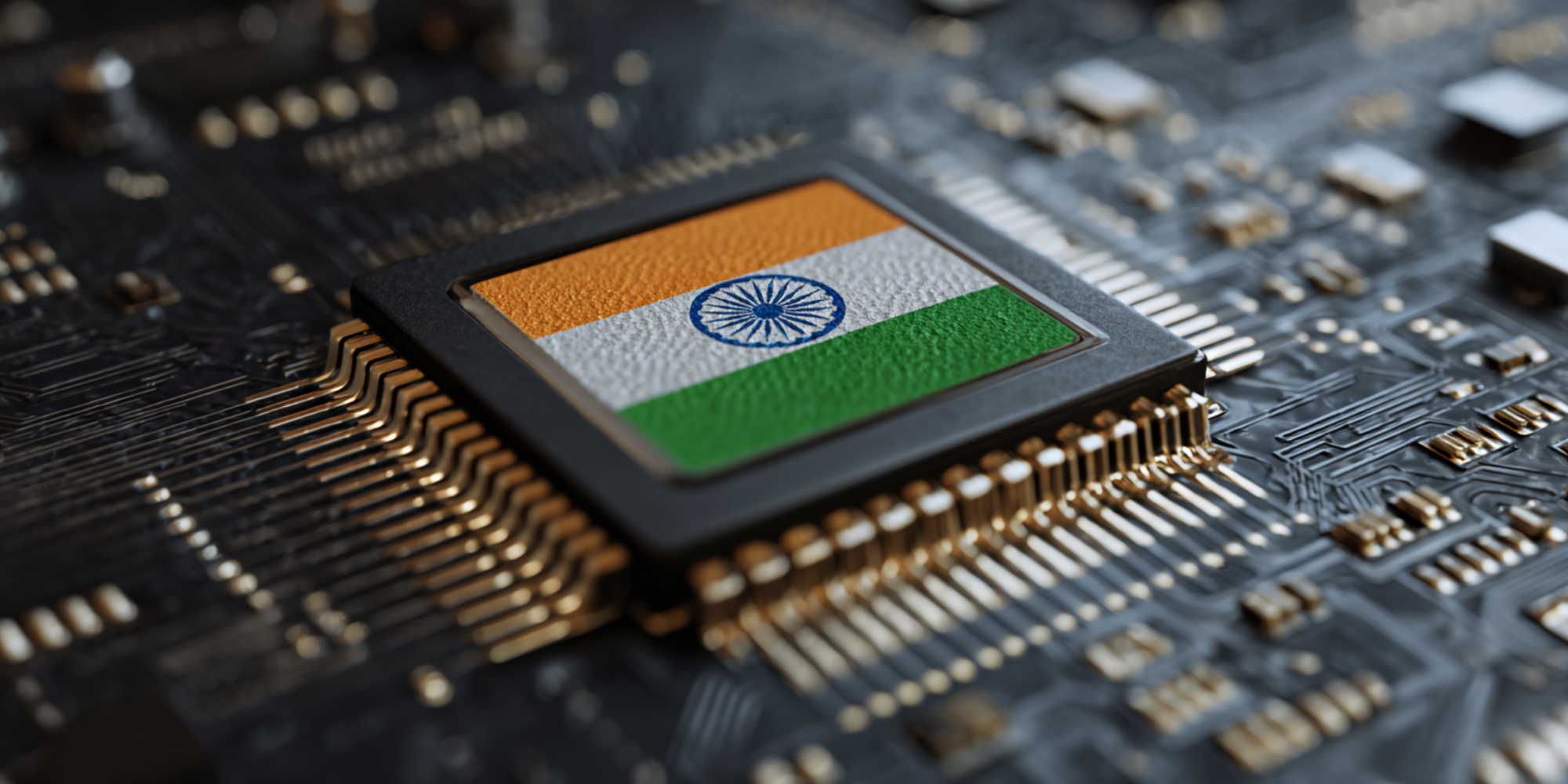
But when it comes to creating homegrown IP and startups that will drive the next generation of innovation in this space, India remains significantly underrepresented as a product nation. Great founders tackling silicon photonics, RISC-V instruction sets, Edge AI, quantum accelerators, or foundation models are running into problems wherein the investor ecosystem plays it somewhat safe; Indian investors tend to desire SaaS or D2C-style traction numbers within SaaS or D2C-style timelines, whereas deeptech requires significantly deeper investments and longer timelines.
This creates a paradox: Indians within India are helping build global technology moats, but the capital ecosystems to support them as entrepreneurs are not scaling up.
Where venture capital can step up
By definition, deeptech is dual-use. Hence, when a founder is developing a next-generation inference engine capable of outdoing current AI accelerators, VCs must be able to invest larger chunks of money alongside government assurances of short-term grants, medium-term ecosystem assistance, and long-term commitment to the end products.
There are great examples such as Taiwan and the Netherlands. The Dutch have invested in ASML’s global superstar success and in TU Delft’s Quantum leadership. Similarly, the Taiwanese have a single-minded focus, shared across corporations and government alike, to make their node processes the absolute best in the world. Even South Korean conglomerates like Samsung have not been able to overtake the Taiwanese in this area.
Similarly, a fabless chip company developing an innovative edge-processing unit shouldn’t have to heavily dilute or move overseas simply to access world-class laboratory facilities. Venture capital needs to work with the government and reputed educational institutes to enable the ecosystem to build world-class facilities locally and then seed entrepreneurs who will thrive due to such robust support. This is the lesson to learn from Taiwan and the Netherlands.
Capital as a strategic lever
During the Cold War, aerospace, nuclear, and computers were the arenas of supremacy. India has built its space and nuclear capabilities exceedingly well. Now it is AI and semiconductors that matter. Nations are spending billions so they don’t miss the bus. The US has the CHIPS Act and AI programmes, while China is spending heavily on homegrown chips. Tariffs are the ever-hanging sword that can destroy the delicate balancing act of startups and venture capital; it can even destroy decades-long friendly relations between nations. Hence, even moderately sized nations such as Taiwan and the Netherlands have punched much above their weight due to targeted capital investments and deep public-private collaborations.
India needs to deal with venture capital in AI and chips as a national interest lever, and not only as a financial asset class. The VCs coming in today to invest in India’s deeptech frontier are not only investing in companies; these are bets on sovereignty, security, and economic resilience.
We have been concentrating on startups creating core technologies for the digital economy, along with AI, sensors, edge computing, and quantum-safe infrastructure. We feel that developing these crucial capabilities within the country isn’t just great economics; it’s table stakes for survival and growth.
Creating the deeptech funding stack
India requires a stack of support for deeptech founders:
- Pre-seed capital with strong technical mentoring to convert research into prototypes.
- Equity financing of seed and Series A stages is willing to invest in infrastructure, hardware design, or compute-intensive R&D with longer time horizons and delayed revenue milestones.
- Sector-specific venture capital dealing in AI, semiconductors, and quantum technology with longer horizons and lower IRR requirements.
- Public-private partnerships involving DRDO, MeitY, ISRO, IISc, CDACs, IITs, and investors to de-risk innovation and facilitate commercialisation.
India requires capital and founders to operate in tandem, particularly in a space where cycles are extended, capex is more significant, and exits do not arrive in 3–5 years but can generate exponential returns over ten years or more.
Current government programmes to foster dual-use/deeptech must be headed by VCs who have skin in the game, which enables the programmes from a technological vision perspective as well.
Let’s not miss this window
We are at a critical inflection point in India’s tech journey. We lost our chance to create global leaders during the first wave of computing hardware. We served as spectators and data conduits when platform companies developed during the mobile era. But today, we have a chance with AI and semiconductors—to create and own foundational technology, not just deploy it.
Ability alone will not take us there. It requires capital, supported by vision. We cannot afford to stumble in this race for the most impactful technologies of our era.
And for India to win this race for AI and chips, its venture ecosystem needs to lead from the front and set the pace, with the government and reputed educational institutes playing a deeply supportive role.
(The author is Venture Partner, YourNest and MD, Everstream Analytics. Views expressed are personal.)
Edited by Kanishk Singh
(Disclaimer: The views and opinions expressed in this article are those of the author and do not necessarily reflect the views of YourStory.)
