

In the fast-evolving world of AI, the focus has shifted from just large language models to how we can make them act like true problem-solvers. Enter the era of agents, intelligent systems that don’t just generate responses but also orchestrate tools, data, and workflows to get real work done. The real challenge is building them quickly, scaling them seamlessly, and monitoring them in production without the hassle of infrastructure.
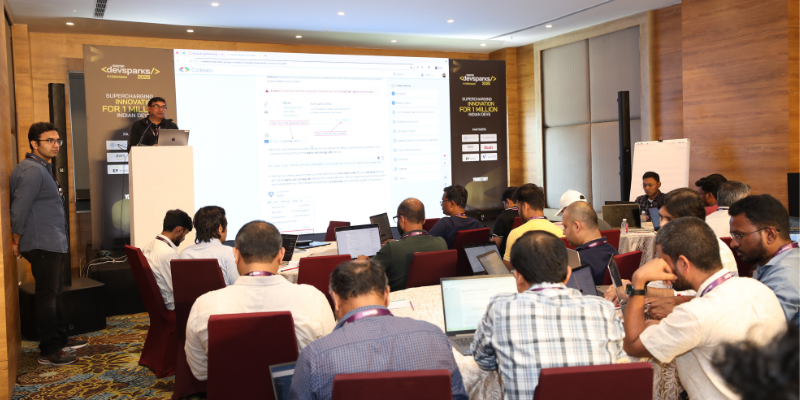
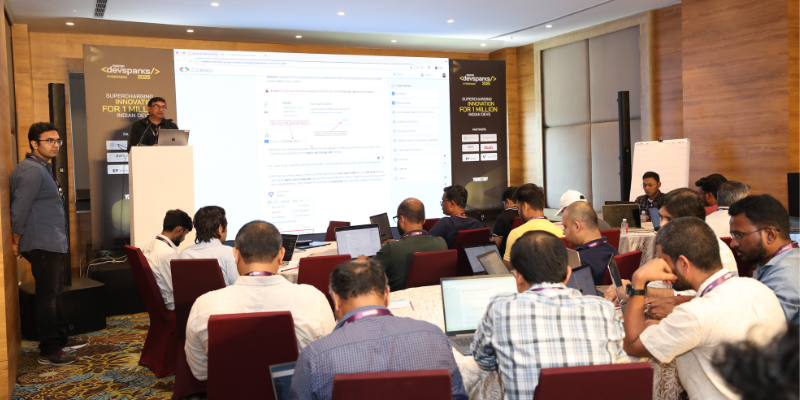
That’s exactly what developers explored at DevSparks 2025, where Google Cloud’s Customer Engineers Shashi Ranjan and Praful Mehrotra led a workshop on Building Serverless Agents with ADK on Google Cloud Run and Gemini 2.5.
Why agents
A tech veteran with over three decades in the IT industry, Ranjan explained the conversation is shifting from LLMs to agents.
“The flavor of the season is generative AI,” he said, “but today it is less about the hype and more about the wrappers. Agents are those wrappers, the orchestrators of AI and tools that help us solve real-world problems.”
He described agents as assistants that combine intelligence with tools and data so they can be deployed quickly and scaled easily. “The question isn’t whether AI can perform these tasks,” Ranjan added. “It’s about how we package and deploy that intelligence so it becomes useful in real workflows. That’s why ADK exists.”
Why ADK
Earlier this year at Google Next, Google introduced the Agent Development Kit (ADK).
Ranjan explained why it matters. “Think of building one agent for booking a flight and another for booking a cab. Do you really want to hardcode how they talk to each other?” he asked. “In the future, agents should be able to communicate seamlessly. ADK and frameworks like the Model Context Protocol make that possible.”
By allowing agents and tools to reveal their own capabilities, ADK enables interoperability. Instead of wiring every integration, developers can focus on use cases, while the framework handles orchestration. This makes agents faster to build, easier to deploy, and more flexible in production.
If ADK provides the framework, Cloud Run provides the foundation to run it. Ranjan described it as the natural home for serverless agents.
“Cloud Run gives you one-command deployment,” he said. “It’s easy to run, it scales automatically, and it’s robust enough for production. We use it every day, not just for experiments, but for real systems.”
Cloud Run’s ability to spin up new instances under load and scale back down automatically makes it ideal for workloads where demand is unpredictable, exactly the kind of scenarios agents face.
Hands-on with Gemini 2.5
On the other hand, Praful Mehrotra guided the room through the practical setup. The agenda was ambitious but clear: claim Google Cloud credits, set up a new project, provision a PostgreSQL database on Cloud SQL, build an ADK-based Weather Agent wrapped in a FastAPI app, and finally deploy it to Cloud Run with Docker.
“The instructions are your Bible,” Ranjan reminded participants. “Even if I tell you something else, follow the lab. That way, you’ll get through step by step.”
With Gemini 2.5 powering the agent, participants saw how natural-language instructions could drive real actions, from database interactions to scaling under load. As one attendee tested the deployment, Cloud Run automatically spawned new instances, demonstrating how effortlessly the platform scales.
Key insights from the session
- Agents are the new abstraction: Instead of coding complex workflows, ADK allows developers to build assistants that expose and consume capabilities naturally.
- Cloud Run proves production-ready: What starts as an experiment in the lab can scale infinitely, making it a go-to for serverless agent deployments.
- The future is agentic: “Agents will talk to each other without us telling them how,” Ranjan noted. “That’s why frameworks matter.”
From concept to cloud, the workshop made one thing clear: the future of AI won’t be defined by smarter models alone, but by the agents built on top of them, and the serverless platforms that allow those agents to run, scale, and thrive.
