

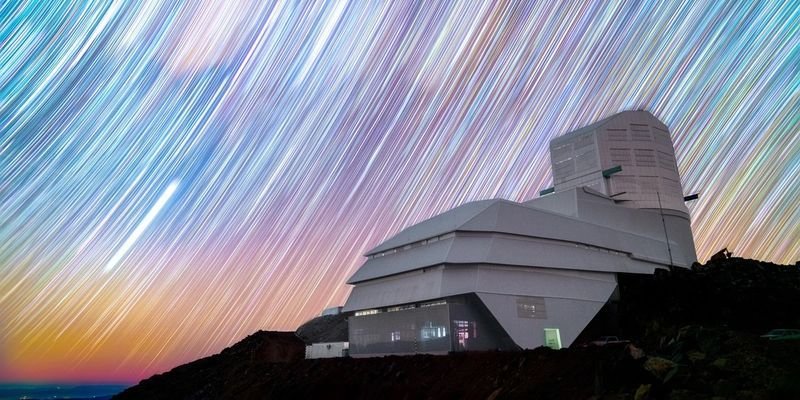
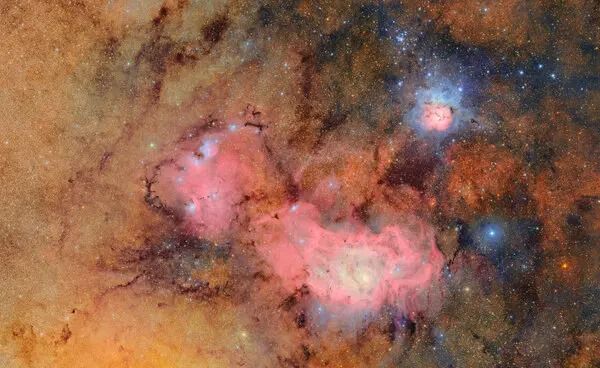
In a landmark moment for modern astronomy, the Vera C. Rubin Observatory has unveiled its first-ever test images—and they’re already rewriting the rules of skywatching. Captured by the world’s largest digital camera, these images showcase an unprecedented blend of resolution, scale, and speed. The observatory’s camera, which clocks in at a whopping 3,200 megapixels, has spotted over 2,100 new asteroids in just 10 hours, and mapped a staggering 10 million galaxies in a tiny sliver of the southern sky.
But these are just the opening credits. Over the next decade, Rubin will scan the entire southern sky every three nights, eventually capturing over 20 billion galaxies and producing a time-lapse 3D movie of the universe in motion.
Let’s zoom in and understand why this moment matters—for space science, planetary defense, and our place in the cosmos.
The biggest eye on the sky
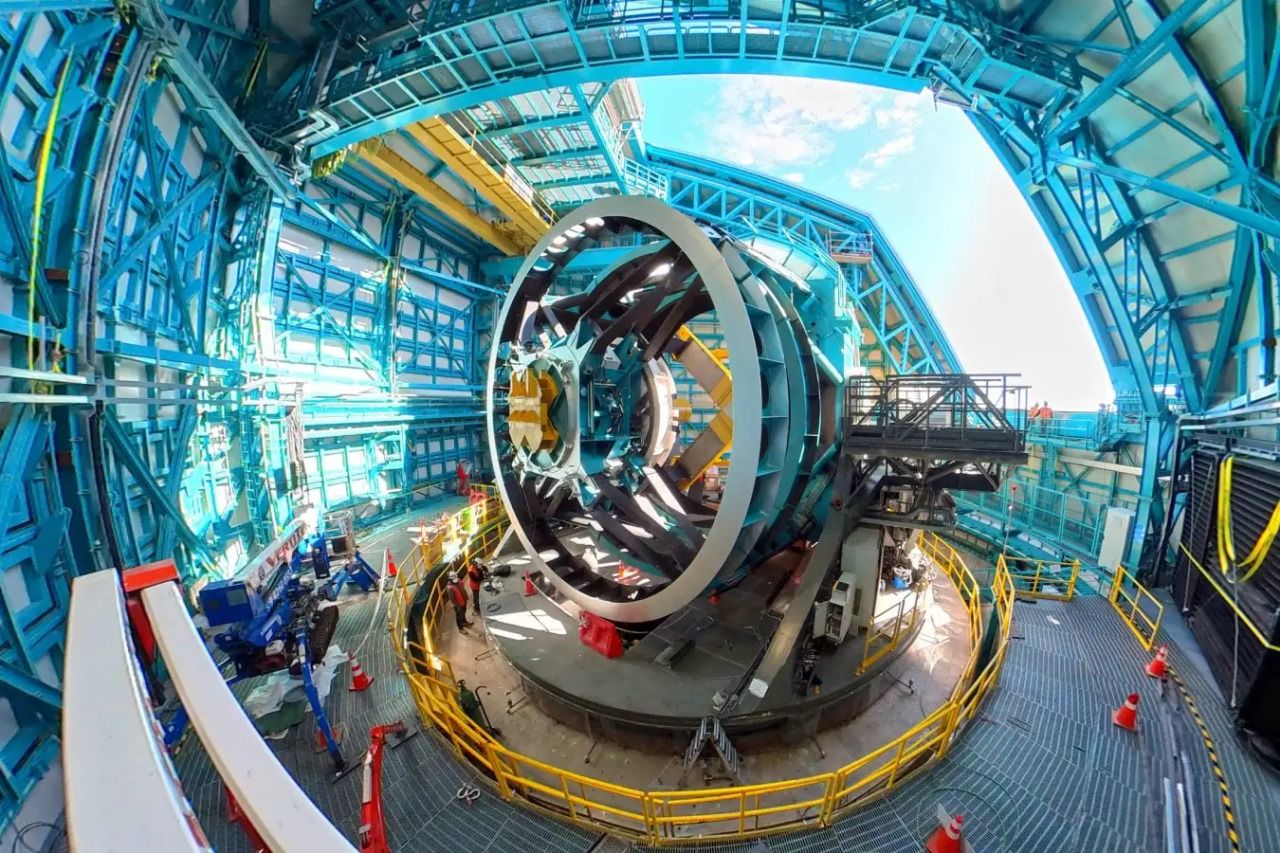
The Rubin Observatory’s camera is, quite literally, a giant. Built over two decades and costing over $800 million, it’s the size of a small car and powerful enough to detect a golf ball from 15 miles away. With a 64 cm-wide focal plane, it boasts the largest digital sensor ever used in optical astronomy—each image it takes is so detailed, you’d need 378 4K ultra-HD TVs to view one at full resolution.
This extraordinary level of detail isn’t just about pretty pictures. It allows astronomers to see the faintest flickers in the sky—distant galaxies, small asteroids, even potential supernovae—all in real time. And because the camera can take wide-field shots of the entire southern hemisphere, it’s designed not just to observe, but to monitor the sky continuously.
A swarm of asteroids – and the power to protect
Perhaps the most stunning revelation from Rubin’s first images is the detection of 2,104 previously unrecorded asteroids. Seven of them are near-Earth objects (NEOs), though none pose a threat. Still, the sheer number spotted in just a few hours suggests Rubin could uncover millions more over its lifetime.
This is more than just a numbers game. With the accelerating risk of asteroid impacts—highlighted by recent close flybys—Rubin is poised to become a cornerstone of planetary defense. Its data will feed into global early warning systems, helping scientists calculate orbits and predict potential collisions years in advance.
In essence, it’s not just watching the stars—it’s watching our backs.
A sky survey like no other
Rubin’s signature project is the Legacy Survey of Space and Time (LSST)—a 10-year campaign that will create the most comprehensive catalogue of the universe to date. Every 30 seconds, the observatory will take a new image, processing changes in brightness, movement, or position to flag anything new or unusual. That includes exploding stars, rogue asteroids, transient events, gravitational lensing phenomena, and more.
By the end of its first year, Rubin will have collected more data than all previous optical observatories combined—roughly 500 petabytes (that’s 500 million GB). The data will be made public and open-source, giving astronomers, students, and curious citizens worldwide a front-row seat to the evolving universe.
And it’s not just static snapshots. These sequential images will be stitched together to build the first high-definition time-lapse movie of the entire night sky, showing how the universe changes over time, in real motion.
The legacy of Vera Rubin
The observatory’s name pays tribute to Vera Rubin, the pioneering astronomer whose work in the 1970s provided the first direct evidence of dark matter—the mysterious substance that makes up 85% of the universe’s mass. Rubin spent her career fighting for both scientific truth and gender equality in the field, and this facility carries forward both legacies.
Fittingly, one of the observatory’s main objectives is to map the distribution of dark matter and dark energy, shedding light on how galaxies form, why the universe expands, and what it all means.
A telescope for the TikTok generation
What makes Rubin uniquely of its time is its real-time detection and AI-powered analysis. In an era where social media trends last minutes, Rubin is built to detect changes in the sky and alert scientists within 60 seconds. That immediacy is crucial for capturing short-lived cosmic events, and it also means citizen scientists can jump in and explore new phenomena as they happen.
Imagine a future where the discovery of a comet or a supernova becomes a global moment—live streamed, discussed, and tracked in real-time.
Eyes wide open
Rubin’s camera isn’t just a marvel of engineering—it’s a reminder of what humanity can achieve when we look up. Its first images are a declaration that the golden age of sky exploration is just beginning. We are no longer passive observers of the stars—we are now archivists of cosmic change, tracking every flicker, flare, and flyby.
From finding dangerous asteroids to decoding the fabric of the universe, Rubin gives us more than data—it gives us a sense of perspective. And in an age defined by uncertainty, there’s something comforting about knowing that someone or something is always watching the sky.
