

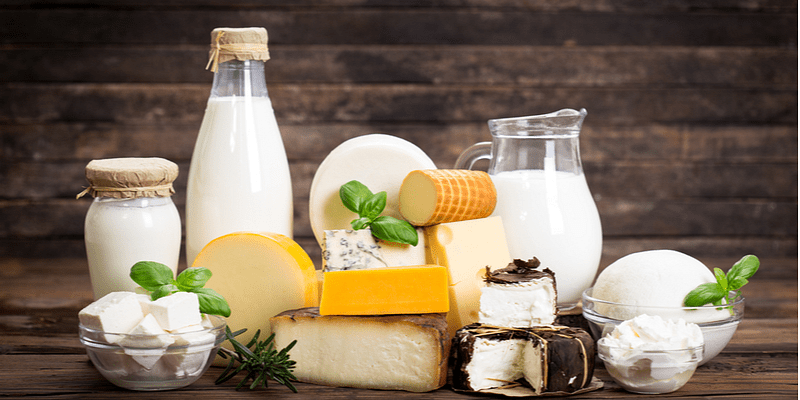
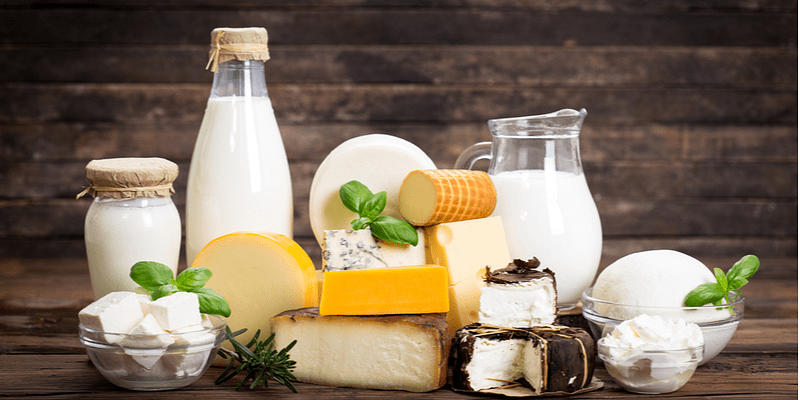
Milky Mist Dairy Food Ltd has for long been a household name in Tamil Nadu. Known for its neatly packed paneer and processed cheese, the company has carved a lucrative niche for itself in India’s fragmented dairy sector by focusing on value-added products—a marked difference from the milk cartons crowding grocery shelves.
Now the company is preparing to go public.
Erode-based Milky Mist has filed a draft red herring prospectus (DRHP) earlier to raise Rs 2,035 crore through an initial public offering. The deal includes a fresh issue of Rs 1,785 crore and an offer-for-sale by the promoter family worth ₹250 crore. The company plans to use the proceeds towards paying down debt, upgrading its manufacturing facility, and expanding its footprint beyond its home market in southern India.
The move signals a shift for the 27-year-old company. Until now, Milky Mist has grown organically and largely off the radar of institutional investors. Its IPO not only gives it access to capital, but it also subjects it to public scrutiny.
Cheese, curd, and cash flow
Milky Mist has managed something few consumer brands in India can claim to have done: it makes money, and plenty of it. In the fiscal year ended March 2024, the company reported a revenue of Rs 1,952.7 crore, up from Rs 1,209.7 crore two years earlier. Its net profit more than doubled in that period, from Rs 78.4 crore in FY22 to Rs 167.2 crore in FY24. Profit margins improved steadily, with EBITDA rising to 19.3% in FY24, well above the industry average.
Much of this performance is tied to its product strategy. Unlike large cooperatives that dominate the milk market, Milky Mist sells only processed dairy such as cheese, paneer, curd, ghee, and yogurt under a single brand. Cheese alone accounted for 43% of its revenue last year.
The company does most of the processing of dairy products at a single facility in Perundurai, Tamil Nadu, where milk sourced from over 65,000 farmers is turned into packaged products for homes, restaurants, and stores across South India. This tight integration is part of the company’s appeal. So is its control of distribution. Milky Mist owns and operates more than 400 refrigerated trucks, giving it end-to-end visibility across its cold chain.
But this could also be a potential challenge.
All in one place
Currently the company operates two manufacturing facilities, one in Perundurai, Erode District, Tamil Nadu and the other in Bengaluru, Karnataka.
The Perundurai plant processes most of the dairy products that Milky Mist sells. That makes operations efficient but also leaves the company vulnerable. Any disruption like a fire, machinery failure, or labour unrest could shut down production entirely. There’s no backup plant. And the company’s DRHP flags this as a material risk.
“We significantly depend on our Perundurai manufacturing facility, as it is dedicated to producing value-added dairy products that contribute to the majority of our revenues. Our Bengaluru manufacturing facility, by contrast, is focused on producing frozen foods, including ready-to-eat (RTE) and ready-to-cook (RTC) products. We intend to consolidate operations by moving our Bengaluru facility into our Perundurai Manufacturing Facility,” says the DRHP.
Geography is another concern.
Milky Mist sells most of its products in Tamil Nadu, Karnataka, Andhra Pradesh, Telangana, and Kerala. While it has started building distribution hubs in Delhi, Mumbai, and Kolkata, its presence in North and West India is minimal. As of FY24, more than 85% of its revenue came from the South.
The company is betting that new capacity and brand investments will help it expand into new regions. Rs 483 crore of the IPO proceeds are allocated to capital expenditure at the Perundurai plant. Another Rs 400 crore will go towards working capital to support national distribution.
However, replicating its success in the South elsewhere will take time. Cold-chain logistics are expensive, and retail competition is intense. Milky Mist will be up against well-established players including Amul, Nestlé, and Britannia, in unfamiliar territory.
Family business steps into the public market
Milky Mist remains a tightly held company. Founder and Managing Director Sathishkumar T and his wife Anitha S, who serves as a whole-time director, own nearly 100% of the company’s equity. There are no institutional shareholders, private equity backers, and large external investors.
All this will change with the IPO, but only slightly. Even after listing, the promoter family is likely to retain majority control.
The company’s board includes internal executives and family members, with committees formed in accordance with regulatory requirements. But, unlike other companies of its size, Milky Mist doesn’t list any prominent independent directors or governance advisors in its DRHP.
The firm’s key managerial positions are also internally filled: R Rajagopal serves as CEO, D Sivakumar as CFO, and V Kannan is the company secretary. All of them report to the founding family.
This structure has served the company well—so far. But with public listing comes the expectation of transparency, board independence, and external accountability. For investors, that transition may take time.
A clean balance sheet with a few footnotes
Milky Mist plans to use Rs 530 crore from the IPO proceeds to repay debt. As of March 2024, it had borrowings of Rs 551.3 crore. Once repaid, the company would have one of the leanest balance sheets in the sector, without compromising its cash position.
Return metrics are already strong. Return on capital employed rose to 18.2% in FY24, up from 13.4% in FY22. Operating cash flow more than doubled to Rs 256.6 crore in the same period.
The DRHP does flag some regulatory issues. A pending goods and services tax (GST) dispute worth Rs 20.38 crore is under litigation. The company also disclosed past errors in TDS filings and tax payments, which have since been corrected.
None of these appear to be material threats, but they add to the company’s compliance watch-list.
Scaling up national presence
India’s dairy market is expected to grow at 10% annually over the next five years, with value-added products such as cheese and yogurt growing even faster. This trend plays directly to Milky Mist’s strengths.
But scaling up won’t be easy. Larger companies such as Amul and Hatsun Agro already have deep distribution in place. New-age D2C brands are also crowding urban shelves, offering artisanal dairy and probiotic formats to affluent customers.
Milky Mist will need to build brand familiarity in markets where it’s largely unknown, while replicating the cost control and the freshness promise that make it competitive in the South.
Still, in a consumer market where few mid-sized brands manage both scale and profit, Milky Mist’s record stands out. Its IPO offers investors a stake in a rare entity: a family-owned business with cash flow, discipline, and ambition.
Whether it can scale from regional dominance to significant national presence is the next test.
Edited by Swetha Kannan
