

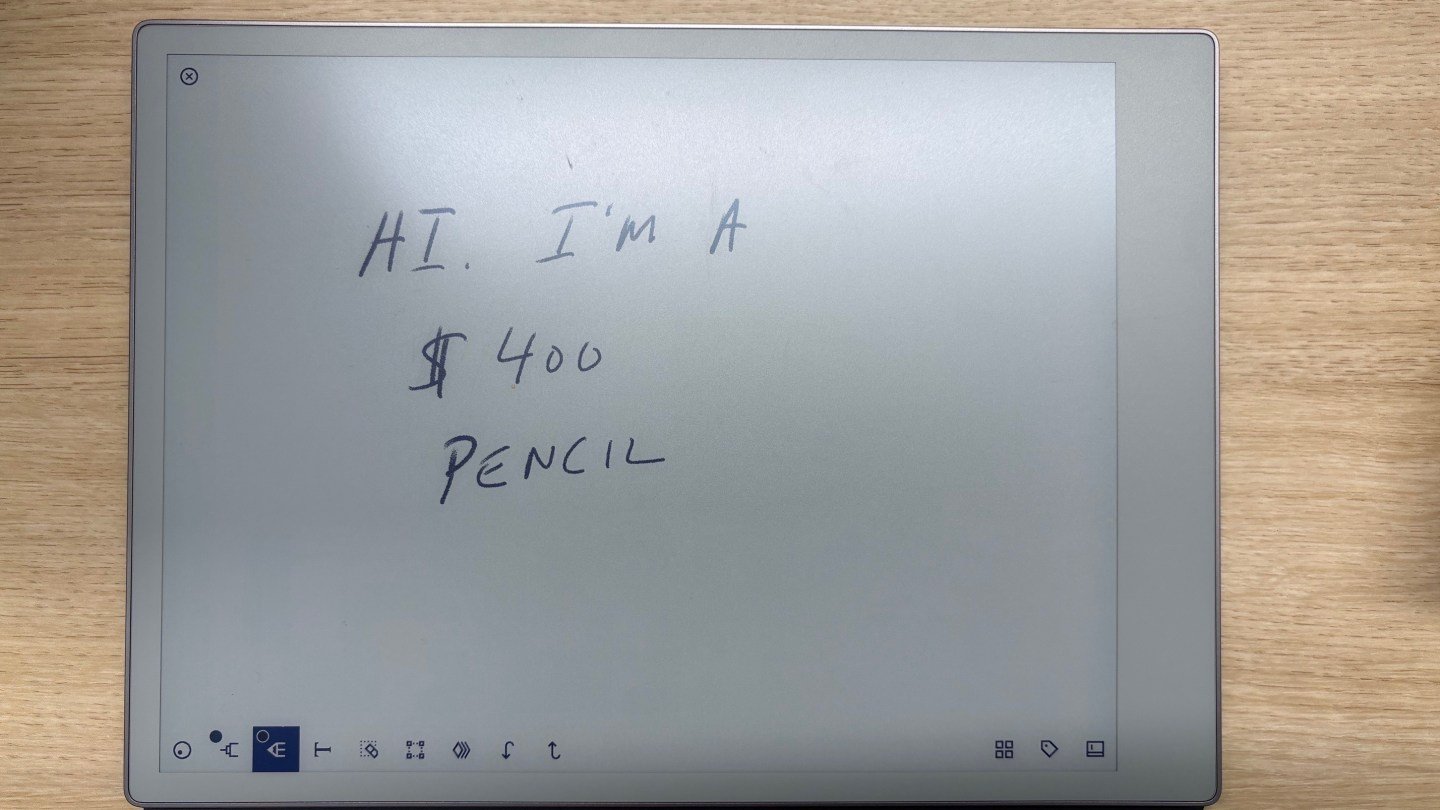
I’m writing this on a state-of-the-art touch-screen gizmo that took Norwegian scientists six years and $50 million to develop. The gadget looks a bit like any other tablet — a simple, almost monastic slab of glass and metal — but unlike an iPad or Galaxy Tab, it doesn’t have a web browser, won’t stream TV shows and doesn’t let you Zoom or FaceTime or even text with friends.
It does just one thing — and obsessively, exquisitely well.
It almost perfectly mimics the experience of doodling on paper with a No. 2 pencil.
It’s called reMarkable, retails for about $400, and it neatly encapsulates a recent, head-scratching trend in the tech sector: companies big and small shoveling hundreds of millions of dollars and devoting petabytes of R&D bandwidth into making the future feel more like the past.
Call it analog nostalgia. Or high-tech regression therapy. Across the gadget-verse, there’s a growing appetite for devices that strip away bells and whistles in favor of simpler, more tactile, often decades-old user experiences — re-created with 21st-century precision and luxury pricing.
“There’s just something satisfying about the feeling of pencil on paper,” says reMarkable’s CEO, Philip Hess. “It’s an almost primal feeling that people crave.”
Another almost-primal experience people are apparently craving: live TV. Which is why, over the last couple of years, streamers have been pushing the technological envelope to present instantaneous events like NFL games (on Peacock), celebrity boxing matches (on Netflix), the Golden Globes (on Paramount+) and the Oscars (on Hulu).
The science of live streaming is far too complicated to unpack here — it involves routing “packets” of video data through a vast lattice of servers so they can be reassembled on millions of devices at precisely the same time — but it’s a heavy technological lift. All so that subscribers can experience the thrill of watching something as it happens, just like Grandpa did in 1956, fiddling with the rabbit ears and yelling at the kids to keep it down during Ed Sullivan.
The retro wave doesn’t stop there. There are mechanical keyboards engineered to mimic the clack of an IBM Selectric. There are Bluetooth gadgets — like Cell2jack — that let you connect your antique rotary phone to your cell and take calls on it like it’s 1964. Or, if you’d prefer, you can now purchase a minimalist “dumbphone” designed specifically to help users escape modern screen addiction by returning to … the bare minimum of 2005.
Of course, there’s nothing new about nostalgia, even in the tech sphere. Antique gadgets have always had their appeal — it’s why the vintage mechanical wristwatch business continues to boom even with most folks strapping miniature super-computers onto their wrists. Polaroid cameras — long left for dead — have lately become something of a Gen Z obsession, with teens snapping grainy selfies on Instax Minis like it’s prom night in 1983. Vinyl records, once a dusty niche for audiophiles, continue their improbable comeback, with sales over the past two years outpacing CDs for the first time in decades.
What’s different now, though, is that tech companies aren’t just reviving old gear — they’re reimagining it. They’re building sleek, modern tools that intentionally limit functionality in order to recapture the tactile, analog feel of older technology. And so far, there appears to be a big demand for what they’re offering; reMarkable, for instance — essentially a $400 replacement for a pencil and pad that cost maybe three bucks — has sold 2 million of its devices globally since they first started rolling them out in 2017, with the company raking in $430 million last year.
“Some things just work better with the way the human brain is wired,” says Hess. “Like handwriting. The speed of writing with pencil on paper perfectly matches the speed at which we think. So, we’re seeing this development across different tech fields — cutting-edge technology trying to align itself with how the human mind actually works.”
Perhaps. Or maybe people are turning to old-style tech not because it does more but precisely because it does less. A device that can only let you draw or type plants guardrails around your brain by removing the temptation to shop for sneakers or stream TikTok videos. Those sorts of self-imposed limits can feel empowering. For some younger consumers — Gen Zers, who didn’t grow up with landlines and stereos — plug-in phones and vinyl records must also carry some novel charm. Look, how cute! You have to dial the number by spinning a little wheel!
One other possibility: The trend toward retro tech has more to do with the heart than it does the brain. After all, digital life can be so coldly ephemeral. Swipe, scroll, forget. There’s no sentimental connection to what we’re seeing on our screens. But analog-style objects — a Polaroid photo, a vinyl record, a handwritten note — pack real emotional weight. It’s why we bother to store shoeboxes full of the stuff in our closets and basements.
In the end, that may explain what’s going on here. It’s not really about nostalgia or working with the brain’s natural rhythm. It’s about making our technology feel more human. Not faster, not smarter — just a little more real.
