

The universal struggle for opportunity and recognition among women filmmakers took center stage on the sidelines of this year’s Shanghai International Film Festival, as four leading industry figures shared their experiences to inspire and inform.
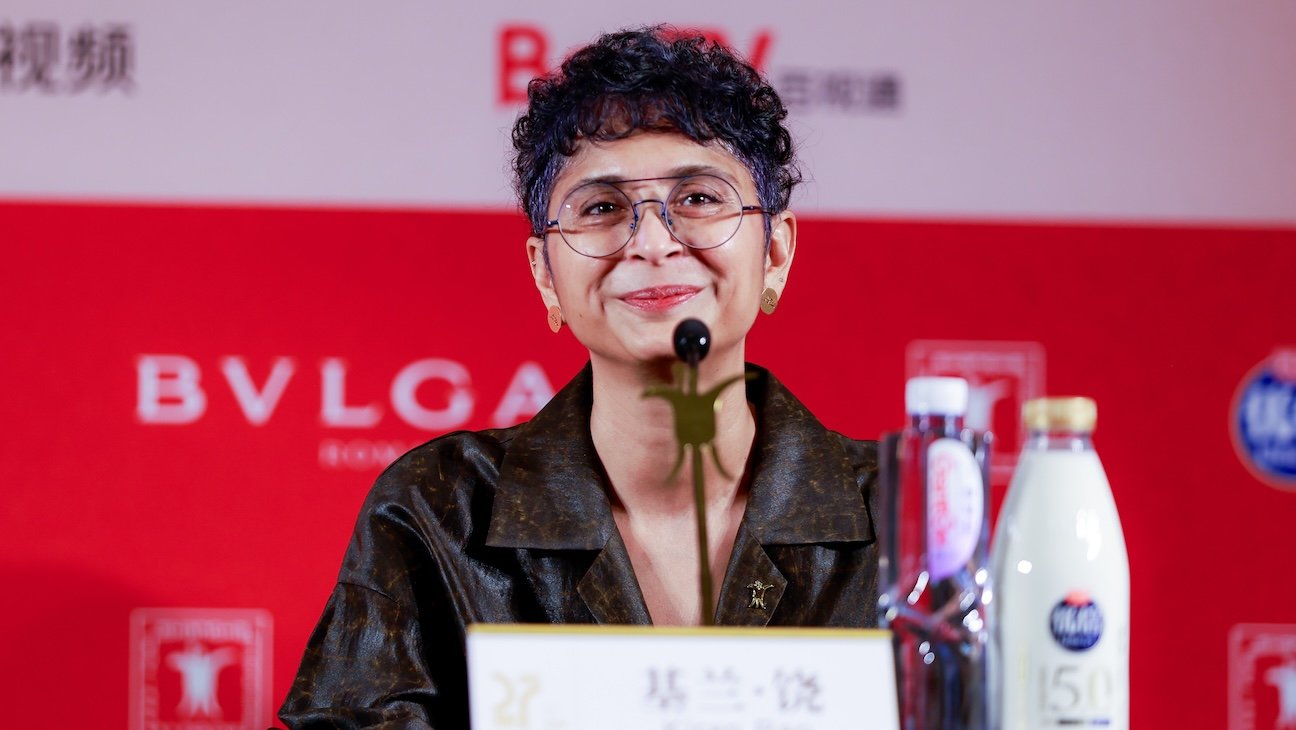
The Kering Women In Motion initiative — launched by the French luxury group to “highlight women in arts and culture, change mindsets, and combat gender inequality” — held its first-ever China event this week, bringing together Chinese actor-producer Liang Jing, Brazilian filmmaker Luiza Mariani, Indian multi-hyphenate Kiran Rao, and Chinese actress Lyu Yanting, best known for voicing the title character in the animated blockbuster franchise Ne Zha.
Rao, who produced the global hit Dangal (2016), which grossed a historic $200 million at the Chinese box office, reflected on significant industry shifts she’s witnessed over her 25-year career.
“I think we’ve seen that [change] in the kinds of stories and roles that women get to play on screen,” she told the forum. “There have been studies to show that the participation of women in the film fraternity is still well below 25-30 percent in India and I think we have to really work towards that 50 percent. But I think having women there who disagree in decision-making roles, as we are seeing — as directors, writers, producers — makes much more of an impact. Just the visual of women out there working within the industry encourages so many more women to join.”
Among ongoing challenges, Rao highlighted the need to shift perceptions about the stories and heroes audiences prefer. Pointing to the success of Dangal, based on the real-life Phogat wrestling sisters who broke down barriers for women in sports in India, Rao noted, “Women everywhere, by and large, have very similar problems.”
“There’s this sense that you get when you join the industry as a director that people want to see male heroes, and that women are primarily going to be accepted more as romantic co-leads — and people don’t want to come out and spend money on films that have primarily women protagonists,” she continued. “I think one of the changes that we are really happy to see with women now entering the industry in such big numbers — and especially with their own voices telling their own stories — is that we see complex, interesting women characters. Women, you know, who are not the norm as patriarchal society would like to see them. And that really gives me a lot of hope.”
The panel’s timing coincides with the increasing prominence of women-driven films in Chinese cinema, exemplified by the recent box office and critical successes of Jia Ling’s feel-good boxing comedy-drama Yolo ($485 million) and Shao Yihui’s socially conscious, award-winning comedy Her Story ($100 million).
Mariani’s new film, Cyclone, is an example of how similar developments are taking hold elsewhere, too. In contention for SIFF’s Gold Goblet award, it tells the gripping story of an emerging playwright whose future is cast into doubt when she undergoes a back-street abortion.
“It’s a film all done by women in major positions — director, producers, screenwriters — so I think this is a significant change,” she said. “Ten years ago, that wouldn’t have been possible. Today, in Brazil, 15 percent of films are directed by women. In the 70s, we were less than two per cent – so, we are breaking some rules.”
For Liang, the message she wanted to share with aspiring female filmmakers in the audience: “Work hard and don’t be afraid to speak up, to find your voice.”
